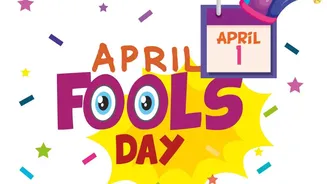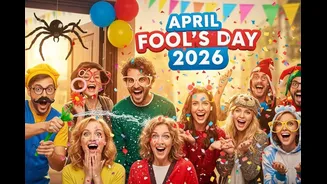







April Fool’s Day 2026: Every year on April 1, people across the world indulge in the lighthearted fun of April Fool’s Day, playing pranks, pulling jokes, and sharing laughs. Whether you’re a child or an adult,
this playful tradition is something we all enjoy. But do you know the origins behind this quirky day?
Why is April 1 celebrated as April Fool’s Day, and how did this tradition begin? Check out the history and evolution of this fun holiday.
ALSO READ: April Fool’s Day 2026: 25 Best Pranks, Messages And WhatsApp Jokes
April Fool’s Day Origins
The exact origin of April Fool’s Day is somewhat murky, but many historians trace it back to 1582 when France adopted the Gregorian calendar. This shift, endorsed by Pope Gregory XIII and the Council of Trent, moved the New Year from April 1 to January 1. However, not everyone immediately embraced the new calendar system.
Those who continued to celebrate the New Year on April 1 – either because they hadn’t received word of the change or were resistant to it – became the target of jokes and pranks. People who had adopted the new calendar began to mock these “April fools” by playing tricks on them, making fun of their outdated celebration date.
This evolved into what was called All Fools’ Day, which eventually became April Fool’s Day.
Other Theories About the Origins of April Fool’s Day
While the calendar change theory remains one of the most popular explanations, other theories also exist:
- The Spring Equinox Connection: Some believe it’s a celebration of the arrival of spring, symbolizing the unpredictable, whimsical nature of the season. Much like the weather during this time of year, April Fool’s Day is about surprise and spontaneity, reflecting the unpredictability of nature.
- Ancient Roman Traditions: Another theory ties April Fool’s Day to the ancient Roman festival of Hilaria, celebrated at the end of March. During Hilaria, Romans would dress in disguises, engage in playful tricks, and enjoy revelry. It’s likely that these festivities helped shape the modern-day celebration of April Fool’s Day.
The Spread of April Fool’s Day Traditions
April Fool’s Day spread across the world, with Britain playing a significant role in popularizing the tradition. By the 18th century, the celebration had become a well-established practice in the UK. In Scotland, the celebration of April Fool’s Day extends to two days, with April 2nd known as Taily Day, where pranks often focus on making fun of people’s backsides (hence the term “kick me” signs).
The tradition continued to grow in popularity throughout the 19th and 20th centuries and eventually made its way to the United States, where media outlets began getting in on the action.
April Fool’s Day in Modern Times: Media and Hoaxes
As the tradition evolved, media outlets began playing pranks on their audiences, contributing to the global spread of April Fool’s Day. In 1957, the BBC aired a segment about a bumper crop of spaghetti growing on trees in Switzerland.
Many people were fooled by this prank, believing it was real. This marked one of the first instances where television was used to spread an April Fool’s Day hoax on a large scale.
Since then, the trend of spreading fake news or creating elaborate hoaxes has become a key feature of the day.
Over the years, companies, media outlets, and websites have all taken part in the fun, with elaborate pranks and fake announcements becoming an expected part of the April 1st celebration.
The Global Impact of April Fool’s Day
While April Fool’s Day is widely celebrated across many countries, not all nations embrace the tradition. For example, in Iran, April Fool’s Day is celebrated as Sizdah Bedar on the 13th day of the Persian New Year, but the government deems the holiday as “promoting superstition and foolishness,” leading to a ban on its celebration.
In countries such as China, North Korea, and Saudi Arabia, April Fool’s Day is illegal, as pranks and the spread of misinformation can be seen as disrupting social order or violating strict government controls over public expression.
However, in places where it is celebrated, April Fool’s Day is not just a day of pranks but a chance to foster laughter and connect with others. It reminds us not to take life too seriously and to enjoy the spontaneous and humorous moments that come our way.
April Fool’s Day Today: A Celebration of Fun and Laughter
In today’s digital world, April Fool’s Day has taken on a life of its own, thanks to the internet and social media. Platforms like Facebook, Twitter, Instagram, and YouTube are filled with clever hoaxes, fake product launches, and satirical news reports.
Companies such as Google, YouTube, and Amazon are known for participating in the fun by creating elaborate pranks and announcing fake products or features. These viral jokes often spark widespread laughter and engage people globally in a collective celebration of humor.
The tradition has become a way for people to connect, share a good laugh, and remind themselves to not take life too seriously.
Whether it’s a harmless prank at the office, a playful social media joke, or a cleverly staged piece of fake news, April 1st is a day that unites people through the shared joy of laughter and fun.
Why April Fool’s Day Still Matters
Despite its ancient origins, April Fool’s Day remains a celebration of humor, laughter, and spontaneity. It’s a day to have fun, share jokes, and connect with others in a light-hearted way.
While the pranks may change with time, the spirit of the day remains constant: a reminder that we all need to take a step back from the seriousness of life and enjoy a good laugh.
Next time you find yourself laughing at a clever joke or pulling a prank on a friend, remember: April Fool’s Day is more than just a tradition – it’s an opportunity to celebrate the playful side of life.
FAQs About April Fool’s Day
When did April Fool’s Day begin?
The tradition is believed to have started in 1582 when France switched to the Gregorian calendar, leaving those who didn’t adjust to the change open to pranks.
Why do we play pranks on April 1?
The origins are believed to be linked to mocking those who didn’t accept the new calendar or celebrating the arrival of spring with light-heartedness.
Who started April Fool’s Day?
While the exact origin is unclear, some historians trace it back to the Council of Trent and the calendar change in the late 1500s.
Is April Fool’s Day celebrated worldwide?
Yes, but some countries like Iran, China, and Saudi Arabia have restrictions on such celebrations.