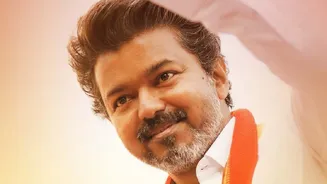







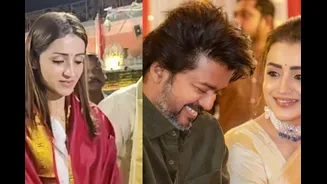
Actor-turned-politician Vijay’s Tamilaga Vettri Kazhagam (TVK) has dramatically altered Tamil Nadu’s political arithmetic, surging into pole position in the 2026 assembly election trends and sparking intense
speculation over the state’s post-result alliance possibilities.
With TVK emerging as the single-largest party in early trends with 96 seats and the ruling DMK slipping to third, what was once framed as Vijay’s debut election has quickly turned into a conversation about government formation.
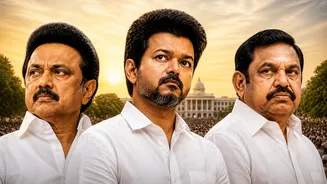
Latest counting trends show TVK leading comfortably ahead of both the AIADMK and the DMK, putting the spotlight squarely on one key question: Will AIADMK join hands with Vijay to keep the DMK out of power?
From Outsider To Centre Of Gravity
Vijay entered the election projecting TVK as an alternative to Tamil Nadu’s entrenched Dravidian politics. Contesting independently across all 234 seats, the actor sought to position himself as neither pro-DMK nor pro-AIADMK.
But TVK’s unexpectedly strong performance has changed the equation.
Instead of merely playing spoiler, Vijay now appears central to any government formation scenario, especially if no party crosses the halfway mark of 118.
That possibility had already been flagged before counting day, with reports suggesting the AIADMK was open to exploring post-poll talks with TVK if arithmetic demanded it.
Why AIADMK Could Consider A Tie-Up
For the AIADMK, a post-poll arrangement with TVK could offer a route back to power after years in opposition.
A combine of AIADMK’s organisational machinery and TVK’s apparent mass appeal could potentially create a numerically viable bloc against the DMK, which is now trailing in third position. Such an arrangement would also allow AIADMK to remain politically relevant even if it fails to emerge as the largest anti-DMK force.
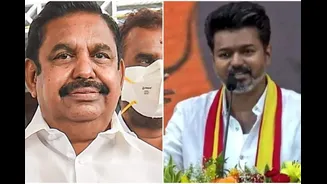
The optics, however, would be delicate: AIADMK chief Edappadi K Palaniswami had earlier publicly ruled out an alliance with TVK before the election.
TVK Remains Noncommittal
Even as alliance chatter intensifies, TVK leaders have publicly dismissed speculation of any tie-up with AIADMK as “rumours,” insisting the party was built as an independent alternative to both Dravidian majors.
Regardless of what happens next, one fact is already clear: Tamil Nadu’s familiar DMK vs AIADMK script has been disrupted.
TVK’s rise has not just made Vijay a political player; it has potentially made him the pivot around which the next Tamil Nadu government may be formed. And if the numbers hold, the biggest post-result question may no longer be who won, but who gets Vijay on their side.