




Makar Sankranti 2026 Date And Time: Makar Sankranti, one of India’s most cherished harvest festivals, will be celebrated on Wednesday, January 14, 2026. The festival marks the Sun’s entry into Capricorn
(Makar), a key astronomical event signaling the return of longer days after winter. Unlike many Hindu festivals, which follow the lunar calendar, Makar Sankranti follows the solar cycle, making it fall on the same date each year.
Punya Kaal and Shubh Muhurat for Makar Sankranti 2026
What is Punya Kaal?
Punya Kaal refers to the most auspicious period to perform rituals and spiritual activities during Makar Sankranti. Actions done during this time are believed to bring maximum blessings, prosperity, and positive energy.
Timing of Punya Kaal
For 2026, the Sankranti moment occurs at 3:13 PM on January 14. The Punya Kaal begins shortly after the Sun enters Makara Rashi (Capricorn) and lasts for a few hours, making it the ideal time for pujas, charity, and festive rituals.
Significance of Shubh Muhurat
Performing Makar Sankranti rituals during the Shubh Muhurat ensures that the efforts are aligned with cosmic energy, promoting spiritual growth, success, and harmony in personal and professional life.
Importance of Makar Sankranti
The festival carries deep cultural and religious importance. In Hindu belief, Makar Sankranti marks the start of Uttarayana, the Sun’s northward movement, which is considered highly auspicious. It is believed that good deeds performed during this period bring positive results and support spiritual progress.
Makar Sankranti is also closely connected with rural life and farming. Farmers celebrate the harvest and express gratitude for their crops. In earlier times, the festival also helped people align daily life with the Sun’s movement, as the Sun was seen as the primary source of energy.
Rituals Followed on Makar Sankranti
- Holy Dip: Devotees wake early to take a holy dip in rivers like the Ganga, Yamuna, or Godavari. It is believed to purify the body and mind.
- Temple Visits: People offer prayers to the Sun God and perform pujas.
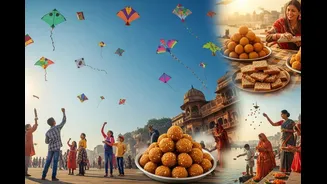
- Til-Gur Sweets: Sharing sweets made of sesame seeds and jaggery symbolizes warmth, harmony, and goodwill.
- Kite Flying: In Gujarat, Maharashtra, and Rajasthan, the skies are filled with colorful kites. Families enjoy friendly competitions and festive snacks.
Regional Celebrations Across India
Makar Sankranti is known by various names in different parts of the country. In Punjab, it is celebrated as Lohri. In Tamil Nadu, it coincides with Pongal, a four-day harvest festival.
In Karnataka and Andhra Pradesh, it is called Sankranthi, while in West Bengal, it is referred to as Poush Sankranti. Despite the different names, the underlying spirit of the festival remains the same.
Auspicious Muhurat and Beliefs
The best time to perform Makar Sankranti rituals is in the early morning when the Sun enters Capricorn. Legend associates this day with Bhishma Pitamah, who chose to leave his mortal body during Uttarayana, enhancing the spiritual significance of the festival.
Overall, Makar Sankranti celebrates sunlight, harvest, and fresh beginnings. As 2026 approaches, people across India will come together to welcome longer days with prayer, festive foods, and shared joy.