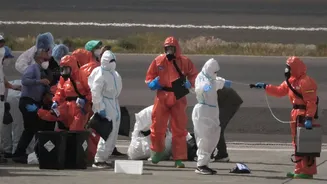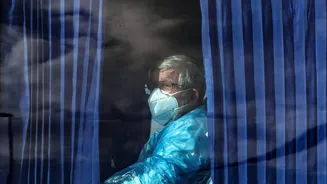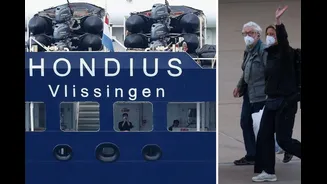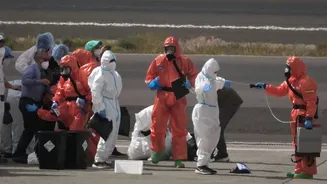









As global health authorities continue to monitor the situation, the hantavirus outbreak linked to the expedition cruise ship MV Hondius has escalated, with nine confirmed cases reported so far and more
expected in the coming weeks.
Around 150 passengers and crew members have now begun returning home aboard military and government-operated flights from Spain’s Canary Islands. The World Health Organization has recommended a 42-day quarantine period along with active symptom monitoring, including daily fever checks. However, the guidance is advisory rather than mandatory, and quarantine may be completed either at home or in supervised isolation facilities.
Meanwhile, some health experts remain concerned about whether travellers will strictly follow six weeks of isolation guidance. India has confirmed that two Indian crew members from the ship were evacuated to the Netherlands and are currently under quarantine despite being healthy and asymptomatic. So far, three passengers a Dutch couple and a German woman have died, although WHO chief Tedros Adhanom Ghebreyesus has stressed that the outbreak is “not another Covid” and that the overall public health risk remains low.
Hantavirus Outbreak: Countries Affected So Far
Health officials have identified confirmed or suspected cases and high-risk contacts in multiple nations. The map of affected areas currently includes:
United States: One confirmed case, one suspected symptomatic case, and 18 passengers under monitoring or quarantine in facilities in Nebraska and Georgia. Additional individuals are being monitored in states including Kansas and Washington.
France: One confirmed case in serious condition (reportedly on life support), with several other passengers and 22 close contacts under observation.
Netherlands: Multiple cases, including a Dutch couple who tragically died.
United Kingdom: Several passengers affected, with contacts being monitored.
Spain, Germany, Switzerland, South Africa, and others have also reported repatriated passengers under quarantine or medical observation.
Passengers from over 20 countries were aboard the MV Hondius, triggering one of the largest international contact-tracing operations in recent years. The European Centre for Disease Prevention and Control has advised treating all passengers as high-risk contacts who should be monitored for up to 42 days.
Why More Hantavirus Cases Are Expected
WHO Director-General Dr Tedros Adhanom Ghebreyesus has warned that additional infections are likely due to the virus’s long incubation period of six to eight weeks and interactions among passengers before preventive measures were introduced. Many travellers shared close quarters on the ship, increasing the chance of transmission of the Andes strain.
Public health experts stress that the risk to the general public remains low. Hantavirus typically spreads through contact with infected rodents, but this outbreak has highlighted the potential for limited human-to-human spread under specific close-contact conditions.
What This Means for the Public?
Health officials across the board continue to stress that the risk to the general public remains low. Unlike respiratory viruses such as COVID-19, this hantavirus requires prolonged close contact for person-to-person spread. Traditional hantavirus transmission occurs through contact with infected rodent droppings, urine, or saliva.
Symptoms to watch for include fever, fatigue, muscle aches, headaches, and in severe cases, breathing difficulties. Anyone who was on the MV Hondius or had close contact with a confirmed case is urged to monitor their health closely and seek immediate medical attention if symptoms develop.
The MV Hondius is heading to Rotterdam for thorough sanitisation. Meanwhile, governments are managing repatriation differently some with strict hospital quarantines, others with home monitoring after initial assessment.
This situation serves as a reminder of how interconnected global travel can amplify health risks, even on remote expeditions. While panic is unwarranted, vigilance and adherence to public health guidance remain essential.