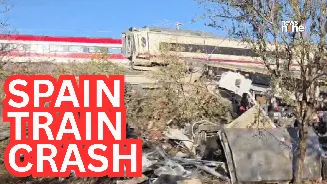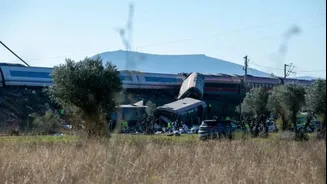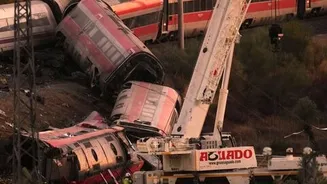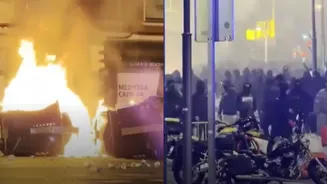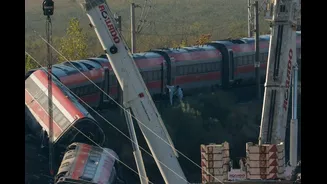









Public outrage has erupted in Spain after at least 68 people were killed and dozens injured in one of the deadliest rail disasters in modern European history. As rescue workers spent the night cutting
through mangled train carriages to search for victims, thousands took to the streets demanding the resignation of Prime Minister Pedro Sanchez and Transport Minister Oscar Puente.
The latest tragedy marks the second major high-speed train crash in Spain this year.
Spanish broadcaster TVE reported that around 1,500 demonstrators gathered outside the Transport Ministry in the capital overnight, demanding that the ministers step down. Some protesters allegedly hurled bottles and flares at police personnel, prompting officers to deploy tear gas to disperse the crowd.
No injuries or arrests have been reported so far. Videos of the demonstration circulating on social media showed confrontations between protesters and police, with demonstrators questioning the authorities’ response to the disaster.
Some protesters carried banners bearing the slogan “CRIMINALES ABAJO EL REGIMEN DEL 78” (Criminals Down with the Regime of ’78).
🚨🇪🇸 BARCELONA RIOTS: FAKE PROTEST CALLS, REAL CHAOS
TikTok accounts linked to “Blocus” allegedly lured youths into unrest disguised as student protests.
-130 arrested, 76 minors
-14 police officers injured
-More rallies promoted across #Europe.
#Barcelona #Spain https://t.co/X9CCdxV0Fu— Geo Politics Desk (@GeoPoliticsDesk) October 28, 2026
Demonstrators also chanted “Scar Puente, minister of death” as police moved against them in the capital.
Meanwhile, railway drivers are expected to go on strike on Thursday. According to a BBC report, the Spanish Union of Railway Drivers (Semaf) said the action would be held “in defence of railway safety”.
Spain’s High-Speed Rail Network Under Scrutiny
Spain’s high-speed rail network has long been regarded as one of the country’s major achievements. With the world’s second-largest high-speed rail network by track mileage after China, the system had not experienced a fatal crash since its launch more than three decades ago, until this year.
The latest collision on Wednesday transformed a quiet stretch of railway surrounded by olive groves into a scene of devastation. The disaster has also come just four weeks before the country votes in a national election.
MADRID ERUPTS IN PROTEST AFTER DEADLY TRAIN CRASH
🔹 More than 1,000 people gathered outside Spain’s Transport Ministry, demanding answers and accountability after a train collision killed 68 people.
🔹 Anger is mounting as the disaster marks the second major high-speed train crash in Spain this year.
🔹 Families are demanding answers, while protesters are calling for those responsible to be held accountable.
#Spain #Madrid
— THREE POINTS NEWS (@ThreePointNews) October 28, 2026
Spanish Prime Minister Sanchez visited the crash site in the central province of Toledo after regional authorities confirmed that more than 60 people had died and dozens were receiving treatment in hospitals.
The latest tragedy follows another deadly collision in January, when 46 people were killed after one train derailed and struck the side of another travelling in the opposite direction in southern Spain.
Sanchez has promised an investigation into the latest crash and measures to prevent similar incidents. The two disasters have shaken public confidence in a rail network that carried 45 million passengers last year, including millions of tourists.
The government has also declared three days of national mourning beginning Thursday.
Spain’s Existing Protests Add To Public Anger
Public discontent had already been growing in Spain over housing shortages and rising rents, and the rail disaster has further fuelled anger.
The housing protest movement gained momentum last month following the eviction of 87-year-old Maricarmen Abascal from her lifelong apartment in Madrid. Police broke down her door before carrying her out on a stretcher, triggering widespread public outrage.