







Team India was flying high in white-ball formats until New Zealand brought them crashing back to earth in the three-match ODI series. After conceding the opening game, the Kiwis bounced back emphatically
with back-to-back wins to script their first-ever ODI series triumph on Indian soil. A 41-run victory in the Indore decider sealed a historic 2-1 series win for the Black Caps.
The defeat has put the Indian team management under the scanner, with several individuals, particularly those named in the T20 World Cup squad, also facing tough questions. Kuldeep Yadav endured a forgettable series, managing just three wickets in as many games while conceding runs at over seven an over.
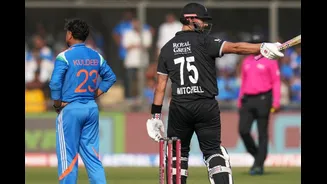
The final ODI in Indore summed up Kuldeep’s struggles. Daryl Mitchell wasted no time in denting the wrist-spinner’s confidence, charging down the track to smash him for a straight six off his very first ball in the 17th over. From thereon, Kuldeep appeared more reactive than authoritative.
The pressure mounted in the death overs as well. In the 41st over, Mitchell and Glenn Phillips went on the offensive once again, launching Kuldeep for towering sixes straight down the ground. On a compact Indore surface, the left-armer found no answers and finished with figures of 1 for 48 from six overs.
Interestingly, Mitchell was still generous in his assessment of Kuldeep.
“Kuldeep is world-class. There is a reason we try to put him under pressure. When he bowls well, he sets up his whole attack. He can spin the ball both ways, and I still think he has a massive role to play for India in the future,” Mitchell said.
There is little doubt about Kuldeep’s pedigree. At his peak, he is capable of bamboozling batters with his variations and guile. But with less than three weeks to go before the T20 World Cup, his current form is a genuine concern for India.
With Jasprit Bumrah rested for the series, India’s bowling attack looked blunt, and Kuldeep, perhaps bowling too slowly through the air, bore the brunt of New Zealand’s aggression. He ended what was arguably the worst ODI series of his career with three wickets at an average of 60.66 and an economy rate of 7.28.