









For people living in villages who want to start a business with a small investment and earn a steady income, the vermi compost or worm fertiliser business can be an excellent option. The biggest advantage
of this venture is that it requires very little capital to begin, along with proper training and consistent hard work.
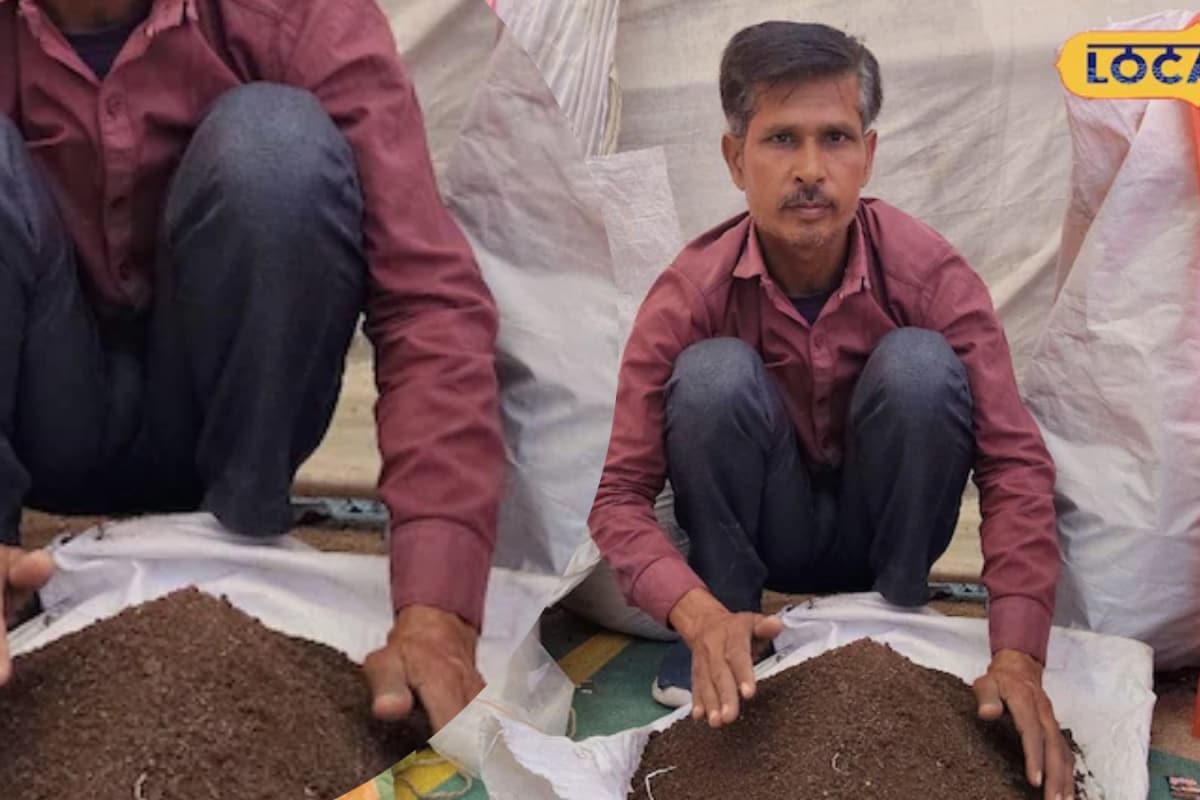
One such example is Kripal Pal from Rajgarh district of Madhya Pradesh, who has successfully turned this idea into a profitable livelihood.
Earning From Vermi Compost For The Past Two Years
Kripal Pal has been producing and selling worm fertiliser for the past two years. According to him, the business has been financially rewarding, and he earns a decent income every three months through the sale of organic fertiliser.
His journey shows how rural entrepreneurship can flourish with the right knowledge and dedication.
Started His Own Work After Completing Class 12
Kripal explained that he studied agriculture up to Class 12 but did not pursue further education. Instead, he wanted to start something innovative related to farming.
While exploring opportunities, he learned about vermi compost production and decided to gain practical knowledge about the process.
To understand the business properly, Kripal visited Niwari village in Chhatarpur district. There, he received a three-day training programme from progressive farmer Chitranjan Chaurasia.
After completing the training, he returned home and began producing worm fertiliser on his own.
How Worm Fertiliser Is Produced
Kripal says that producing vermi compost is not a difficult task and does not require a large workforce. Generally, two people are enough to manage the work. However, when the fertiliser needs to be sieved or sifted, around three to four people may be required.
Currently, he prepares worm fertiliser in 10 to 12 plastic beds, each containing approximately 5 kilograms of worms.
Fertiliser Ready In Three Months
The vermi compost takes around three months to be fully prepared. Each plastic bed produces approximately 6 to 6.5 quintals of fertiliser.
As a result, after every three-month cycle, Kripal produces 20 to 30 quintals of high-quality worm fertiliser.
Supplying Fertiliser To Farmers And Hotels
Kripal says awareness about vermi compost is gradually increasing among farmers. At present, however, only about 20 to 25% of farmers regularly use worm fertiliser.
Apart from selling to farmers, Kripal also supplies fertiliser to three hotels in Rajgarh. Additionally, he receives online orders through the Meesho platform, which has helped him reach more customers.
Pricing Of The Fertiliser
The price of the fertiliser varies depending on how it is sold.
- Retail price: Around Rs 20 per kilogram
- Wholesale price: Between Rs 15 and Rs 20 per kilogram
- Online sales price: Around Rs 60 to Rs 70 per kilogram
Kripal explains that the higher price for online sales is due to transportation costs, packaging expenses, and occasional order cancellations.
Low Investment And Good Profit
According to Kripal, the biggest expense in this business is purchasing worms at the beginning. Once the system is established, the running costs become relatively low.
He says that every three months it is possible to earn around Rs 20,000 to Rs 30,000, making it a sustainable source of income.
A Promising Business For Rural Youth
Kripal believes the vermi compost business is an ideal opportunity for young people in villages. With low initial investment and the potential for expansion, the business can gradually grow into a larger enterprise while supporting sustainable agriculture.