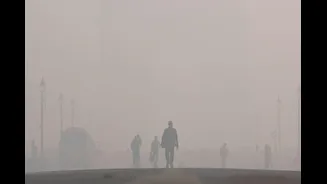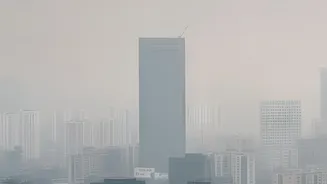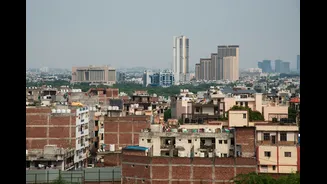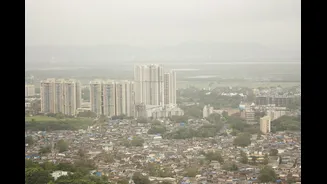






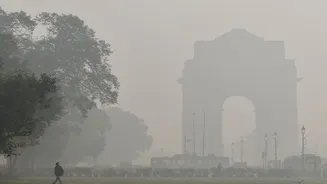


Delhi woke up to another morning of hazardous air quality on Friday, November 13, with pollution levels plunging into the ‘Severe’ category across several parts of the national capital. The Air Quality
Index (AQI) at ITO touched 455, while multiple other locations, including AIIMS, Anand Vihar and Akshardham, recorded readings above 400.
According to the Central Pollution Control Board (CPCB), ITO recorded an AQI of 455, placing it in the severe category. Rajokri Border reported an AQI of 402, while the reading around AIIMS stood at 417-418. Akshardham and Anand Vihar also recorded AQI levels of 414 each.
The situation was alarming in other parts of the city as well. Dwarka Expressway recorded an AQI of 369, categorised as ‘Very Poor’, while the area around Jawaharlal Nehru Stadium registered 374.
The latest readings reflect a sharp deterioration in air quality following a worsening trend over the past few days. Delhi’s overall AQI had climbed to 350 on Thursday afternoon, November 12, marking its worst reading since Diwali night, according to reports citing CPCB data. By Thursday night, the index had risen further to 387, with 21 of the 58 monitoring stations reporting severe pollution levels.
The deterioration comes despite a decline in farm-fire incidents in neighbouring Punjab. Weak surface winds clubbed with high humidity and a reduced atmospheric mixing layer have made it difficult for pollutants to disperse. According to reports, PM2.5 concentrations more than doubled within 24 hours to 244 micrograms per cubic metre by Thursday evening, nearly four times the national standard.
The mixing layer, which determines how much air is available to disperse pollutants, shrank to approximately 400 metres on Thursday afternoon, compared with 1,400 metres two days earlier. North-westerly winds have also resumed carrying smoke from agricultural fires in Punjab and Haryana towards Delhi.
The worsening pollution levels come as authorities continue to implement measures under the Graded Response Action Plan (GRAP). The Commission for Air Quality Management (CAQM) had invoked Stage III of GRAP across Delhi-NCR on November 6 after the capital’s AQI reached 382 and forecasts indicated a further deterioration.
Under the revised GRAP framework, AQI readings of 401-450 fall under the Severe category, while readings above 450 fall under Severe Plus. Restrictions under the different stages include curbs on construction and demolition activities, restrictions on polluting vehicles and other emergency pollution-control measures.
environment.