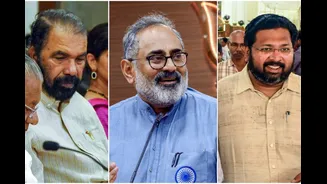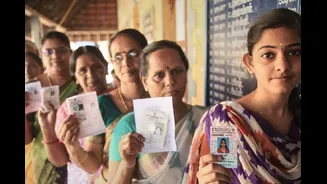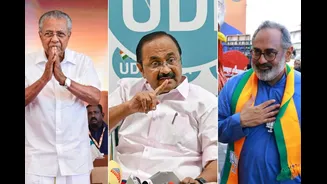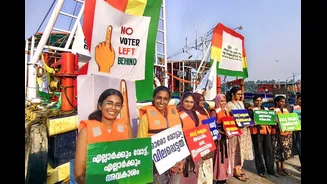




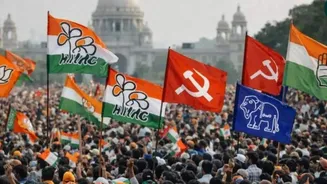
The political mood in Kerala ahead of the April 9, 2026 Assembly elections is a high-stakes standoff between a quest for a historic “triple” by the Left and a strong “pendulum” push for change by the opposition.
While the ruling Left Democratic Front (LDF) seeks a historic third term, the United Democratic Front (UDF) aims for a comeback, and the National Democratic Alliance (NDA) attempts to break the bipolar trend.
What are the core narratives?
LDF: The Continuity Pitch
The ruling LDF, led by the Communist Party of India (Marxist), is seeking an unprecedented third consecutive term to solidify the “Pinarayi model” of governance.
It is banking on welfare continuity (social security pensions), infrastructure achievements like the Vizhinjam port, and a “pro-people” image of stability. They have largely retained sitting legislators to project experience and reliability.
UDF: The Change Narrative
The Congress-led UDF’s goal is to reclaim power by appealing to Kerala’s historical pattern of alternating governments every five years.
The UDF is highlighting anti-incumbency after a decade of Left rule, focusing on “administrative fatigue,” fiscal stress (rising state debt), and corruption allegations like the gold smuggling scandals.
They are positioning as a “corrective moment” with a mix of veteran heavyweights and fresh faces.
NDA: The Governance Reset
The BJP-led NDA’s goal is to disrupt the traditional bipolar contest to become a decisive third force.
Pitching a “Vikasitha Keralam” (Developed Kerala) roadmap, it is focusing on job creation to curb youth migration and infrastructure-heavy promises backed by the Union government.
The NDA is keeping issues like the Sabarimala development and temple management reforms central to their outreach.
What is the ground sentiment in Kerala?
The mood is described as unpredictable due to several silent undercurrents: While some voters prefer continuity for stability, many are vocal about “everyday struggles” including jobs and safety.
Psephologists suggest the election may be decided by micro-shifts in a few dozen closely fought constituencies rather than a sweeping wave.
Pre-poll surveys show a tightening race; some projects give a slight edge to the United Democratic Front (UDF) with 77–81 seats, while others suggest the Left Democratic Front (LDF) remains a close second in a “cliffhanger” scenario.
What are they key voter concerns?
Economy: High public debt and delayed welfare pensions are weighing on the LDF’s core base.
Unemployment: Graduate unemployment and the resulting migration of youth remain top concerns across all demographics.
Social Fabric: The alignment of minority communities (Muslims and Christians) is viewed as a decisive factor in nearly 50 constituencies.
KEY FAQS
Is this election about continuity or change?
It’s not a simple choice — voters are weighing both continuity and change in a tight, complex contest.
Is there a strong anti-incumbency mood?
There is a noticeable but not overwhelming anti-incumbency undercurrent, making the race very close.
What will likely decide the final outcome?
Small swings in key seats and voter turnout could decide whether Kerala picks stability or a reset.
With agency inputs