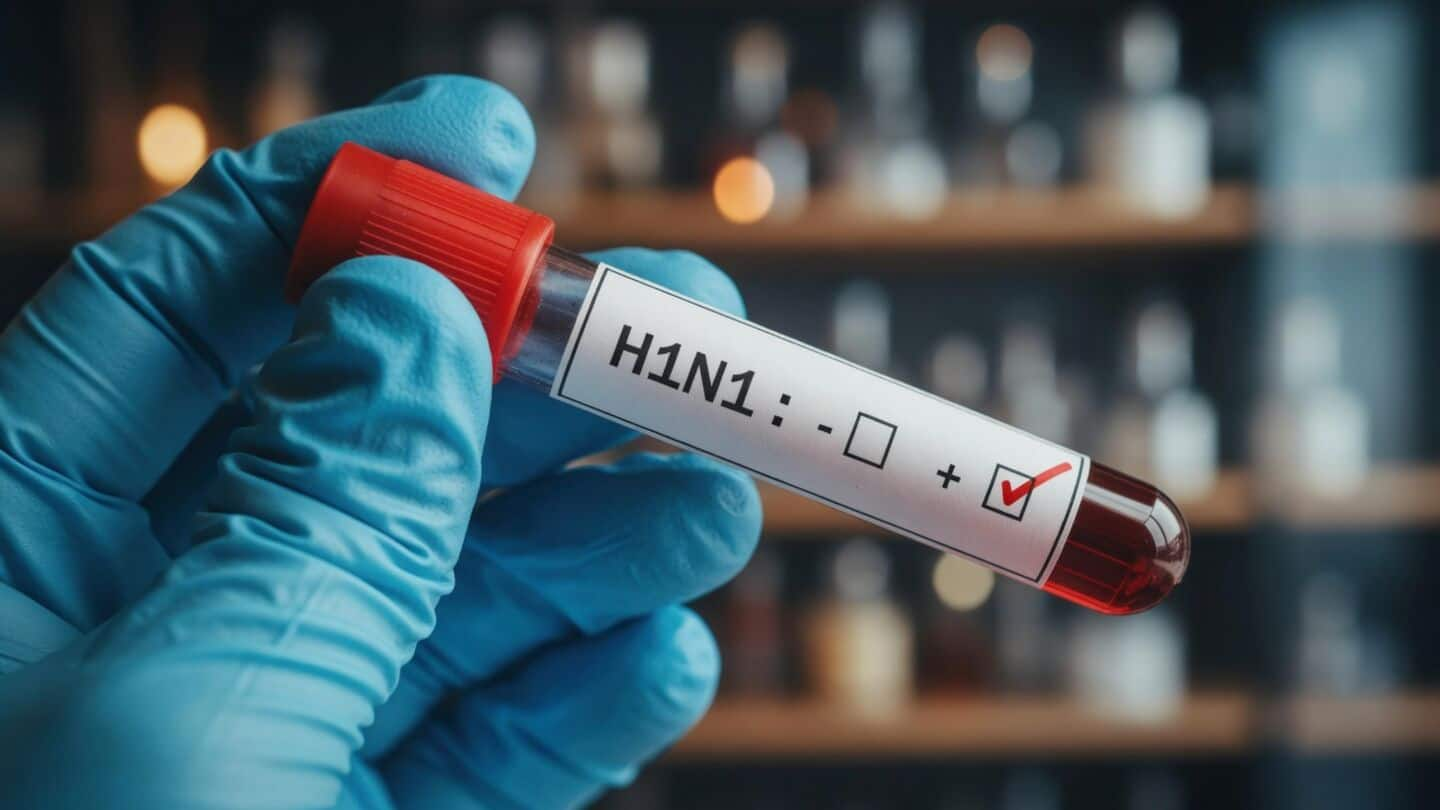








Delhi News: The rise in Influenza A (H1N1), commonly known as swine flu, is prompting increased surveillance and hospital preparedness across several parts of India, with Delhi witnessing a sharp increase in infections.
The latest figures put Delhi’s H1N1 tally at 2,308, even as doctors stress that most infections remain manageable with rest, fluids and supportive care.
The current rise is being closely watched as the seasonal influenza trend appears to be moving towards its peak, although doctors say it is difficult to predict exactly when cases will begin to decline. The message from health experts is clear: there is no need to panic, but people should know which symptoms require medical attention and who is at higher risk of complications.
Delhi has reported 2,308 H1N1 infections this year, while the city’s total Influenza-A tally has reached around 2,392 and Influenza-A and B cases together stand at approximately 2,602. H1N1 remains the predominant Influenza-A subtype being reported in the capital. The increase has prompted reviews of hospital preparedness, surveillance and the availability of essential medicines and beds.
At the same time, the Indian Council of Medical Research (ICMR) has said that no new H1N1 strain has been detected in India. Scientists have said the viruses currently circulating have been in circulation since 2025 and are well matched to the influenza vaccine strains recommended for the Northern Hemisphere.
According to a doctor quoted by News18, antibiotics have no role in treating influenza, as H1N1 is a viral infection. Antiviral medicines are generally considered for patients who are at high risk or develop severe illness, rather than being routinely prescribed for every person with flu-like symptoms.
Rising H1N1 cases in Delhi:
2-3 licensed vaccines recommended by WHO, ICMR can be taken by people at high risk of infection like elderly, pregnant ladies or immune compromised but not mandatory. pic.twitter.com/klX4hO8j0x
— News Arena India (@NewsArenaIndia) August 25, 2026
For most otherwise healthy people, adequate fluids, a nutritious diet and sufficient rest can help the body recover from the infection. However, doctors say certain symptoms should not be ignored. Respiratory distress or chest pain warrants immediate medical attention and a hospital visit
Who Should Consider The Flu Vaccine?
A flu vaccine is available in India, and doctors say it can be considered particularly by people who are at higher risk of severe influenza.
The World Health Organization recommends seasonal influenza vaccination for priority groups, and two to three influenza vaccines are licensed in India, according to the doctor quoted by News18.
However, the vaccine is not mandatory. People who wish to take a flu shot can do so after discussing it with their doctor, particularly if they fall into a high-risk category.
Why Is Delhi On H1N1 Alert?
Delhi’s health authorities have stepped up surveillance as infections rise. Union Health Minister JP Nadda recently reviewed the capital’s preparedness with Delhi Health Minister Pankaj Kumar Singh. The review covered influenza-like illness (ILI), severe acute respiratory infections (SARI), testing, surveillance and hospital preparedness.
Delhi Health Minister Pankaj Kumar Singh has said there is no shortage of beds, doctors, medicines or essential medical equipment in the capital. Hospitals have been directed to maintain adequate facilities and strengthen monitoring of patients with influenza-like symptoms.
The Delhi State Health Mission is also monitoring ILI, SARI and influenza cases through the Integrated Disease Surveillance Programme and the Integrated Health Information Platform.
Delhi: Amid a rise in H1N1 cases, hospitals in the national capital have stepped up preparedness measures. Lok Nayak Jai Prakash (LNJP) Hospital has made isolation arrangements for H1N1 patients, while the Delhi Health Department has directed hospitals to ensure the availability… pic.twitter.com/oAw8FiCf66
— IANS (@ians_india) August 25, 2026
The government has circulated technical guidelines covering patient categorisation, treatment protocols, ventilatory management, masks and home care. Healthcare workers are also being sensitised about symptoms and follow-up procedures.
Hospitals in Delhi have begun strengthening arrangements to deal with patients who may require admission. Lok Nayak Jai Prakash Hospital (LNJP) has made isolation arrangements for H1N1 patients, while the health department has directed hospitals to ensure the availability of beds, medicines and other essential facilities.
The emphasis is on ensuring that hospitals can handle patients who develop complications while most people with uncomplicated seasonal influenza can recover with routine care.
Delhi CM Rekha Gupta To Review H1N1 Situation
Delhi Chief Minister Rekha Gupta is also scheduled to hold a meeting on H1N1 as part of a wider review of issues facing the capital. The meeting comes amid the continuing increase in seasonal influenza cases and will focus on the city’s preparedness and response.
The Delhi government is simultaneously monitoring other seasonal health threats, including vector-borne diseases.
What Is The Health Ministry Telling The Public?
The Union Health Ministry has emphasised that Influenza A (H1N1) is a seasonal respiratory infection and is mostly self-limiting in healthy adults. Common symptoms include:
- Fever
- Cough
- Sore throat
- Runny nose
- Headache
- Body or muscle aches
- Fatigue
- Occasionally nausea, vomiting or diarrhoea
🔹???????????????????????????????????? ???? (????????????????) is a seasonal respiratory infection and is mostly ????????????????-???????????????????????????????? in healthy adults.
🔹???????????????????????? ???????????????????????????????? include fever, cough, sore throat, runny nose, headache, body/muscle aches, fatigue, and sometimes nausea, vomiting… pic.twitter.com/nFUjh3Jr3A
— Ministry of Health (@MoHFW_INDIA) August 25, 2026
The ministry has advised people to stay hydrated, get adequate rest, wash their hands frequently, cover their mouth and nose while coughing or sneezing and stay home when unwell.
It has also advised people to consult a doctor or visit a government health facility if symptoms do not improve within 5-6 days, particularly when the patient is a young child, elderly person or someone with an underlying medical condition.
Doctors Say Most Cases Are Mild – But Know The Warning Signs
Dr Susheel Tyagi, senior consultant in internal medicine at Yashoda Medicity Hospital, said H1N1 cases are quite prevalent this season, with the post-monsoon period typically seeing an increase in viral infections. He said testing is not required in every flu case, and is particularly recommended for high-risk patients such as elderly people, children, pregnant women and those with conditions including kidney disease or cancer.
According to him, most cases are mildly symptomatic and recover with routine treatment. Dr Tyagi also stressed that influenza is primarily a respiratory illness and that preventing transmission remains key. Frequent handwashing and wearing a mask in crowded places can help reduce the spread of respiratory droplets.
Which H1N1 Symptoms Should You Not Ignore?
While fever, cough and body aches can occur with ordinary seasonal influenza, doctors say certain symptoms require prompt medical attention.
Dr Neeraj Nischal, Professor of Medicine at AIIMS, has advised people to seek medical care if they develop:
- Breathlessness
- Chest pain
- Low oxygen levels
- Persistent or worsening fever
- Confusion
- Severe weakness
- Dehydration
One particularly important warning sign is when a person appears to recover and then suddenly becomes significantly worse.
Doctors say this pattern can indicate complications and should not be dismissed as a normal part of recovering from flu.
What Is Happening In Ghaziabad?
The H1N1 rise is not confined to Delhi. Seven H1N1-positive patients have been reported in Ghaziabad, according to Chief Medical Officer Sachin Vaishya. Four patients have been hospitalised, while three are undergoing treatment in home isolation.
#Swineflu seven cases of H1N1 positive Patient reported in Ghaziabad, 4 of them hospitalised and 3 are in home isolation treatment. All of them are fine no severe symptoms seen, Ghaziabad chief medical officer Sachin vaishya said they focused on triple T I.e. tracking,tracing… pic.twitter.com/lVYc2S9HAc
— Lokesh Rai (@lokeshRlive) August 25, 2026
Officials said all seven patients are doing well and no severe symptoms have been reported so far.
The district health department has adopted a ‘Triple T’ strategy – Tracking, Tracing and Treatment – while issuing a health advisory to increase awareness and monitoring.
Are Other States Seeing A Rise?
The increase in seasonal influenza activity has prompted heightened surveillance in other parts of the country as well. Rajasthan, for instance, has increased disease surveillance following the rise in H1N1 cases in Delhi, directing field teams, hospitals and clinics to monitor people presenting with influenza-like symptoms, including fever, cough, sore throat, body ache, nasal congestion and breathing difficulties.
Reports have also pointed to increased influenza activity in cities including Mumbai, Bengaluru and Chennai, although the scale and nature of the rise varies from state to state.
The situation in Maharashtra is therefore being watched closely, particularly as seasonal respiratory infections increase during the monsoon and post-monsoon period.
Why Are Cases Rising Now?
Doctors say the increase comes during a period when viral respiratory infections typically become more common. Changing weather conditions, humidity, crowding and increased person-to-person transmission can contribute to the spread of influenza.
Delhi’s 2026 numbers are notably higher than last year. The capital had recorded 229 H1N1 cases during the corresponding period in 2025, compared with 1,777 this year. However, experts caution against interpreting the numbers as evidence of a new or more dangerous virus.
ICMR scientists have specifically clarified that there is no new H1N1 strain circulating in India.
Who Needs To Be More Careful?
Although healthy adults generally recover from seasonal influenza, complications can be more serious among certain groups.
Extra caution is advised for:
- Young children
- Older adults
- Pregnant women
- People with kidney disease
- People with cancer
- People with chronic respiratory or other underlying conditions
- People with weakened immunity
For these groups, medical advice should be sought earlier rather than waiting for symptoms to become severe.
Should You Get Tested For H1N1?
Not necessarily. Doctors say not every person with fever, cough or a runny nose needs an H1N1 test. Testing decisions depend on the patient’s symptoms, risk factors and clinical assessment.
High-risk patients and those with concerning or persistent symptoms may require testing and closer monitoring.
This is also why doctors are advising people not to self-medicate, particularly with antibiotics or prescription antiviral medicines without medical advice.
What Can You Do To Stay Safe?
The basic precautions remain simple.
- Wash your hands regularly.
- Avoid close contact when you are unwell.
- Cover your mouth and nose while coughing or sneezing.
- Consider wearing a mask in crowded or poorly ventilated places, particularly if you have respiratory symptoms.
- Stay home when sick and maintain adequate hydration and rest.
- Most importantly, don’t ignore symptoms that are persistent or worsening.
Don’t Ignore The Warning Signs
The current H1N1 situation calls for vigilance rather than alarm. Delhi’s 1,777 H1N1 cases are significant and have rightly prompted hospitals and authorities to strengthen preparedness. But the available evidence does not point to a new H1N1 strain, and health authorities have said there is no reason for panic.
For most healthy people, H1N1 remains a seasonal respiratory infection that can resolve with appropriate care. The important distinction is knowing when a routine flu-like illness is not following a routine recovery.
If fever persists, breathing becomes difficult, oxygen levels fall, chest pain develops, or a person’s condition suddenly worsens after appearing to recover, that is the point to stop waiting and seek medical attention.