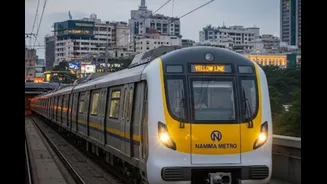







Early morning activity at the Hebbagodi depot may not draw crowds, but it is where some of Bengaluru Metro’s most important milestones are unfolding. The Bengaluru Metro Rail Corporation Limited has begun
testing the eighth driverless train for the Yellow Line, continuing a series of trials aimed at strengthening services on one of the city’s key upcoming corridors.
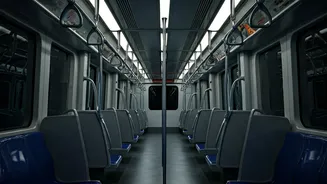
The six-coach trainset was recently brought to Bengaluru and has now entered the testing phase, which officials say is a necessary step before any train is allowed to carry passengers.
With the induction of the eighth train, the Yellow Line project is moving closer to its planned rolling stock strength. Driverless trains are central to the corridor’s design, allowing for smoother operations, better scheduling, and the ability to run services at shorter intervals once full deployment is achieved.
Officials said each trainset goes through multiple rounds of inspection and testing before being cleared, even after arrival at the depot. This ensures that all systems are fully integrated with the metro’s signalling and control infrastructure.
Inside the testing process
The ongoing tests include checks on braking performance, acceleration and deceleration, door operations, onboard communication systems, and coordination with signalling equipment. Since these are driverless trains, particular attention is paid to the communication-based train control system, which enables automated operation without a human driver onboard.
Metro officials said these trials are conducted in phases, beginning within depot limits and gradually moving to controlled runs on the main line. Only after all safety benchmarks are met will the train be considered fit for passenger service.
Why commuters are watching closely
For commuters, especially those travelling to and from the Electronics City belt, the addition of more driverless trains could translate into shorter waiting times and more predictable services. At present, services on the Yellow Line operate with longer intervals due to limited availability of trainsets.
Once more trains complete testing and are inducted into service, authorities expect headways to reduce, particularly during peak hours. This is expected to make metro travel more attractive for daily office-goers and industrial workers along the corridor.
The Yellow Line connects Rashtreeya Vidyalaya Road to Bommasandra, passing through important residential, commercial, and industrial areas. The corridor is designed to ease pressure on some of Bengaluru’s busiest arterial roads, which see heavy traffic during office hours.
Metro planners see the Yellow Line as a critical link in the city’s expanding rapid transit network, especially as Bengaluru continues to grow outward toward industrial and technology hubs.
More trains in the pipeline
With eight driverless trains now tested or under testing, officials said the project is progressing steadily. Additional trainsets are expected to arrive in the coming months and will undergo similar trials before being deployed for commercial operations.
BMRCL officials reiterated that safety clearances, independent inspections, and successful trial runs will determine how quickly these trains are introduced into regular service. While there is visible progress, they emphasised that no shortcuts would be taken in certifying driverless operations.
As testing continues behind the scenes, the Yellow Line inches closer to becoming a more frequent and reliable option for Bengaluru’s daily commuters.