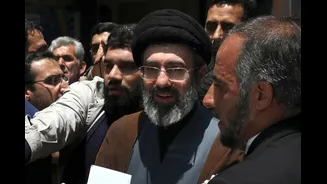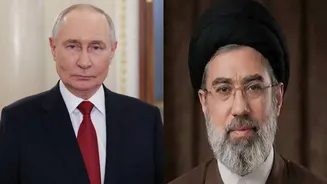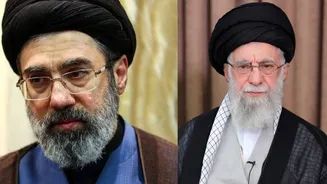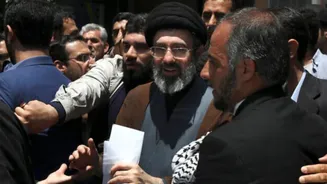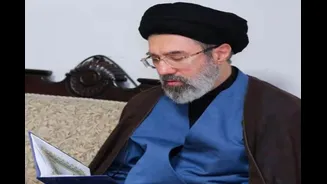




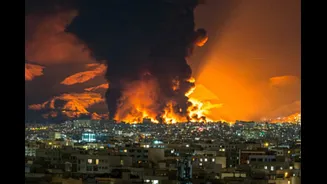
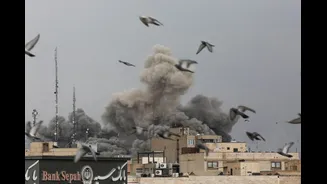
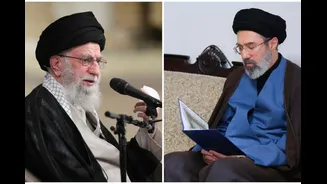
Mojtaba Khamenei, Ayatollah Ali Khamenei’s son, is now the Supreme Leader of Iran. This came days after Ali Khamenei was killed in a joint strike by the United States and Israel in Tehran. Mojtaba has
risen through the ranks not just with his “behind the scenes” political influence, but also financial influence that spreads across the world.
As he succeeds his father as Iran’s Supreme Leader, his personal wealth does not change considerable, but it is what he inherits from Ayatollah Ali Khamenei politically that multiplies that financial power he already had.
What Is Mojtaba Khamenei’s Personal Net Worth?
The exact personal net worth of Mojtaba Khamenei is not publicly known, because most assets linked to him are hidden through proxies, shell companies, or political networks. However, multiple investigations and estimates give a rough range. Some reports estimate his wealth at over $3 billion, with assets spread across banks and investments outside Iran.
Investigations also link him to a large offshore network holding properties and investments in Europe and the Middle East, often registered through intermediaries rather than in his own name. A recent Bloomberg report had exposed how Mojtaba indirectly holds over £100 million worth of properties in London’s upscale ‘Billionaire’s Row’.
According to the report, the assets linked to his network include high-end residential properties in London, including large mansions held through offshore companies, luxury villas in Dubai, located in elite residential districts, commercial real estate and hotels in Europe, including properties in Germany and Spain, and financial assets held through foreign accounts and investment vehicles, often routed through multiple jurisdictions.
However, none of these assets are publicly registered in Mojtaba Khamenei’s own name. Ownership is typically attributed to shell companies, trusts or third-party individuals, making direct legal attribution difficult.
Meanwhile, Mojtaba Khamenei has been under US sanctions since 2019, primarily due to his role within the Supreme Leader’s office and alleged links to Iran’s security apparatus. Sanctions enforcement agencies in the US and UK have increasingly focused on asset tracing and beneficial ownership, leading to property freezes and expanded scrutiny of networks believed to be tied to Iran’s leadership circle.
Inherited From Ayatollah Ali Khamenei
Mojtaba Khamenei’s personal wealth is separate from the enormous economic empire controlled by Iran’s Supreme Leader. His father, Ali Khamenei, was reported to control a network of assets worth about $95 billion through entities such as Execution of Imam Khomeini’s Order (Setad). That wealth does not become Mojtaba’s personal money, but as Supreme Leader he would gain influence over those institutions.
Hence, the big shift is not personal net worth but control over state-linked economic empires. As Iran’s Supreme Leader, Mojtaba now has influence over:
The Supreme Leader’s Hidden Conglomerate: Setad
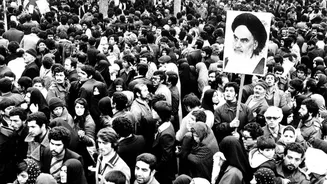
At the centre of the system is Execution of Imam Khomeini’s Order, commonly known as Setad. Originally created in the late 1980s to manage properties abandoned after the Iranian Revolution, Setad evolved into a vast holding company under Ali Khamenei.
Investigations have estimated that Setad’s assets are worth tens of billions of dollars.
It operates through hundreds of subsidiaries in sectors such as banking and finance, telecommunications, pharmaceuticals, real estate, energy and petrochemicals.
Some of its key business arms include large investment companies that quietly hold stakes in Iranian industries.
Control over Setad means influence over one of the most powerful financial engines inside Iran, with funds that can be directed toward political, military, or religious projects.
Iran’s Religious Foundations (Bonyads)
Another pillar of the system is the network of bonyads, or religious charitable foundations.
These foundations were created after the revolution but operate outside government oversight and taxation. One of the biggest is the Mostazafan Foundation.
The foundation reportedly controls hundreds of companies, owns factories, mines, hotels, and farms, operates in sectors ranging from food production to construction. Estimates place its asset value at over $10 billion.
Other foundations linked to the clerical establishment also command large resources and political influence.
As Supreme Leader now, Mojtaba has ultimate oversight and appointment power over these institutions and their leadership.
The Revolutionary Guards’ Business Empire
A huge chunk of Iran’s economy is also linked to the Islamic Revolutionary Guard Corps (IRGC). The IRGC runs massive economic networks through construction firms, energy companies, and infrastructure projects.
One of its most powerful companies is Khatam al-Anbiya Construction Headquarters.
This conglomerate has been involved in oil and gas development, dams and highways, and telecommunications infrastructure.
Its contracts are often worth billions of dollars.
While the IRGC is not formally owned by the Supreme Leader, its leadership answers directly to him. That means the Supreme Leader wields enormous influence over its economic operations.
Clerical Networks and Patronage
The Supreme Leader also controls a vast patronage network that channels money to religious seminaries, clerical institutions, media organisations, charities and political loyalists.
These funds come from multiple sources including foundations, religious donations and state-linked investments. The control of this patronage network helps maintain loyalty among clerics, security forces, and political elites.
Hence, Mojtaba Khamenei’s personal net worth may be in the hundreds of millions, but the economic system he influences as Supreme Leader could be worth tens or even hundreds of billions of dollars.