






Globally, there is a lot of interest around India right now. It is not surprising, given that India appears to be an island of calm amidst the geopolitical upheaval that is going on. When countries in the world
are unsure about their changing position and role in the emerging global order, India has hunkered down and focused on its economy. With current financial year’s GDP growth projected to be above 7% and healthy growth expected to continue, India is poised to become the third largest economy of the world soon. It does not mean that there will not be challenges on the economic front.
I underline this because the current bump in GDP growth rate is a result of a number of initiatives by the Government—increased exemption limit for income tax, lowering of indirect tax under GST 2.0 reforms, successful inflation management which gave RBI a window to reduce policy rates. Thus, the low-hanging fruits for pushing up GDP growth have been plucked, and sustaining real GDP growth above 7 per cent in the coming years will require significant policy initiatives by the Government. PM Modi calling his commitment to express reform becomes vital in this context.
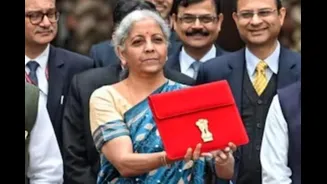
The upcoming annual budget is an important document and will outline India’s roadmap to Viksit Bharat beyond headlines. It is satisfying to note that the policymakers in the Government ecosystem know the challenges and acknowledge them with sincerity. We have already seen promising developments, like the notification of the labour laws, in the last few months. It shows that the Government will continue to work on the challenges that are holding back economic growth.
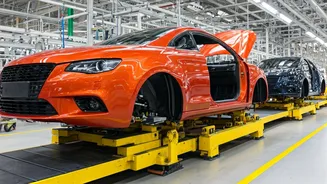
Nothing is more symptomatic of the failure of India’s economic planning than the abysmal share of the secondary sector in our GDP. There just cannot be equitable growth without the manufacturing sector taking off in a big way. Though initiatives have been taken under the rubric of ease of doing business, production-linked incentives, etc., a lot more still needs to be done. Factor market reforms need to extend to land and capital. Land ownership and transfer needs digitisation fillip, and land acquisition and land use change needs to become easier. We have successfully implemented digital public infrastructure, but digitisation of land records is still a work in progress. Policy gaps crippling manufacturing units in the MSME sector will be addressed for it to become globally competitive and take full benefit of several FTAs that we have signed.
Our manufacturing is still capital intensive, in spite of an abundance of labour. Hopefully, implementation of the labour code will correct the balance, but still, uniformity in labour regulations across States is a must. The Central government will ensure that the objective of codification is not defeated by differences in State-level regulations, but States have to come on board. Custom Duty reduction and process simplification are on the cards, and ideas like quality control orders (QCO) are given up. At a time when the government is successfully negotiating free trade agreements (FTA) such as with the European Union, which is the eighth in line, it is equally important to ensure that we position our manufacturing sector to benefit from it.
With the continued government focus on fiscal consolidation and the private sector investment still to pick up in a big way, the government sure will continue spending on capital expenditure. The Economic Survey has pointed out that bringing disinvestment back on the agenda will have a reassuring effect on the economy; its suggestion to amend the definition of Government Company in the company law, bringing the requisite government’s shareholding to 26%, is welcome. It would not only provide resources for high public capex, it will also signal the government’s firm commitment to continued economic reforms and generate an additional source of revenue to the government.
The trickle-down effect of economic growth alone cannot bring equity of income, because of varying educational and health standards in the country, our focus should shift to a bottom-up approach, utilising India’s cultural diversity, particularly handicrafts, cottage industries and in areas like art, music, dance, food, festivals, etc. Skilling and establishing financial connect with artisans in rural areas will bring prosperity to remote villages. Monetisation and creation of value for the practitioners with e-commerce and digital transactions will see our country’s cultural economy as a new catalyst to propelling growth in our country. It is a vital intangible resource that remains largely untapped.
India is witnessing exemplary growth in Southern and Western States, and States in the North are also doing reasonably well. The Government’s extra attention to states and regions in the East—Bihar, Jharkhand, Chhattisgarh, Orissa, and Eastern Uttar Pradesh—will bring balanced geographical growth. A plan for these States in the upcoming budget on the lines of ‘aspirational districts’ could be a good starting point. These states/regions offer cheap land and labour, proximity to the energy source of coal can help them grow as good manufacturing centres.
With commitment and willpower to achieve our stated objectives, the budget will be a Vision document to the goal of Viksit Bharat.
Gopal Krishna Agarwal is the National Spokesperson of BJP for economic affairs. Views expressed in the above piece are personal and solely those of the authors. They do not necessarily reflect News18’s views.