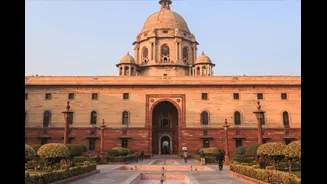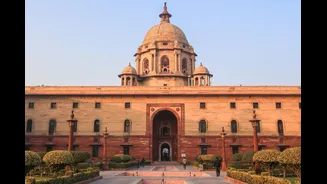




New Delhi’s iconic North and South Block buildings on Raisina Hill are preparing for a remarkable transformation. Once government offices move out, the historic structures will house the Yuge Yugeen Bharat
Museum, an ambitious project designed to take visitors through thousands of years of India’s civilisational history.
The Union Cabinet approved the project on November 11, 2026, at an estimated cost of Rs 3,230 crore. With a proposed built-up area of 1,78,509 square metres, the museum is being planned as the world’s largest in terms of display area.
Following the approval, Prime Minister Narendra Modi shared the vision for the museum on X, summing it up in three words: “Think scale. Think culture.” He described the project as a new chapter for India’s cultural heritage, with immersive experiences and world-class galleries bringing the country’s history to life.
Imagine New Delhi becoming home to the world’s largest museum display area?
Think scale. Think culture.
That is the vision behind the Yuge Yugeen Bharat Museum!
Today’s Cabinet decision will give impetus to transform historic North and South Block buildings into a magnificent celebration of Bharat’s civilisational journey.
From ancient knowledge systems, mathematics and astronomy to architecture, art, languages and spirituality, the museum will bring thousands of years of our heritage to life through immersive experiences and world-class galleries.
Buildings that have been centres of governance will now become a place where millions can discover, experience and celebrate the timeless richness of our civilisation.
A historic new chapter for India’s cultural heritage!
https://t.co/lV7gjJ0iXk*
— Narendra Modi (@narendramodi) November 11, 2026
For visitors, this could mean much more than walking through rows of historical artefacts. The museum aims to offer an expansive journey through India’s knowledge systems, architecture, languages, spirituality, trade, art and cultural traditions.
A Journey Through India’s Civilisational History
Announced by Prime Minister Narendra Modi on May 18, 2023, the Yuge Yugeen Bharat Museum is envisioned as a national museum documenting India’s civilisational journey across different periods. Its scope will extend beyond kings, dynasties and political events. The galleries will explore both tangible and intangible heritage, bringing together historical objects, artistic traditions, cultural practices, languages and knowledge systems.
The proposed themes include Architecture and Cityscapes, Mathematics and Astronomy, Languages and Scripts, Faith and Spirituality, and Bharat Connects: Trade and Ideas.
These galleries are intended to showcase how ideas, beliefs, artistic expressions and innovations developed in India and connected with the wider world. Visitors can expect exhibitions supported by immersive technology and interactive experiences.
The first gallery, titled Adornment, is expected to open in the North Block in the latter half of 2027. It will mark the first phase of the museum becoming accessible to the public, while other galleries will be introduced gradually.
18 Lakh Objects Identified From Museums Across India
One of the biggest attractions of the project will be its proposed collection. Around 18 lakh objects have already been identified for the museum, drawing from institutions and collections across the country. These include the National Museum and other museums under the Ministry of Culture, 52 Archaeological Survey of India (ASI) site museums, state museums and private collections.
The identified objects are currently part of the collection and content analysis being undertaken for the project. Dedicated storage and conservation facilities are also planned to help preserve the collections.
The scale of the collection is expected to give the museum a wide-ranging representation of India’s history, artistic heritage and cultural diversity.
When Will The Museum Open?
The museum will be developed in phases between the financial years 2026-27 and 2030-31. The first gallery is expected to open in the North Block in the latter half of 2027, with the remaining galleries being added in stages.
The project is planned to accommodate around one crore visitors annually, making it a major cultural destination in the national capital. Its expected visitors include domestic and international tourists, students, researchers and scholars.
The museum is also expected to generate revenue through ticket sales, guided tours, food and beverage facilities, retail outlets, events, venue rentals and digital experiences.
What Visitors Can Look Forward To
For anyone planning a trip to Delhi, the Yuge Yugeen Bharat Museum could become a significant addition to the city’s cultural attractions. Its location on Raisina Hill, in the historic North and South Block buildings, will also give visitors an opportunity to experience two important landmarks in a new way.
From ancient mathematical and astronomical knowledge to languages, architecture, spirituality and trade, the museum aims to bring together stories that span thousands of years.
Although the full museum will take shape over several years, the opening of its first gallery in 2027 will offer an early glimpse of the larger vision: turning India’s historic civilisational journey into an immersive experience for visitors.