




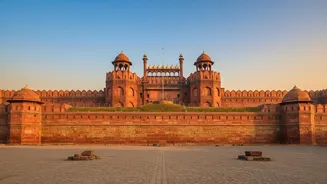
As India celebrates its 80th Independence Day, the story of freedom is being retold across schools, television studios, social media, and family conversations. We remember the midnight speech, the tricolour
rising over Delhi, and the leaders who shaped the new nation. But alongside the story of independence lies another story – of division, displacement, and a border drawn in haste.
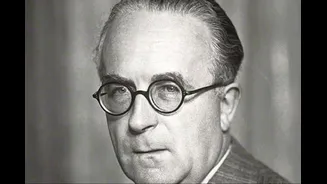
At the centre of that story was a man who had never seen India before 1947. His name was Sir Cyril Radcliffe.
For millions of Indians, Pakistanis, and Bangladeshis, the line he drew changed the course of family histories forever.
A Stranger To The Land He Divided
Cyril John Radcliffe was born in 1899 in Wales and educated at Oxford. He became a successful barrister in London and earned a reputation for being sharp, efficient, and politically neutral. During the Second World War, he worked in important administrative roles for the British government.
What made his appointment extraordinary was not what he knew, but what he did not know. Before July 1947, Radcliffe had never visited India. He was not a historian of the subcontinent, not a geographer, not a scholar of its religions or languages. Yet the British government chose him to chair the boundary commissions that would divide British India into India and Pakistan.
The reasoning in fact was he had no previous connection with India, he would be seen as impartial. In hindsight, that decision remains one of the most debated choices of the Partition process.
Why Did Britain Need Him?
By 1947, the British had decided to leave India quickly. Lord Mountbatten, the last Viceroy, announced that power would be transferred in August that year. The partition of the country had been accepted, but the exact borders of the two new dominions were still unresolved.
Two provinces posed the greatest challenge: Punjab in the west and Bengal in the east. Both had mixed populations of Muslims, Hindus, and Sikhs. Drawing a clean religious border was impossible.
To handle this, Britain created two boundary commissions – one for Punjab and one for Bengal. Each had four judges, half nominated by the Congress and half by the Muslim League. Radcliffe was appointed chairman of both commissions. Whenever the judges disagreed, the final decision would effectively rest with him.
Five Weeks To Decide The Fate Of Millions
Radcliffe arrived in India on 8 July 1947. He was expected to complete his task before the transfer of power in mid-August. That gave him about five weeks.
In those few weeks, he had to examine census figures, district boundaries, canal systems, railway lines, administrative links, and the competing claims of political leaders. He held hearings, studied maps, and listened to arguments from both sides.
Even today, historians struggle to understand how such a decision could have been made under such severe time pressure. Radcliffe himself later suggested that the assignment was nearly impossible.
The official instruction was to identify “contiguous majority areas” of Muslims and non-Muslims while also considering “other factors” such as communications, irrigation, and administrative convenience.
Those “other factors” became crucial.
In Punjab, Sikhs were concentrated in certain areas, but their religious shrines and economic interests were spread across the province. Canal colonies and irrigation networks could not easily be divided. Railway connections linked cities that might end up in different countries.
In Bengal, the future of Calcutta was fiercely contested. The province’s economy functioned as an interconnected unit even though its population was religiously mixed.
The judges on the commissions often split two against two, leaving Radcliffe to make the decisive call.
The Line Nobody Knew
One of the most tragic features of Partition is that India and Pakistan became independent before many people knew where the border would actually run.
Pakistan came into existence on 14 August 1947. India became independent on 15 August 1947. The Radcliffe Award, which revealed the final boundary, was published only on 17 August.
For ordinary people, this meant terrifying uncertainty. Villages did not know which country they belonged to. Families waited for rumours from nearby towns. Trains carrying refugees moved through areas whose final status had not yet been publicly announced.
The secrecy was intended to reduce political pressure on the commission, but it also deepened confusion and panic at a moment when communal violence was already spreading.
The Radcliffe Line was not just a border on a map. It cut through fields, rivers, roads, neighbourhoods, and sometimes even extended families.
The Partition that followed triggered one of the largest migrations in human history. Historians estimate that around 14 million people crossed the new borders. The death toll remains disputed, but estimates range from several hundred thousand to around two million.
Punjab witnessed horrific massacres involving Hindus, Muslims, and Sikhs. Bengal experienced mass displacement on a different but still devastating scale.
For many families, the memory of Partition survives not through official documents but through stories: a grandmother who walked for days, a grandfather who never returned, a house left behind, a train that arrived full of corpses.
The border Radcliffe drew became part of personal memory across generations.
Did Radcliffe Understand The Consequences?
Radcliffe certainly knew that his decisions would affect millions. But it is doubtful that he fully grasped the scale of the human catastrophe that was unfolding around him. He spent only a short time in India and worked largely from official records rather than deep local knowledge.
After completing the award, he left India almost immediately. One detail has added to the mystery surrounding him: he later destroyed many of his papers related to the boundary decision. As a result, historians cannot fully reconstruct why certain districts were allocated the way they were.
80 Years Later
Today, the Radcliffe Line still shapes South Asia. It influences India-Pakistan relations, the Kashmir issue, cross-border migration, security policies, and even water-sharing arrangements.
As India marks 80 years of independence, remembering Sir Cyril Radcliffe is really about recognising the paradox of 1947. A nation was born in celebration, but a subcontinent was divided in sorrow.
On the night India became free, millions were not thinking about constitutional ideals or political speeches. They were thinking about survival, about missing relatives, about whether they would have to leave home before dawn.
And somewhere behind that uncertainty was a man who had never known India, yet drew a line that would continue to shape the lives of its people for generations.