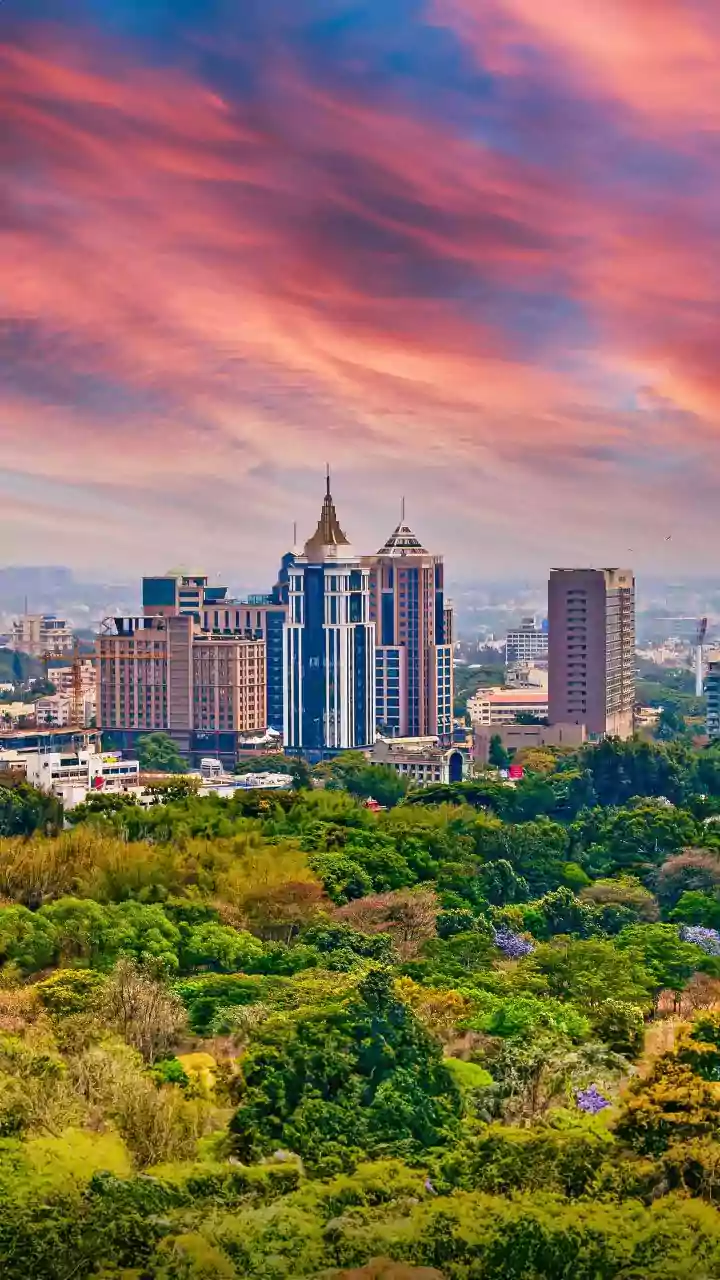

Imagine you are at a hill station, looking forward to a relaxed holiday, when thunder rumbles in the sky. For most, it signals impending rainfall. For Ravi Chandra, though, it triggered sheer panic.
The
34-year-old Bengaluru professional began praying fervently to be “rescued”. His family’s efforts to calm him were unsuccessful, and his holiday was ruined.
For the next two years, the sound of thunder triggered a full-blown panic attack. Chandra experienced nearly 20 to 25 such episodes.
Diagnosed with an anxiety disorder nine years earlier, it was two years ago that his quality of life began deteriorating. Sleeplessness, overthinking, and even physical manifestations such as gastritis became part of his life.
At that point, he sought the help of Yoga. Chandra enrolled as a participant in the Department of Psychological Disorders at a Yoga centre in Bengaluru. After two fortnight-long stays, he felt things begin to change. “I’m now confident I will be able to face the situation if it arises. The treating physicians patiently helped me open up layer by layer, and the techniques helped me relax. I was able to see where the problem lay within me and how to correct it,” he says.
The Director of Arogyadhama at SVYASA, Bengaluru, Dr Nagarathna Raghuram, explains in this interview how the patient was helped.
YOGA AND GENERALISED ANXIETY DISORDER
According to her, Yoga therapy for anxiety is not about prescribing one or two Asanas. That would be an allopathic way of thinking, whereas Yoga is holistic.
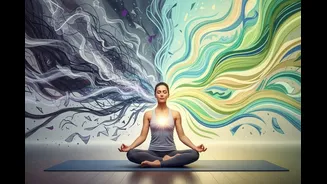
“Mental anxiety is essentially an uncontrolled, spinning speed of thoughts,” she says. “Yoga has a hundred different techniques to slow down this speed.
One hour of daily Yoga practice—one set of physical Yoga, one set of breathing Yoga, meditation, and relaxation—is recommended. Crucially, patients must develop an understanding of the concepts of health, disease, and lifestyle.
Yogasana or Physical Yoga: Among physical Yoga practices, she suggests ‘Dynamic Asanas’, which help shift excess energy from the mind level to the body level. Surya Namaskar, which involves all parts of the body, is the best.
Pranayama or Breathing Yoga: Pranayama helps even more than Asana, and Dr Nagarathna recommends a 10-minute module repeated three times a day:
Kapalabhati – Three rounds of 40-50 strokes of exhalations per minute
Nadi Shuddhi – 10 rounds
Bhramari – 10 rounds
Meditation: “A key meditation technique used is MSRT (Mind Sound Resonance Technique) where the mind is gently led toward silence through stages of loud chanting, subtle chanting and mental resonance,” suggests Dr Nagarathna.
Diet and Integrative Healing: “If anxiety is severe, the mind may not be manageable through Yoga alone,” says Dr Nagarathna.
Allopathic anti-anxiety medication may be used temporarily as an immediate remedy. Ayurveda works at a subtler level, where imbalances caused by lifestyle and negative thought patterns are addressed.
Finally, a naturopathy-based diet—raw vegetables, simple, wholesome vegetarian meals with emphasis on green leafy vegetables—is ideal, with two to three meals a day. Occasional fasting helps too.
YOGIC COUNSELLING – THE KEY INGREDIENT IN YOGA THERAPY
“Many participants report they’ve been practising physical yoga, breathing and meditation, yet continue to struggle with anxiety, says Dr Nagarathna. “They’ve missed the key component—Yogic Counselling, which is distinct from modern psychological counselling,” she says. Yogic counselling is based on the Pancha Kosha concept—the five sheaths of existence.
In this model, there are two functional aspects of the mind: a lower mind that reacts impulsively (Manomaya Kosha), and a higher mind (Vijnanamaya Kosha) that holds the capacity to transform responses. There is further, an Anandamaya Kosha—the state of silence, creativity, inner freedom, and bliss.
“Anxiety is understood as excessive activity arising in the Manomaya Kosha from emotions that get triggered in a difficult situation. The resultant uncontrolled mental speed not only drains vital energy, but it also prevents the patient from accessing their Vijnanamaya Kosha—the inbuilt capacity that decides whether to react, not react, or suppress.”
“In Yogic counselling, we listen to patients carefully and help them understand that the problem is not outside; it is the mental state from which they are reacting—the uncontrolled speed of thoughts.”
“Patients learn through several techniques—physical Yoga, breathing Yoga, intellectual Yoga and relaxation practices—to observe the speed of their thoughts and consciously slow them down. The lengthening of exhalation during Bhramari and other Pranayamas is especially helpful,” she explains.
“This makes the person confident that they can use them in the moment of anxiety. Unlike Psychosis, Anxiety Neurosis is manageable and even curable.”
How Yogic Counselling Differs From Modern Counselling
Modern counselling focuses on changing response patterns and converting negative emotions into positive ones. This involves more work for the mind.
“In Yogic counselling, we don’t stop at the mind; we help take them beyond to the state of silence. We have a hundred activities to help them do this.” says Dr Nagarathna.
“When the mind is racing, there can be hundreds of thoughts every second. The mind at Manomaya kosha is packed up so much that it prevents the Vijnanamaya Kosha to take over. We make patients understand that they must make space in their Manomaya Kosha, in order to use inbuilt knowledge from the Vijnanamaya Kosha.”
Regular Practice Equals Certain Cure
For Chandra, this is how he gained confidence to face his fears.
“Patients feel good while they are here, but they don’t continue their practice at home. If they were regular with their three-times-a-day practice and, additionally, spent time in intellectual yoga—reading words of wisdom, scriptures, as well as understanding adhija vyadhi (ailments that originate in the mind due to chronic stress and unhealthy patterns of thinking), etc—anxiety can be effectively managed and, in many cases, reversed,” says Dr Nagarathna.
The author is a journalist, cancer survivor and certified yoga teacher. She can be reached at swatikamal@gmail.com.