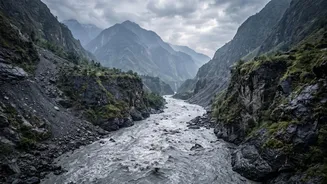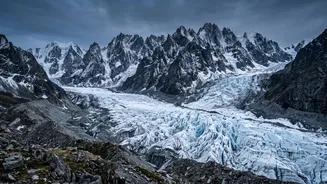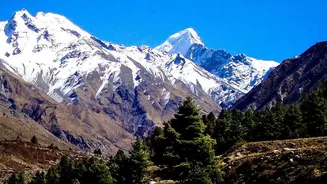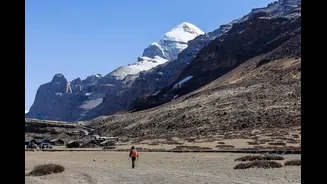






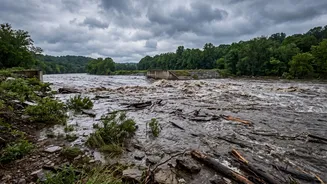


The images emerging from the Nepal-Tibet border this week have cast a different light on a journey that, for generations, has meant something far beyond travel. Among those caught up in the devastating
flash floods and landslides are Indian nationals travelling to or returning from the Kailash Mansarovar pilgrimage. Authorities have reported hundreds of Indians missing or unaccounted for, while several pilgrims remain stranded on the Tibetan side after the disaster disrupted roads and border crossings.
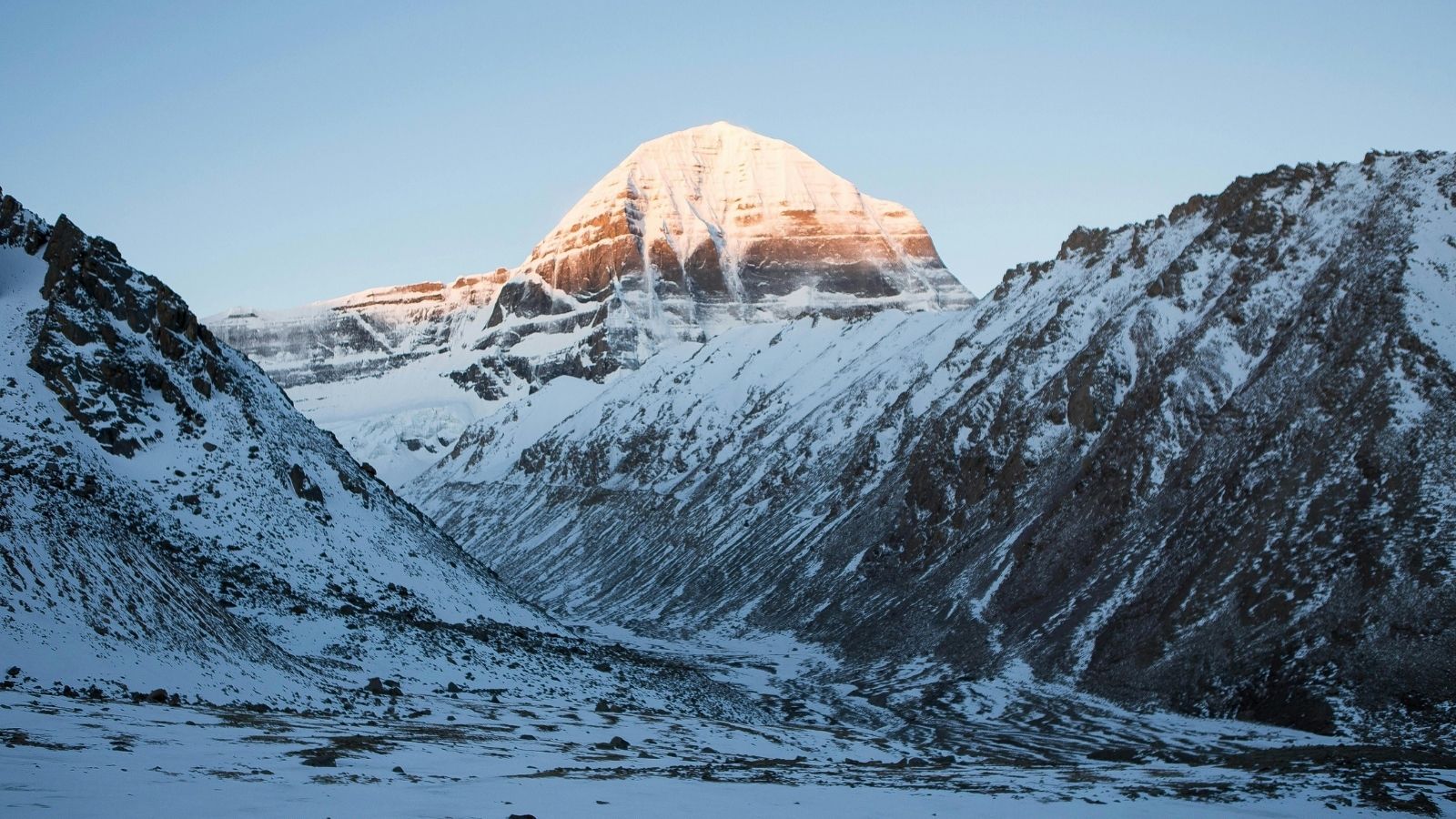
The tragedy has brought attention to one of the world’s most arduous pilgrimages, a journey across some of the highest and most remote landscapes in the Himalayas to Mount Kailash, a mountain that has been revered across multiple faiths for centuries.
Why Is Mount Kailash Sacred?
For Hindus, Mount Kailash is traditionally regarded as the abode of Lord Shiva and Parvati. It is associated with Shiva’s transcendence and meditation as well, and for Hindus, a journey here means moksha (salvation). Beliefs also say that this mountain is where Ravan sang the Shiva Tandav Strotam to please Lord Shiva. Beyond India’s borders, Kailash Parvat is also sacred in Buddhism, Jainism and the Tibetan Bon tradition. In Buddhist traditions, Kailash is associated with Mount Meru, the cosmic mountain at the centre of the universe. For Jains, the region is associated with Rishabhadeva, the first Tirthankara, and his liberation. The Bon tradition, the indigenous spiritual tradition of Tibet that predates the arrival of Buddhism there, also regards the mountain and surrounding landscape as sacred.
Mansarovar Lake
Mount Kailash and Lake Mansarovar are often spoken of together, and for good reason. The freshwater lake, known in Sanskrit as Manas-sarovar, is traditionally understood as being associated with manas, or mind, and sarovar, meaning lake. In Hindu belief, it is connected to Brahma and is regarded as a sacred body of water. For generations of pilgrims, bathing in or drinking its water has carried profound religious significance.
The lake also occupies an extraordinary geographical setting. At roughly 4,557 metres above sea level, it is among the world’s highest freshwater lakes. The wider Kailash region is associated with the headwaters of several major Asian river systems, including the Indus, Sutlej, Brahmaputra and Karnali.
This combination of geography and mythology has helped turn Mansarovar into a part of the sacred geography of the region.
The Road To Kailash Mansarovar
The Kailash Mansarovar Yatra traditionally involves travelling through Tibet to reach the region around Mount Kailash and Lake Mansarovar. One of the routes from Nepal passes through the Rasuwa–Gyirong corridor, a historic Himalayan passage between Nepal and Tibet that has also become an important access point for pilgrims and trekkers. The recent floods devastated parts of this corridor, washing away roads, bridges and other infrastructure and cutting communications in the region.
For those making the pilgrimage, the journey does not end at the border. After entering Tibet, pilgrims travel towards places such as Saga and eventually Darchen, the settlement that serves as the starting point for the traditional circumambulation of Mount Kailash. The journey involves long stretches at extreme altitude, acclimatisation and difficult terrain. And then comes the kora.
The 52-km Walk Around Kailash
The parikrama, or kora, of Mount Kailash is roughly 52 km in total, with around 10 km covered by vehicle depending on the route and arrangements. The outer trekking section is approximately 42 km. Typically completed over three days, the circuit begins at Darchen and proceeds clockwise for Hindu and Tibetan Buddhist pilgrims. The first stretch leads towards Dirapuk, from where pilgrims get some of the most dramatic views of the northern face of Mount Kailash.
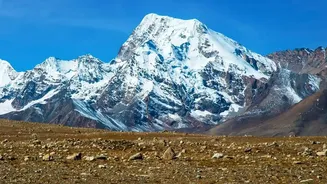
The second day is the hardest. The route crosses the Dolma La Pass at approximately 5,630 metres. The pass can be snow-covered, windy and physically punishing, and the altitude makes even a seemingly ordinary walk demanding. From there, the trail descends towards Zuthulphuk. The final stretch brings pilgrims back towards Darchen, completing the circle.
This makes Kailash unusual even among the world’s great pilgrimage sites. Its significance crosses religious boundaries. Different traditions have different stories about the mountain, and the climb is arduous. But the reverence for the landscape itself is remarkably persistent.