


The White House has said no conclusions should be drawn from media reports about possible talks between the United States and Iran, stressing that diplomatic efforts remain sensitive and subject to change,
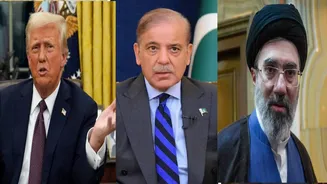
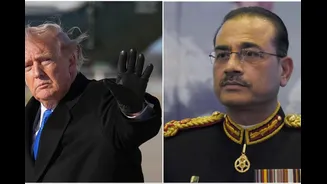
even as it confirmed talks between US President Donald Trump and Pakistan’s army chief Asim Munir.
Responding to questions regarding reports that senior US officials could meet Iranian representatives in Islamabad, White House Press Secretary Karoline Leavitt said speculation about meetings should not be treated as confirmed.
“These are sensitive diplomatic discussions, and the US will not negotiate through the press. This is a fluid situation, and speculation about meetings should not be deemed as final until they are formally announced by the White House,” Leavitt said.
REPORTS OF POSSIBLE TALKS IN ISLAMABAD
According to Reuters, a Pakistani official and a second source said direct talks aimed at ending the war could be held in Islamabad as early as this week.
The report said US Vice President JD Vance, Special Presidential Envoy for Peace Missions Steve Witkoff and businessman Jared Kushner were expected to meet Iranian officials in Pakistan’s capital following the call between Trump and Munir.
A report with The Times of Israel also suggested that mediating countries were trying to convene a meeting between US and Iranian officials in Islamabad, possibly as soon as later this week.
The Financial Times reported that Pakistan is positioning itself as a lead mediator seeking to broker an end to the war between the United States, Israel and Iran, drawing on ties between its military leadership and Tehran as well as its relationship with Trump.
According to the report, Munir spoke with Trump on Sunday, citing two people briefed on the call.
Pakistan has pitched Islamabad as a potential venue for a summit involving senior Trump administration officials and Iranian representatives as part of its diplomatic push, the report said.
Iranian media also reported that President Masoud Pezeshkian and Pakistan’s Prime Minister Shehbaz Sharif discussed the war’s impact on regional and global security.
Pezeshkian was quoted by Reuters as saying that Iran remained committed “to preserving stability and security and countering foreign interference in regional affairs” and was seeking to strengthen cooperation with regional countries.
SHEHBAZ SHARIF SPEAKS WITH IRANIAN PRESIDENT
Pakistani Prime Minister Shehbaz Sharif said he had spoken with Pezeshkian and emphasised Pakistan’s support for efforts to reduce tensions.
Sharif said the leaders discussed “the grave situation in the Gulf region and agreed on the urgent need for de-escalation, dialogue and diplomacy”.
In a post on X, Sharif said Pakistan was committed to playing “a constructive role in advancing peace in the region.”
Iranian foreign ministry spokesman Esmaeil Baqaei said messages had been received from “some friendly countries indicating a US request for negotiations to end the war.”
Pakistan’s Deputy Prime Minister and Foreign Minister Ishaq Dar also spoke with Iranian Foreign Minister Abbas Aragchi to discuss recent developments, Pakistan’s foreign ministry said.
“They emphasised the importance of dialogue and diplomacy to promote peace, security, and stability in the region and beyond,” the foreign ministry said.
DIPLOMATIC MOVES AMID ONGOING CONFLICT
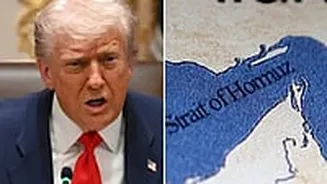
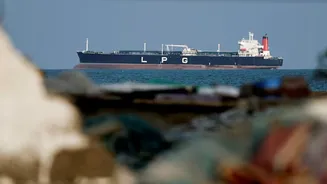
Iran had responded to Trump’s threats to strike its power plants by warning it could target infrastructure belonging to US allies in the Middle East, raising the prospect of prolonged disruption to global energy supplies.
More than 2,000 people have been killed in the war launched on February 28, according to Reuters.
The diplomatic efforts come amid concerns about regional stability, with multiple countries, including Pakistan, Egypt and Qatar, seen as potential intermediaries.
ALSO READ | Iran Says It Received US Message Via Mediators As Trump Delays Strikes After ‘Productive Talks’