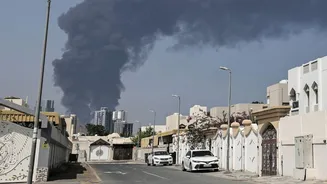






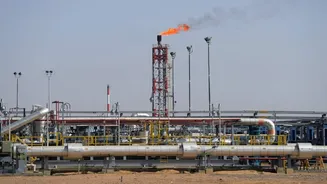
The West Asia crisis triggered by the Iran-US war has raised concerns about the fragility and challenges of energy supply security. India is facing one of its worst energy supply disruptions with the supply crunch,
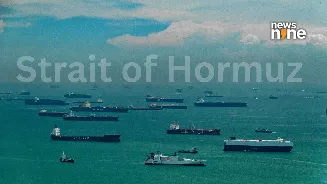
when the Iran-US war has led to the closure of the Strait of Hormuz, hindering the flow of tankers of crude oil and natural gas from Gulf nations to other countries.
India is a big importer of crude oil, as it completes almost 90 per cent of its requirement through imports. With the elevated crude oil prices, which are hovering at $105 per barrel, its import bill has shot up considerably, leading to an outflow of forex at an accelerating pace.
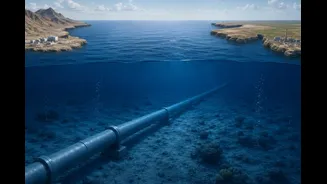
Amid this precarious situation, India is reviving its decade-old plan for the proposed Middle East-India Deep-water pipeline (MEIDP). If the plan becomes a reality, then gas and oil will be supplied through pipelines, and the dependence on tankers. The dependence on oil and gas tankers will be reduced once it becomes a reality.
What Is the India-Oman Subsea Gas Pipeline?
The proposed plan is a 2,000 kilometer undersea pipeline infrastructure, connecting Oman’s coast directly to India’s west coast state Gujarat. It is expected to cost about Rs 40,000 crore, equivalent to $4.7 to $4.8 billion.
It is projected to take five to seven years, with state-run PSUs GAIL, Engineers India and Indian Oil Corporation preparing the report on a detailed feasibility report.
The route includes traversing the Arabian Sea via Oman and the UAE deliberately bypassing geopolitically sensitive maritime corridors.
At its maximum operational depth, the project would reach nearly 3,450 metres below sea level, making it one of the world’s most technically challenging undersea pipeline ventures ever undertaken.
As part of preliminary technical validation, SAGE is said to have laid nearly 3,000 metres of test pipeline along the proposed route at an estimated cost of Rs 25 crore to study seabed conditions and verify engineering feasibility.
How Will It Be Helpful At This Time
India’s import of oil and natural gas from Gulf nations has come to a grinding halt. As the Strait of Hormuz is closed amid the Iran-US war, India-bound tankers are stuck near it and waiting for things to cool down before they begin their journey.
The proposed pipeline is expected to offer India access to natural gas from Oman, the UAE, Saudi Arabia, Iran, Turkmenistan and Qatar.
This changes the MEIDP from a simple gas supply project into a larger energy corridor that can transport gas from multiple suppliers through one common pipeline infrastructure, supporting long-term supply agreements.
Once completed, the MEIDP will supply 31 mmscmd of steady and competitively priced gas directly to Gujarat within the planned construction timeline.
It will somehow free India from these geopolitical challenges by opening another route of supply of natural gas. It is important as India doesn’t have a strategic natural gas reserve like oil.