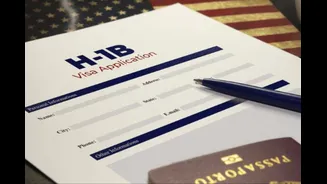

The US Embassy in India has issued an advisory for H-1B visa applicants, after many of the existing appointments were rescheduled or postponed in the wake of the US State Department’s new social media
vetting policy.
The Embassy warned that arriving on previously scheduled appointment dates will result in denial of entry.
In an X post, the Embassy stated, “Attention visa applicants – If you have received an email advising that your visa appointment has been rescheduled, Mission India looks forward to assisting you on your new appointment date.”
“Arriving on your previously scheduled appointment date will result in your being denied admittance to the Embassy or Consulate,” it wrote.
ATTENTION VISA APPLICANTS – If you have received an email advising that your visa appointment has been rescheduled, Mission India looks forward to assisting you on your new appointment date. Arriving on your previously scheduled appointment date will result in your being denied…
— U.S. Embassy India (@USAndIndia) December 9, 2025
The announcement comes against the backdrop of a sharp increase in visa revocations by the US State Department this year.
In a separate X post, the Department of State mentioned, “85,000 visa revocations since January. President Trump and Secretary Rubio adhere to one simple mandate, and they won’t stop anytime soon.”
85,000 visa revocations since January.
President Trump and Secretary Rubio adhere to one simple mandate, and they won’t stop anytime soon⤵️ pic.twitter.com/fbNYw9wj71
— Department of State (@StateDept) December 9, 2025
The posts underline the Donald Trump administration’s intensified focus on immigration enforcement, visa compliance, and national security.
According to a senior State Department official, more than 8,000 of the revoked visas affected students.
Key offences cited include driving under the influence (DUI), theft, and assault, which together accounted for nearly half of the cancellations in 2025.
While the official did not detail the remaining cases, past explanations have included visa expirations, support for terrorism, and participation in politically sensitive activities.
For instance, in October, visas were revoked for individuals accused of having “celebrated” the killing of conservative activist Charlie Kirk, and international students involved in protests related to the Gaza conflict have also come under heightened scrutiny.
ENHANCED VETTING FOR H-1B VISA APPLICANTS
On December 3, the Donald Trump administration announced increased vetting of applicants for H-1B visas for highly skilled workers, with an internal State Department memo saying that anyone involved in “censorship” of free speech be considered for rejection.
H-1B visas, which allow US employers to hire foreign workers in speciality fields, are crucial for US tech companies, which recruit heavily from countries including India and China. Many of those companies’ leaders threw their support behind Trump in the last presidential election.
The cable, sent to all US missions on December 2, orders US consular officers to review resumes or LinkedIn profiles of H-1B applicants, and family members who would be travelling with them, to see if they have worked in areas that include activities such as misinformation, disinformation, content moderation, fact-checking, compliance and online safety, among others.
The cable said all visa applicants were subject to this policy, but sought a heightened review for the H-1B applicants, given they frequently worked in the technology sector, including in social media or financial services companies involved in the suppression of protected expression.”
The new vetting requirements apply to both new and repeat applicants.
The Trump administration has made free speech, particularly what it sees as the stifling of conservative voices online, a focus of its foreign policy.
Officials have repeatedly weighed in on European politics to denounce what they say is the suppression of right-wing politicians, including in Romania, Germany and France, accusing European authorities of censoring views like criticism of immigration in the name of countering disinformation.
In May, Rubio threatened visa bans for people who censor speech by Americans, including on social media, and suggested the policy could target foreign officials regulating US tech companies.
The Trump administration has already significantly tightened its vetting of applicants for student visas, ordering US consular officers to screen for any social media posts that may be hostile towards the United States.
As part of his wide-ranging crackdown on immigration, Trump in September imposed new fees on H-1B visas.
Trump and his Republican allies have repeatedly accused the administration of Democratic former President Joe Biden of encouraging suppression of free speech on online platforms, claims that have centred on efforts to stem false claims about vaccines and elections.
ALSO READ | H-1B Approvals For Indian IT Firms Crash To Lowest In 10 Years