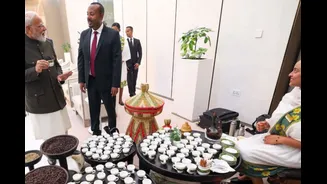








Typically, VVIP visits involve red carpets, formal ceremonies, and a guard of honour. But Ethiopian Prime Minister Abiy Ahmed Ali drew global attention by choosing a different approach for PM Narendra
Modi . Instead of formalities, he organised a traditional Ethiopian coffee ceremony, the most sacred ritual in their culture, right at the airport. To add a personal touch, he also drove PM Modi to his hotel.
But what exactly is this coffee ceremony? Why is it considered a ‘celebration of life’ in Ethiopia? And how can a cup of coffee symbolically strengthen ties between two nations?
Coffee: More Than Just A Beverage
While coffee is loved worldwide, for Ethiopians, it is far more than a drink; it is an identity. Ethiopia is recognised as the birthplace of coffee, and the beverage is woven into its folklore and history as profoundly as the Ganges is in India. There is a local saying: “Buna dabo naw”, meaning ‘coffee is our bread’. This illustrates how central coffee is to everyday life.
In Ethiopia, coffee is not a solitary affair; it fosters community, honours elders, and elevates guests to a revered status.
A Magical Ritual: The Ethiopian Coffee Ceremony
The Ethiopian coffee ceremony is a deliberate, unhurried tradition, standing in contrast to today’s instant coffee culture. The ritual lasts one to two hours and is as much a performance as a beverage preparation.
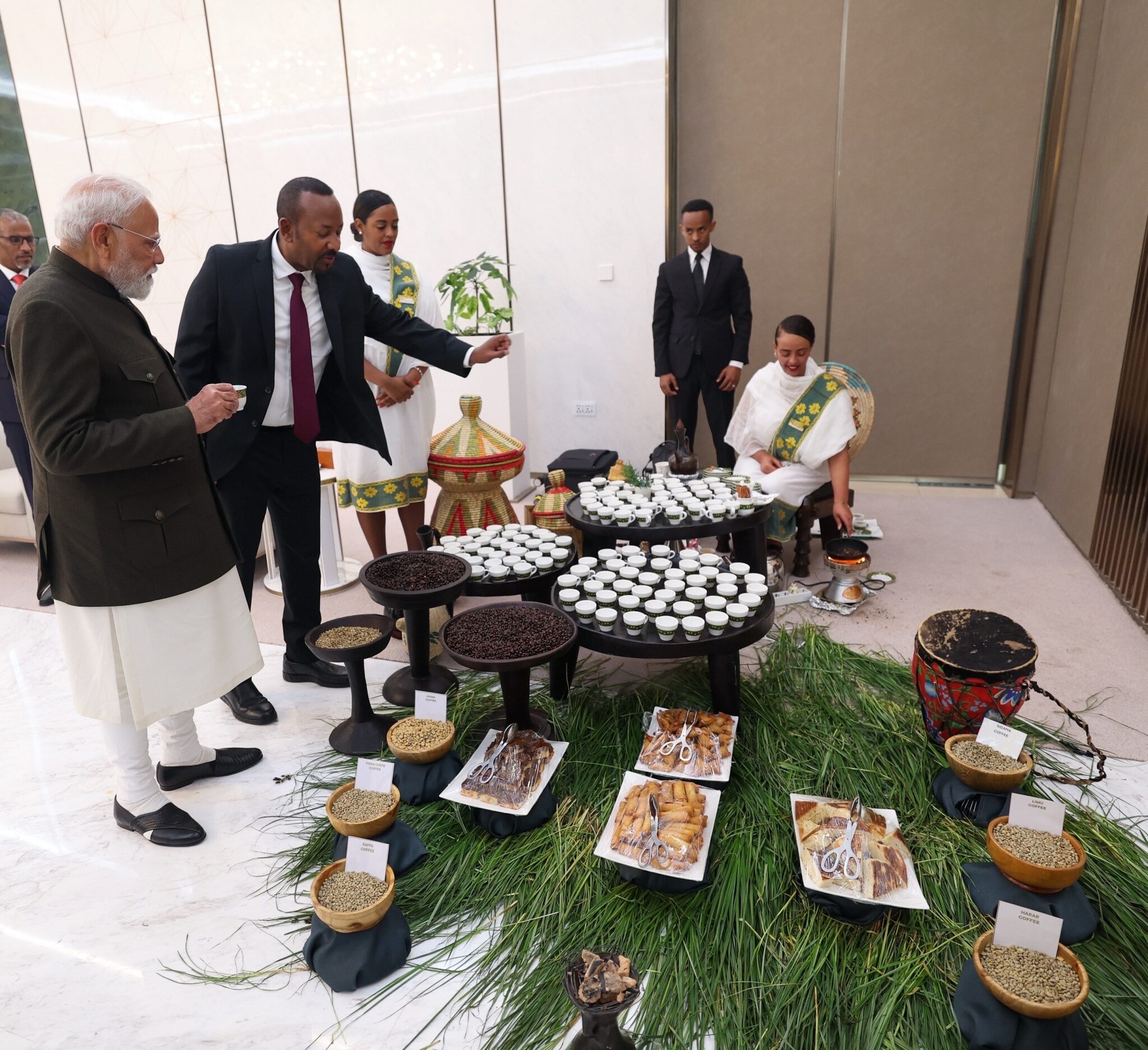
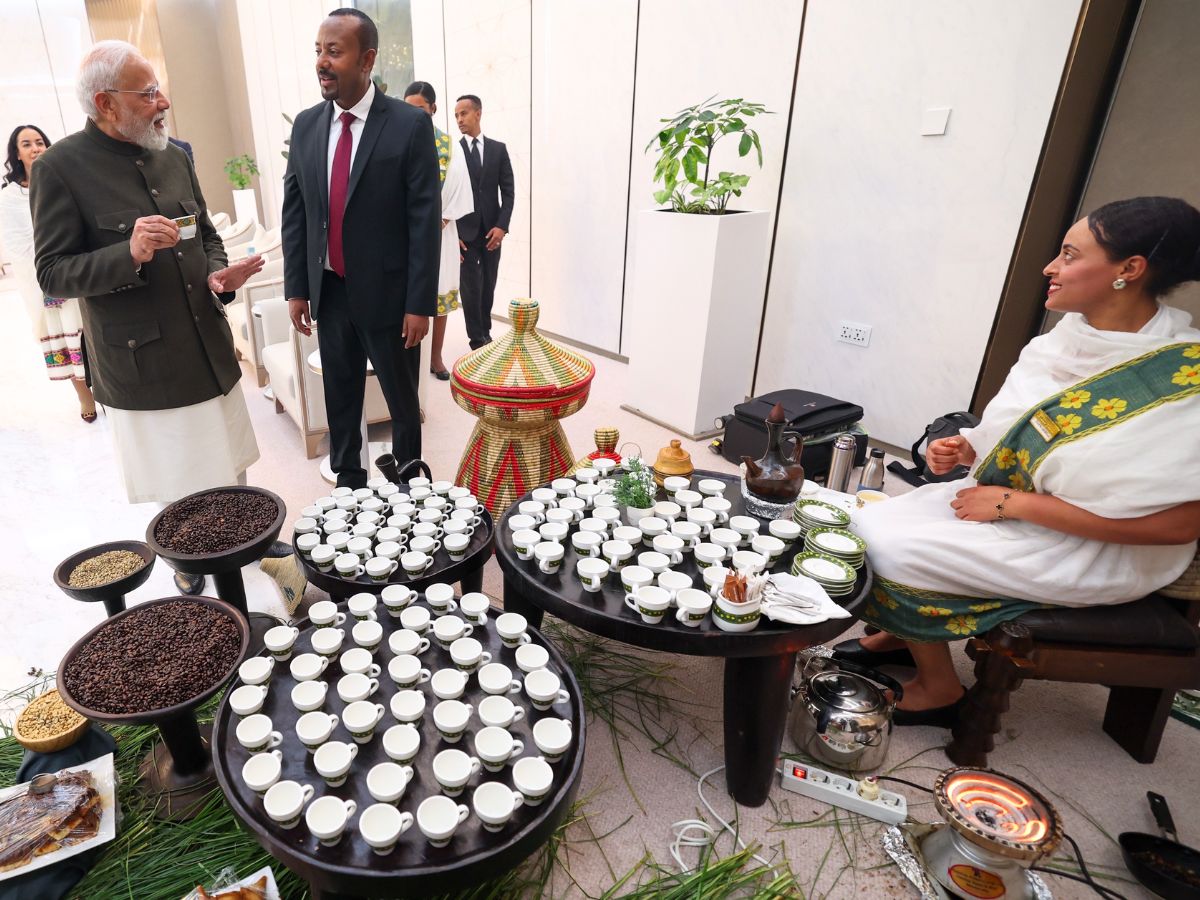
It is typically conducted by women wearing traditional white attire known as the Habesha Kemis.
The ceremony has three main stages, engaging all five senses.
- Roasting for an Intoxicating Aroma: The ceremony begins with green (raw) coffee beans, which are washed and roasted over a small charcoal fire in front of guests. As the beans darken from green to brown, an intoxicating aroma fills the air. The host often moves the roasting pan closer so guests can fully inhale the fragrance, a step known as ‘smoke tasting’. This initial stage is crucial in welcoming visitors.
- Grinding and Brewing: Once roasted, the beans are manually pounded using a traditional wooden mortar and pestle, called a Zenezena. The rhythmic pounding adds a musical dimension to the ceremony. The ground coffee is then poured into a Jebena, a clay pitcher with a round bottom and long neck, along with water, and slowly brewed over a coal fire. A filter made of horsehair or special grass is placed over the spout to strain the coffee.
- The Serving Technique: The brewed coffee is served in small, handleless ceramic cups called cini. The host pours the coffee from a height of about a foot, forming a smooth stream without spilling a drop. Accompaniments such as roasted barley, peanuts, or popcorn are often served alongside.
The Rule Of Three Cups: Abol, Tona, and Baraka
Ethiopian tradition dictates that guests drink three cups of coffee, each with a unique name and significance:
- Abol: The first cup, strongest and thickest; drinking it is mandatory.
- Tona: The second cup, made by adding water to the remaining coffee and boiling again; consumed to encourage discussion.
- Baraka: The third and final cup, meaning ‘blessing’; drinking it is believed to bring blessings from elders and God.
From Legend To Global Brew
Ethiopia’s claim as the birthplace of coffee comes with a famous legend. In the 9th century, a shepherd named Kaldi noticed his goats becoming energetic after eating red berries from a bush. Curious, he tried the berries himself and felt revitalised. He brought the beans to a monastery, where monks initially rejected them as the ‘devil’s fruit’.
Roasting revealed a captivating aroma, and boiling the beans in water eventually led to the world’s first coffee, Arabica, originating from Ethiopia’s forests.
Diplomacy In A Cup: More Than Culture
The ceremony for PM Modi was not just a cultural display; it carried profound diplomatic symbolism.
- Solidarity of the Global South: Both India and Ethiopia are prominent voices of developing nations. By personally driving and hosting PM Modi, Abiy Ahmed signalled that India is a true friend, not merely a trading partner.
- Personal Touch: Informal diplomacy strengthens personal chemistry between leaders. PM Modi has often emphasised its importance, and this gesture reflects mutual respect.
- Respect for Heritage: In a tweet, PM Modi acknowledged Ethiopia’s rich heritage. By embracing local customs, India demonstrates respect for other cultures as much as its own.
At the Science Museum and Friendship Park in Addis Ababa, the air was filled not only with the scent of flowers but also with the aroma of coffee, a centuries-old symbol of connection and friendship.