





In West Bengal, the road to power in 2026 may well run through a set of constituencies where margins were wafer-thin in the last election. These seats, spread across districts in south and north Bengal, are
expected to emerge as decisive battlegrounds once again.
In the 2021 Assembly elections, 57 constituencies were decided by margins of 8,000 votes or fewer, making them highly competitive. Of these, the Trinamool Congress (TMC) won 29 seats, while the Bharatiya Janata Party (BJP) secured 28, underlining just how evenly matched the contest was in these pockets.
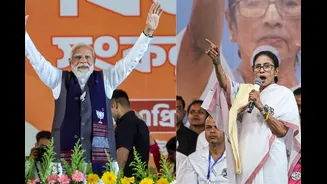
A closer look shows how tight these contests were. Nandigram, one of the most high-profile seats, saw Leader of Opposition Suvendu Adhikari defeat Chief Minister Mamata Banerjee by 1,956 votes. In Kulti, the BJP won by just 679 votes, while Ghatal was decided by 966 votes. In Dantan, the TMC scraped through by 623 votes, and in Bankura, the BJP’s margin stood at 1,468 votes.
One of the starkest examples of volatility came from Dinhata in Cooch Behar district, where BJP leader Nisith Pramanik won by just 57 votes. However, a bypoll later that year saw a dramatic reversal, with the TMC winning by a margin of over 1.6 lakh votes, highlighting how quickly electoral fortunes can shift in these constituencies.
According to an analysis by The Indian Express, these 57 seats are now at the centre of the electoral contest, with even small swings in vote share expected to have an outsized impact. The report notes that 19 of these constituencies were decided by fewer than 3,000 votes, making them especially sensitive to local shifts.
Geographically, the bulk of these seats are concentrated in south Bengal, which accounts for 47 constituencies, while north Bengal has 10. Within this, a significant cluster lies in the western belt — including Purba Medinipur, Paschim Medinipur, Bankura, Purulia and Paschim Bardhaman — regions that witnessed some of the fiercest contests in 2021.
District-level data reflects the intensity. Bankura and Paschim Bardhaman each have six such closely fought seats, while Purba Medinipur, Paschim Medinipur and Purulia account for five each. These areas combine rural, industrial and tribal constituencies, making them electorally diverse and highly competitive.
A separate assessment by India Today identifies parts of this western belt — including Purulia, Bankura, Jhargram and West Medinipur — as a critical testing ground, particularly for the BJP. The region, often described as a “gateway” for the party’s expansion in Bengal, pits the TMC’s welfare-driven campaigns against the BJP’s outreach centred on identity and organisational gains made since 2019.
Beyond the western districts, another key cluster lies in the industrial and peri-urban belt, covering constituencies such as Medinipur, Hooghly, Howrah, Barrackpore, Ghatal and Durgapur. These areas, combining manufacturing hubs with agricultural zones, are seen as particularly sensitive to economic issues and employment concerns.
The border districts — especially Nadia and North 24 Parganas, including constituencies like Krishnanagar, Bongaon and Basirhat — form another crucial battleground. Here, identity politics, particularly around the Matua community and citizenship issues, is expected to play a central role.
What makes these seats even more unpredictable this time is the possibility of a more fragmented contest. With the Congress likely to go solo, the CPI(M) exploring alliances, and smaller players entering the fray, vote splits could alter outcomes in constituencies where margins were already narrow.
Both the TMC and the BJP have acknowledged the stakes. Party leaders from both sides have indicated that even minor shifts — a few thousand votes either way — could determine not just individual seats but the broader electoral outcome.