





The United Arab Emirates secretly carried out military strikes on Iran during the recent Middle East conflict, according to a report by the Wall Street Journal, which cited people familiar with the matter.
The report claimed the UAE emerged as an “active combatant” in the war, despite Gulf states publicly maintaining that their territory and airspace would not be used for attacks on Iran.
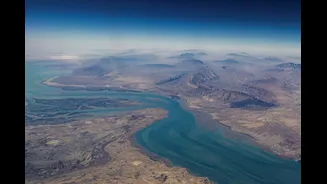
According to the report, the strikes included an attack on a refinery on Iran’s Lavan Island in the Persian Gulf in early April, around the same time US President Donald Trump announced a ceasefire after a five-week air campaign.
The alleged strike reportedly triggered a major fire and knocked much of the refinery’s capacity offline for months.
Iran had at the time described the incident as an “enemy attack” and responded with missile and drone strikes against the UAE and Kuwait, the report said.
The UAE Ministry of Foreign Affairs declined to comment directly on the reported strikes but referred to earlier statements asserting the country’s right to respond, “including militarily,” to hostile acts.
The White House said Trump “has every option at his disposal” and that the United States had “maximum leverage over the Iranian regime,” according to the report.
UAE SAID TO HAVE SHIFTED STRATEGIC POSTURE AFTER IRANIAN ATTACKS
The report said Iran targeted the UAE with more than 2,800 missiles and drones during the conflict, more than any other country, including Israel.
The attacks reportedly disrupted air traffic, tourism and the property market in the Gulf nation, while also triggering furloughs and layoffs.
The report said the attacks prompted a “fundamental shift” in the UAE’s strategic outlook, with Gulf officials describing Iran as a “rogue actor” threatening the Emirates’ economic model and reputation for stability.
According to the report, the UAE has since become “the most openly confrontational country in the Gulf” while maintaining close military coordination with the United States.
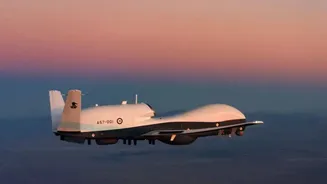
The report said speculation over the UAE’s involvement intensified after footage emerged in mid-March showing a fighter jet over Iran that analysts believed did not belong to either Israel or the United States.
Open-source researchers later pointed to images allegedly showing French Mirage fighter jets and Chinese Wing Loong drones, both used by the UAE, operating in Iranian airspace.
FRESH DRONE INCIDENTS IN UAE
On May 10, the UAE Defence Ministry said the country’s air defences intercepted two drones coming from Iran, marking the latest in renewed attacks on the Gulf state.
Reuters reported that the UAE had experienced multiple attacks from Iran in recent days after nearly four weeks of relative calm following the US-announced ceasefire.
Reuters said Iran denied conducting operations against the UAE in recent days but warned of a “crushing response” if attacks against it were launched from Emirati territory.
The renewed tensions had earlier prompted the UAE to temporarily switch schools to remote learning, although authorities later announced that in-person classes would resume from Monday.
UAE MOVES TO DOCUMENT ATTACKS, SEEK REPARATIONS
Meanwhile, the UAE, on May 7, announced the formation of a national committee tasked with documenting Iranian attacks during the war to support future legal action.
State media said the committee would document “all incidents of attacks and military actions associated with the Iranian aggression.”
AFP reported that landmarks, including Dubai’s Palm development, airports and energy infrastructure, were among the locations struck during Iran’s retaliatory campaign.
The UAE, according to the report, was targeted with more than 2,800 drones and missiles during the conflict.
AFP further reported that the UAE had already demanded reparations from Iran last month, with the foreign ministry stating that the attacks “necessitate a firm position, including ensuring that Iran is held accountable and fully liable for damages and reparations.”