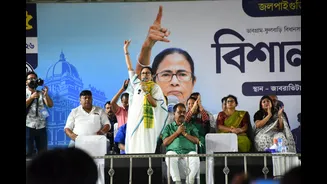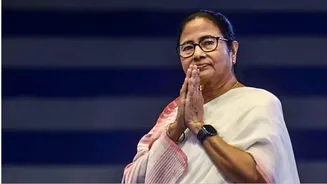







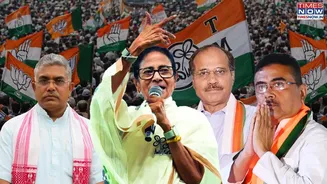
West Bengal Chief Minister Mamata Banerjee faces a defining political test as the state heads into a crucial election cycle, with the outcome likely to shape both her long-term leadership of the Trinamool
Congress (TMC) and the broader balance of power between regional and national parties.
After more than a decade in office, Banerjee is seeking to retain political dominance amid rising anti-incumbency sentiment, intensified opposition mobilisation, and debates around governance, identity, and economic performance.
The contest is widely seen as a high-stakes battle not only for control of the 294-seat assembly but also for the political narrative around federalism, welfare politics, and the Bharatiya Janata Party’s (BJP) expansion in eastern India.
ANTI-INCUMBENCY VS WELFARE POLITICS
Banerjee’s biggest challenge stems from the pressures of anti-incumbency after 15 years in power, as voters assess the performance of her government on employment, infrastructure, governance and public services.
Her party has consistently highlighted welfare schemes such as financial assistance programmes for women and social protection initiatives as central pillars of its political support base.
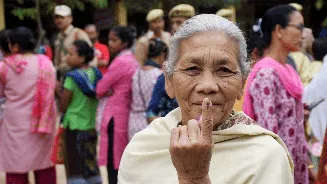
Analysts note that welfare delivery has helped the TMC consolidate rural and women voters, forming what some observers describe as the structural backbone of the party’s electoral strength.
However, opposition parties argue that concerns around job creation, industrial growth and fiscal sustainability could influence urban and younger voters.
Economic data cited in recent analyses show that while the state’s economy has expanded significantly over the past decade, its growth has been uneven compared to some other Indian states.
BJP’S CONTINUED PUSH INTO BENGAL
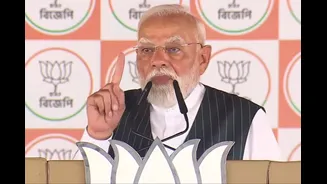
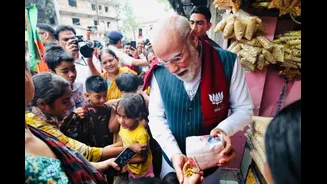
The BJP remains the principal challenger to Banerjee’s dominance, seeking to expand its footprint in a state long seen as resistant to the party’s political ideology.
The election is expected to be shaped by debates around identity politics, migration, citizenship laws and regional pride, issues that both sides have used to mobilise their respective voter bases.
Political observers describe the contest as a test of whether the BJP can convert its organisational strength and national leadership appeal into electoral gains in Bengal, or whether Banerjee’s regional appeal and welfare-driven strategy will continue to hold ground.
CONTROVERSIES, INVESTIGATIONS AND POLITICAL NARRATIVE
The election campaign has also been influenced by allegations and investigations linked to corruption and governance, including cases involving recruitment irregularities and financial probes targeting individuals linked to political consultancies associated with the TMC.
Banerjee has accused central agencies of political targeting, framing the issue as part of a broader conflict between state and central authorities.
Such developments have added to the confrontational tone of the campaign and may influence voter perceptions about governance credibility.
At the same time, political exchanges between the TMC and BJP have intensified during the campaign period, with both sides attempting to shape public opinion through high-visibility events and rhetorical attacks.
ELECTORAL MANAGEMENT, SECURITY AND POLARISATION
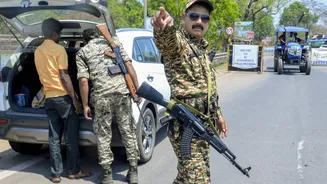
The Election Commission’s decision to identify more than 8,000 “super-sensitive” polling booths underscores the sensitive nature of the electoral contest in the state, where concerns about political violence and voter intimidation have historically been raised.
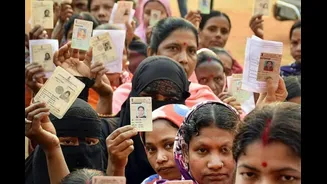
Issues such as voter roll revisions, citizenship debates and identity politics continue to play a central role in shaping the campaign narrative.
The Special Intensive Revision (SIR) of electoral rolls has emerged as a particularly contentious issue, with the TMC alleging risks of disenfranchisement while the BJP frames the process as necessary for removing irregular entries.
A TEST OF LONG-TERM POLITICAL LEGACY
For Mamata Banerjee, the election represents more than a routine political contest.
A victory would strengthen her position as one of India’s most prominent regional leaders and reinforce the TMC’s governance model centred on welfare-led politics and regional identity.
A weaker performance, however, could embolden opposition forces and reshape the political landscape in eastern India.
With competing narratives around governance, development, identity and federal politics converging in the campaign, the outcome will likely have implications beyond the state, influencing national political calculations ahead of future parliamentary contests.