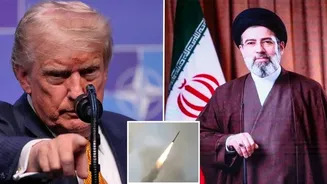





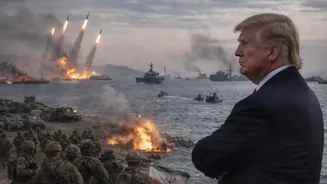
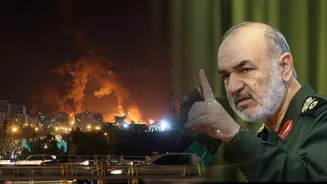


US Defence Secretary Pete Hegseth issued a sharp warning to Iran after the United States launched a fresh round of military strikes, declaring, “Iran made a poor choice. Now they pay.”
Hegseth remarked
in a post on X while reposting a statement from the US Central Command (CENTCOM) announcing the latest American military action.
According to CENTCOM, the operation marked the third round of US strikes against Iran this week, carried out after Iran allegedly attacked a commercial vessel transiting the Strait of Hormuz.
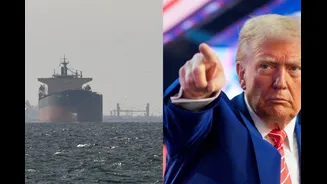
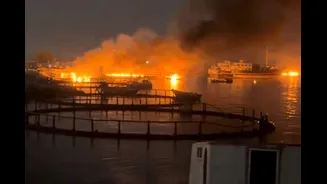
The military said the strikes began at 7.15 pm ET after forces of Iran’s Islamic Revolutionary Guard Corps (IRGC) “blatantly attacked” the Cyprus-flagged container ship M/V GFS Galaxy.
CENTCOM said the vessel suffered an onboard fire, sustained significant engine room damage, and that one civilian crew member is missing, leaving the ship unable to continue its journey.
According to the US military, Iran had been given “yet another opportunity” to demonstrate compliance with the Memorandum of Understanding after earlier attacks on commercial shipping but “has again failed.”
“In response, the United States is imposing a heavy cost by continuing to degrade Iran’s ability to attack civilian mariners and commercial ships freely transiting the strait,” CENTCOM said.
The statement added that the strikes were being carried out “at the direction of the Commander in Chief.”
Iran made a poor choice. Now they pay. https://t.co/8m4fEfgrXv
— Pete Hegseth (@PeteHegseth) July 11, 2026
IRAN CLOSES THE STRAIT OF HORMUZ
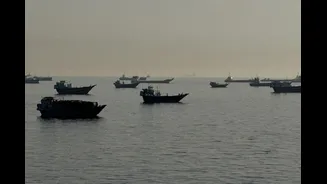
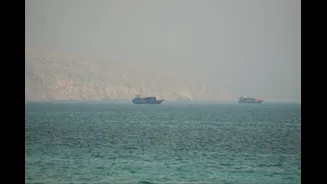
The latest US action came shortly after Iran announced that the Strait of Hormuz was closed once again.
Iran said a warning shot fired by its military struck a vessel travelling through what it described as an unauthorised route in the strategically important waterway.
The Revolutionary Guard claimed that several vessels had ignored its warnings and instructions to alter course, adding that one ship “was struck by a warning shot and brought to a stop.”
Tehran also declared that the strait would remain closed “until further notice” and warned it could target “additional enemy bases in the region” if it came under further attack.
A little more than an hour after Iran’s announcement, the United States confirmed the new round of strikes.
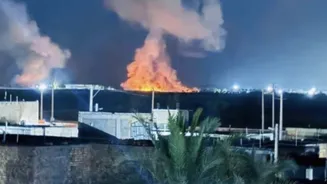
Iranian state media reported explosions in Bandar Abbas and Sirik, two towns along the Strait of Hormuz, after the US operation began.
CENTCOM maintained that the strikes were intended to reduce Iran’s ability to target civilian shipping moving through one of the world’s busiest maritime trade routes.
The Strait of Hormuz is considered a vital global energy corridor, with roughly one-fifth of the world’s traded oil and natural gas passing through it before the conflict disrupted shipping.
DIPLOMATIC EFFORTS CONTINUE
The renewed military escalation comes despite ongoing diplomatic engagement between Iran and Oman over the future of navigation through the Strait of Hormuz.
Iranian Foreign Minister Abbas Araghchi said he met Oman’s foreign minister to discuss “appropriate mechanisms for ensuring the safe passage of ships.” Oman later said both countries agreed to continue discussions on the issue “at the technical and political levels.”
However, the latest exchange of military action has further strained the already fragile ceasefire between Washington and Tehran.
Senior US officials have previously indicated that negotiations to strengthen last month’s agreement to end the conflict cannot move forward unless commercial shipping through the Strait of Hormuz is secured.