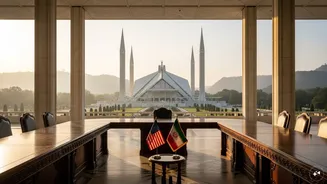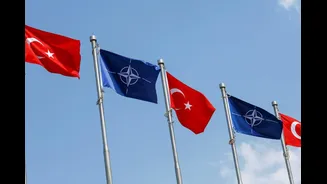




NATO leaders will assemble in Ankara on Tuesday and Wednesday for a summit that could shape the alliance’s priorities for years to come.
While the agenda spans Ukraine, Iran, defence production and regional
security, one issue is expected to dominate discussions — whether European allies are moving fast enough to meet US President Donald Trump’s demand for higher defence spending.
The gathering comes a year after NATO members, at the alliance’s summit in The Hague, agreed to work towards spending 5 per cent of their gross domestic product (GDP) on defence and defence-related measures by 2035. Ankara is widely being viewed as the first opportunity to assess how seriously that commitment is being implemented.
US Ambassador to NATO Matt Whitaker made Washington’s expectations clear ahead of the summit. “President Trump fully expects that all allies will step up immediately and get on the path to 5% and do it with urgency,” Whitaker said, according to AP.
The summit also comes after months of strains within the transatlantic alliance, fuelled by differences over the Iran war, Trump’s repeated remarks about Greenland, announced US troop withdrawals from Europe and Washington’s ongoing review of its military footprint on the continent.
Why Is This Summit Different From Last Year?
At last year’s summit in The Hague, Trump secured what had long been one of his biggest demands: broad agreement among NATO members to significantly increase defence spending over the coming decade.
This year, the focus has shifted from making promises to demonstrating progress.
Luke Coffey, a senior fellow at the Hudson Institute, described the Ankara summit as the “first report card” after last year’s agreement.
“If NATO members play their cards right — if the leaders show up demonstrating a commitment and a reasonable plan to meet these spending targets — then it’ll allow President Trump to take a victory lap,” Coffey told AP.
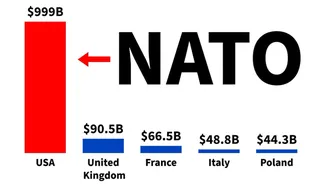
NATO Secretary-General Mark Rutte has also sought to highlight the alliance’s movement on defence spending. During an Oval Office meeting last month, Rutte presented charts showing what he called “The Trump Trillion”, referring to the increase in defence spending commitments made by allies since 2017.
A draft summit declaration seen by Reuters says: “In 2025, European Allies and Canada increased their investments in core defence requirements by more than $139bn.”
The declaration is also expected to state: “We are building the future: a stronger Europe in a stronger NATO – a modernised Alliance. European Allies and Canada, working with the United States, are assuming greater responsibility for the Alliance’s defence.”
Which Leaders Will Attend The Summit?
Leaders of all 32 NATO member countries are expected to attend the summit, including Trump.
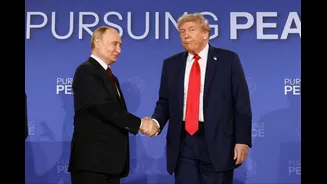
Ukrainian President Volodymyr Zelenskyy will also travel to Ankara, with the White House confirming that he will meet Trump on Wednesday. The meeting follows Trump’s conversations with both Zelenskyy and Russian President Vladimir Putin on July 4.
According to Reuters, South Korean President Lee Jae Myung, European Council President Antonio Costa and European Commission President Ursula von der Leyen are expected to attend a dinner with NATO leaders on Tuesday evening.
Trump is also scheduled to hold bilateral meetings with Turkish President Recep Tayyip Erdogan, the summit host, and Syrian President Ahmad al-Sharaa.
The White House has not outlined the objectives of Trump’s meeting with al-Sharaa. However, AP reported that it comes after Trump publicly suggested Syria could play a larger role in confronting Hezbollah in Lebanon. Al-Sharaa, whose forces overthrew former Syrian President Bashar Assad, has said he has no interest in doing so.
Alongside the summit, NATO foreign ministers are expected to meet counterparts from Bahrain, Kuwait, Qatar and the United Arab Emirates, Reuters reported. Defence ministers will also hold talks with representatives from Australia, Japan, New Zealand and South Korea.
Defence Spending And The Push For ‘NATO 3.0’
The biggest issue before leaders will be defence spending and the future balance of responsibilities within the alliance.
Under the target agreed last year, 3.5 per cent of GDP would go towards core defence expenditure, while the remaining 1.5 per cent would cover defence-related investments such as infrastructure.
Not all allies have embraced the target equally. Spain has already said it cannot meet the 5 per cent goal, while several other countries have expressed reservations about the pace required to reach it.
The Trump administration has framed the broader strategy as “NATO 3.0” — an alliance in which Europe assumes greater responsibility for its own defence, allowing the United States to shift attention to other strategic priorities.
The concept was outlined earlier this year by US Under Secretary of Defense Elbridge Colby before NATO defence ministers. The proposal gained further attention after US Defense Secretary Pete Hegseth announced a six-month review of American forces stationed in Europe.
That review has unsettled several allies. Trump also sent mixed signals earlier this year by announcing plans to deploy 5,000 US troops to Poland only weeks after ordering the withdrawal of the same number of troops from Europe, AP reported.
Ukraine To Remain High On The Agenda
The war in Ukraine, now in its fifth year, is expected to remain one of the summit’s central issues. Beyond Trump’s meeting with Zelenskyy, NATO members are expected to reaffirm political and military support for Kyiv.
According to Reuters, leaders are expected to announce: “For 2026, Allies pledge €70bn in military equipment, assistance and training for Ukraine and affirm their sovereign commitments to sustaining at least equivalent levels in 2027.”
Reuters reported that much of this support will come through existing bilateral commitments and an EU loan facility worth €60 billion for Ukrainian defence investment and procurement during 2026 and 2027. The United States is not expected to contribute to that funding.
Defence Industry, Iran And Turkey’s Priorities
Alongside spending commitments, leaders are expected to discuss expanding weapons production and defence innovation.
Reuters reported that NATO will host a defence industry forum in Ankara on Tuesday, where agreements worth tens of billions of dollars are expected to be announced.
Iran is also expected to feature in discussions following the recent conflict in the Middle East.
According to Reuters, the draft summit declaration states that “allies reiterate that Iran must never have a nuclear weapon and call on Iran to fully respect freedom of navigation in the Strait of Hormuz.”
As host, Turkey is expected to use the summit to showcase its expanding defence industry while renewing calls for NATO members to remove restrictions on defence trade within the alliance.
Reuters reported that Erdogan also hopes to advance discussions with allies, including France and Italy, on SAMP/T missile defence systems and wider defence cooperation.
During his meeting with Trump, Erdogan is expected to press for the removal of US sanctions on Turkey and seek renewed access to the F-35 fighter jet programme, while highlighting improving ties between Ankara and Washington.