






Yami Gautam’s Haq recently premiered on OTT giant Netflix, and ever since the digital release, the movie has been getting all the love in terms of viewership, with everyone heaping praise on the actress.
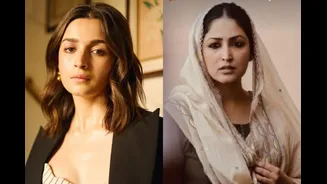
Earlier today, Alia Bhatt took to her Instagram, and while calling Yami a ‘queen’, the Jigra star lauded her performance. Now, the Haq star has replied to Alia’s praise in the kindest words possible.
“It takes a brilliant actor & gem of a person herself to be so generous with her perspective! Have always admired your work & ethics, Alia! Such a heartfelt & honest conversation we had this morning! To many more of such moments & always rooting for each other… celebrating this empowerment today & every day,” Yami wrote while reacting to Alia’s praise for her performance in the recently released film Haq.
Check out Yami Gautam’s story below:
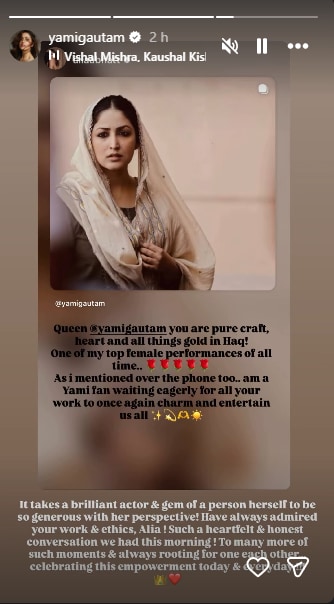
Alia Bhatt praises Yami Gautam’s performance in Haq
Taking to her Instagram stories, Alia Bhatt shared the poster of the film featuring Yami Gautam and wrote, “Queen Yami, you are pure craft, heart, and all things gold in Haq. One of my top female performances of all time… As I mentioned over the phone too… am a Yami fan, waiting eagerly for all your work to once again charm and entertain us all.”
Haq’s Storyline and Cast
Written by Reshu Nath and directed by Suparn Verma, the courtroom drama is inspired by the historic Supreme Court of India judgment in Shah Bano Begum vs. Mohd. Ahmed Khan. The film, set in 1980s India, tells the story of Shazia Bano (played by Yami Gautam) and her legal fight for justice against her husband, Abbas (Emraan Hashmi).
Shazia’s world shatters when her husband marries another woman. Though Abbas initially agrees to provide monthly maintenance for their children, he soon stops supporting them financially. Refusing to remain silent, Shazia takes the bold step of approaching the court.
In a desperate attempt to silence her, Abbas pronounces triple talaq. What follows is a powerful journey of Shazia’s fight for justice, as the narrative examines the fragile intersection of personal faith, entrenched social customs, and constitutional law.