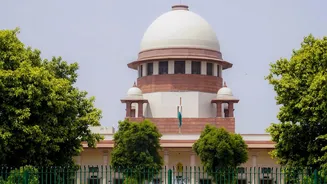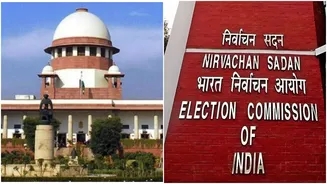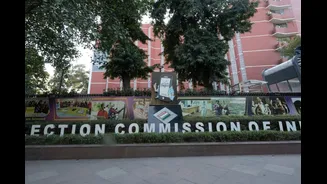






The Supreme Court has made it clear that the Election Commission of India’s (ECI) use of “logical discrepancy” checks during the Special Intensive Revision (SIR) of electoral rolls cannot be treated as legally
settled, raising important questions about how voters are flagged for verification and whether such checks can put their right to vote at risk.
During the hearing on the Delhi SIR exercise, a bench comprising Chief Justice of India Surya Kant and Justices Joymalya Bagchi and V Mohana clarified that the court had not finally ruled on the legality of the logical discrepancy mechanism. It also questioned how electoral entries could be reopened on the basis of patterns identified through the revision exercise, and whether the process involved meaningful human scrutiny.
“We have not finally adjudicated upon the legality of the logical discrepancy exercise,” the bench said, according to reports on the proceedings.
The ECI is tasked with maintaining accurate electoral rolls, removing ineligible entries and ensuring that eligible citizens are registered. But the court’s questions centre on how far the commission can go in flagging existing voters for verification, what standards it uses and whether its methodology is legally sustainable.
What exactly is a logical discrepancy in SIR, and why has it become a matter of judicial scrutiny?
What Is ‘Logical Discrepancy’ In SIR?
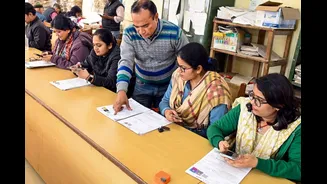
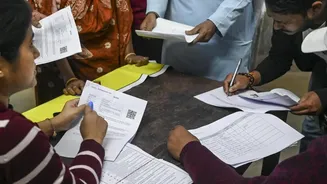
The Special Intensive Revision is an exercise undertaken by the ECI to verify and update electoral rolls. It involves collecting enumeration forms, checking voters’ details and establishing links between current electors and earlier electoral rolls.
As part of this process, the commission uses a category called “logical discrepancy” to flag entries where the information provided appears inconsistent or does not fit specified criteria.
These checks can involve details such as a voter’s age, parents’ ages, family relationships, names and gender particulars. The objective is to identify entries that may require further verification before the electoral roll is finalised.
The category includes several types of discrepancies, such as:
- Unusually large age gaps: Cases where the difference between a voter’s age and a parent’s age falls outside the prescribed range.
- Grandparent-related age inconsistencies: Cases involving age gaps between voters and grandparents that do not meet the specified criteria.
- Large numbers of children linked to a parent: Entries where more than six people are mapped as progeny of the same individual.
- Mismatches in personal details: Differences in a father’s name or gender particulars when compared with earlier electoral records.
- Age-related anomalies: Cases involving voters above a specified age who cannot be found in the earlier electoral roll used for comparison.
Such discrepancies may warrant verification. A mismatch, however, does not automatically establish that a person is ineligible to vote or that an electoral entry is fraudulent. For instance, an unusual age difference between a parent and child could be the result of an error in an older record. A name mismatch could arise from spelling variations or changes in how a name was recorded. Whether such an entry is incorrect requires examination of the circumstances and supporting evidence.
This is the central issue underlying the controversy: should a discrepancy trigger a notice and an opportunity to explain, or can the mechanism effectively reopen an existing electoral entry without adequate individual scrutiny?
Why Has The Supreme Court Questioned The Mechanism?
The court’s concern is whether the process used to identify discrepancies is transparent, legally authorised and sufficiently rigorous to protect eligible voters.
During the Delhi hearing, the bench questioned how the ECI could reopen entries from the 2002-2003 electoral rolls on the basis of patterns identified through its mapping exercise.
Justice Bagchi indicated that the court would have to examine whether the process involved the application of mind by a human agency. In other words, the question is whether a flag generated through a set of criteria is followed by a meaningful assessment of the individual case.
The court had also previously asked the ECI to consider whether “additional filters” were necessary before notices were issued to voters marked under the logical discrepancy category. It expressed concern that some notices appeared to have been issued “mechanically”.
The distinction matters because an automated or rule-based check can identify a possible inconsistency, but it cannot, by itself, establish why that inconsistency exists or whether the voter remains eligible.
The commission has a legitimate responsibility to ensure the integrity of electoral rolls. However, the process must also provide safeguards against genuine voters being subjected to unnecessary scrutiny or facing exclusion because of discrepancies in old records.
How Many Voters Have Been Flagged?
During the Delhi proceedings, petitioners referred to approximately 19.34 lakh electors who had been categorised under logical discrepancies. They also pointed to around 33 lakh electors whose details could not be mapped to the earlier electoral roll.
These are distinct categories. An unmapped voter is one whose current entry could not be linked to the earlier roll, while a voter flagged for logical discrepancy has details that appear inconsistent under the ECI’s specified criteria.
The issue has also arisen in West Bengal, where the logical discrepancy category has affected a much larger number of electors. The scale makes the question of uniform criteria, individual verification and access to remedies particularly important.
The figures represent voters flagged for scrutiny; they should not be interpreted as proof that all those voters are ineligible or that their records are fraudulent.
Why The Bihar SIR Judgment Does Not Settle The Issue
The Supreme Court has also clarified that its earlier judgment in the Bihar SIR case cannot be treated as a final determination on every question arising from electoral revision.
The Bihar proceedings examined the ECI’s authority and the documentation requirements involved in the revision process. However, the logical discrepancy category was not initially part of that exercise.
The court subsequently permitted the mechanism as an interim arrangement during the West Bengal SIR proceedings. That permission, it has now clarified, did not amount to a final ruling on whether the mechanism was legally valid.
What does this mean for voters?
The court’s scrutiny comes amid wider concerns about voters being unable to complete SIR formalities because they did not receive enumeration forms, were temporarily away from their homes or had moved to another address.
In the Delhi proceedings, the bench questioned the burden placed on voters who were already registered but had not returned their enumeration forms. It asked the ECI to reach out to missing electors rather than expecting every affected person to approach the authorities independently.
“Instead of burdening them to approach, why don’t you reach out to them?” the bench asked the commission, as reported during the hearing.
The court also questioned the insistence that certain previously registered voters apply through Form 6, meant for fresh enrolment, instead of using Form 8, which allows existing electors to report a change of residence.
These concerns are related but separate from the legal question surrounding logical discrepancies. Together, however, they highlight the broader challenge of conducting an intensive electoral revision without placing unreasonable procedural burdens on eligible citizens.
What Happens Next?
The Supreme Court is yet to deliver a final ruling on the legality of the logical discrepancy mechanism. Its observations do not mean that the checks have already been declared unconstitutional or that every notice issued under the category is invalid.
The court will have to examine the legal basis of the criteria, the process used to flag entries, the role of human verification and the safeguards available to voters who are asked to explain discrepancies.
The outcome could have implications for how the ECI conducts electoral revisions, particularly when it uses historical records and data-matching exercises to scrutinise existing entries.