







‘Tourism is a peace industry. Where there is peace, tourism thrives. Where there is war, tourism dies.” The late Taleb Rifai’s words feel less like reflection and more like a real-time diagnosis of the global
travel ecosystem today.
As geopolitical tensions escalate across the Middle East, the ripple effects on global aviation and, by extension, tourism have been immediate and severe. Airspace closures across key transit regions have disrupted one of the world’s busiest aviation corridors, grounding thousands of flights and stranding over a million travellers worldwide. For an industry built on predictability, access, and seamless movement, this is nothing short of systemic shock.
Pragya Adiraj, founder, Joy N Crew, captures the scale of disruption succinctly, “Tourism thrives on confidence confidence in safety, access, and freedom of movement. With war brewing across the Middle East, that confidence has collapsed.”
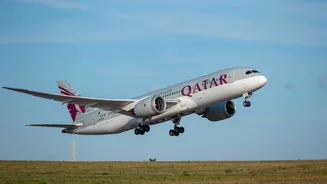
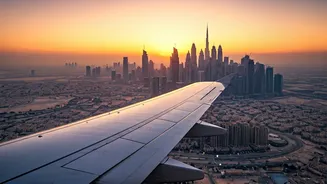
The numbers reinforce this collapse. Gulf aviation hubs, Dubai, Doha, Abu Dhabi, and Bahrain, historically processing over half a million passengers daily, are now operating at drastically reduced capacity. Major carriers such as Emirates, Qatar Airways, and Etihad have slashed operations, fundamentally altering global connectivity and disrupting the backbone of long-haul travel.
For Indian travellers, the timing could not be worse. The summer travel season, traditionally one of the busiest outbound periods has been hit head-on. A significant portion of India–Europe and India–North America traffic relies on Middle Eastern transit hubs. With these routes disrupted, airlines are being forced to reroute flights across longer corridors, often via Central Asia or over the Arabian Sea.
These detours are not merely logistical adjustments, they are structural disruptions. Longer flight paths mean extended travel times, increased fuel consumption, and cascading operational costs. The result is sharply inflated airfares, with prices on some routes rising by as much as 100–150%. What was once a predictable, aspirational summer itinerary has become an expensive and uncertain proposition.
The consequences are already visible. Indian outbound travel demand has softened, with visa applications to Europe, the UK, CIS nations, and parts of the Gulf dropping by an estimated 60–65%. Travellers are not just reacting to cost, they are responding to unpredictability. The question is no longer just “where to go,” but whether the journey itself will hold.
Bernard Corraya, General Manager, Wego India, notes that “geopolitical tensions have disrupted key air corridors between Asia, Europe, and North America, leading to rerouting, delays, and higher fares.” But beyond operational challenges, he highlights a deeper behavioural shift. Travellers are prioritising flexibility over ambition. Refundable bookings, alternate routes, and “cancel for any reason” insurance policies are witnessing unprecedented demand.
This shift signals a broader recalibration of travel psychology. In a volatile world, certainty has become a premium commodity. Aspirational long-haul travel is increasingly being weighed against the risks of sudden cancellations, route changes, or geopolitical escalation.
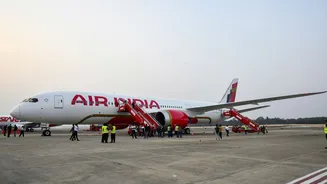
The crisis has also exposed the structural fragility of global tourism. The industry’s heavy dependence on a handful of transit hubs has created systemic bottlenecks, ones that, when disrupted, cascade across continents. Indian tour operators, heavily reliant on Gulf carriers, are scrambling to rebook itineraries, absorb rising costs, and manage anxious customers. Even Air India’s attempts to reroute flights come at a steep operational and financial price.
Yet, amid the disruption, there are signs of resilience. Governments and travel companies are stepping in with adaptive measures. The UAE’s decision to cover accommodation, meals, and rebooking costs for stranded passengers stands out as a rare example of state-backed intervention in an aviation crisis. Travel platforms are leaning into real-time data, transparent pricing, and AI-driven alerts to help travellers navigate uncertainty.
Corraya points to a deeper shift underway, “The industry is rethinking resilience. Airlines, OTAs, and tour operators are investing in smarter technology to anticipate disruptions, diversify routing options, and strengthen traveller confidence.” In essence, this is no longer just about crisis management—it is about redesigning a global travel ecosystem for an era defined by volatility.
The impact extends beyond leisure travel. Medical tourism, where India has long been a global hub has taken a significant hit, with hospitals reporting a 50–75% drop in international patient arrivals. Middle Eastern patients, who account for a substantial share of this segment, are among the worst affected due to restricted mobility. Hospitality markets in affected regions are also reacting, with luxury hotels in Dubai slashing prices by up to 40% to stimulate demand.
What we are witnessing is not merely disruption, it is a reordering of travel priorities. Safety, flexibility, and proximity are replacing aspiration, luxury, and long-haul exploration, at least in the short term. Travel is becoming less about indulgence and more about feasibility.
Tourism has always been more than an industry; it is a barometer of global stability. And today, that barometer is flashing red.
Until geopolitical tensions ease and confidence is restored, tourism will remain in survival mode, rerouting, recalibrating, and reinventing itself. The industry’s resilience is evident, but its recovery hinges on a factor beyond its control.
The Summer That Travel Stalled
Nowhere is this disruption more visible than in how India’s peak summer travel season is unfolding.
For Indian travellers, this is not a distant geopolitical event, it is a direct collision with holiday plans. What is typically a high-demand season for Europe and long-haul destinations has instead become a moment of hesitation, defined by uncertainty, rising costs, and shrinking connectivity.
Airspace Disruptions and Broken Corridors
At the heart of the crisis lies geography. The most efficient flight paths from India to Europe, the UK, and North America traditionally pass through Middle Eastern airspace, including Iran, Iraq, and surrounding regions. With large parts of this corridor now restricted or considered high-risk, airlines are being forced to redraw global flight maps.
According to aviation intelligence platform OPS Group, several key airspaces in West Asia remain either closed or operationally sensitive. Airlines are avoiding these zones altogether, resulting in longer, more complex, and less efficient routes.
Longer Routes, Higher Costs
The operational consequences are immediate. Flights from India to Europe are now being diverted north via Central Asia or south over the Arabian Sea. As reported by The Financial Express, these detours are increasing both flight durations and fuel consumption, two factors directly driving up ticket prices.
In several cases, airfares on India–Europe routes have surged dramatically, turning what was once a routine summer booking into a costly and uncertain decision.
Airlines Forced to Adapt Mid-Air
Airlines are improvising in real time. As reported by The Times of India, some Air India flights to North America have begun making technical stops in cities such as Rome for refuelling, an unusual adjustment driven by extended flight paths.
Meanwhile, Hindustan Times reports that airlines have suspended or restructured routes, including services such as Delhi–Zurich and Amritsar–Birmingham, while attempting to manage capacity across an increasingly constrained network.
Widespread Disruptions and Passenger Impact
The scale of disruption has been stark. According to VisaHQ, more than 350 Indian flights were cancelled in a single day during peak airspace closures, one of the most significant aviation disruptions in recent years.
Passengers are also facing frequent schedule changes, delays, and last-minute rerouting. Airlines have issued advisories urging travellers to stay updated, as flight timings and routes continue to shift dynamically.
A Shift in Indian Travel Behaviour
Faced with these uncertainties, Indian travellers are recalibrating their summer plans. Long-haul destinations, particularly in Europe are witnessing a slowdown, driven not only by higher costs but also by logistical unpredictability.
Instead, there is a clear pivot toward destinations with stable air corridors. Southeast Asia, Bali, Thailand, Singapore, and Japan has emerged as a preferred alternative, offering shorter travel times, fewer disruptions, and relatively stable pricing.
A Moment of Reckoning for Global Travel
What this moment ultimately reveals is the structural dependence of Indian outbound travel on Middle Eastern transit hubs. For years, the efficiency of these corridors made global travel seamless. Today, their disruption has exposed just how fragile that system can be.
For Indian travellers, the question this summer is no longer where to go but whether the journey itself is even possible.