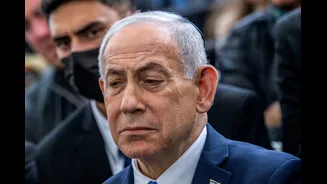







Israel heads into a crucial general election on October 27, with Prime Minister Benjamin Netanyahu facing a challenge from an opposition led by former military chief Gadi Eisenkot. The result could shape
Israel’s approach to the wars in Gaza and the wider region, its relations with the US and Europe, and its domestic political future. For India, the stakes extend to defence cooperation, trade, energy security and its wider diplomatic interests in West Asia.
But even if Netanyahu’s opponents win more seats, removing him from office will not be straightforward. Israel’s proportional representation system means parties must negotiate a coalition capable of commanding a majority in the 120-member Knesset, or parliament. That makes coalition arithmetic as important as the election result itself.
Why The October 27 Election Means
Israel operates as a single nationwide constituency, with roughly 7.3 million eligible voters casting ballots under its proportional representation system. In the last general election, held in November 2022, voter turnout stood at 70.6%.
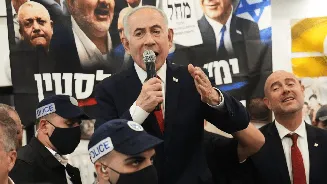
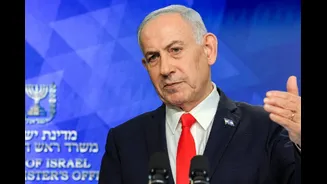
The October 27 vote is Israel’s first general election since the Hamas-led attacks of October 7, 2023, and the subsequent war in Gaza, which widened into a regional confrontation involving several countries. Netanyahu’s leadership, security record and handling of the conflict are central to the political contest.
His Likud party is seeking to retain power with the support of right-wing and ultra-Orthodox parties, including Shas and United Torah Judaism. The opposition, meanwhile, brings together groups that disagree on several ideological questions but share an interest in ending Netanyahu’s long tenure.
Opinion polls indicate a tight contest between Netanyahu’s right-wing bloc and a Jewish-led opposition alliance. However, even an electoral defeat would not automatically mean Netanyahu loses power.
Under Israel’s proportional representation system, parties must form alliances to secure a governing majority in the Knesset. No single party has ever won an outright majority of at least 61 seats in the 120-member parliament.
Recent polls project the opposition bloc to win 52 seats, against 50 for Netanyahu’s religious-nationalist alliance. This leaves Palestinian-led parties in a potentially decisive position in determining who forms the next government.
The election also reflects domestic disputes over the cost of living, judicial independence, military service exemptions for ultra-Orthodox men and the future of Israeli settlements in Palestinian territory. These questions could influence the next government just as much as the conduct of the war.
Despite robust economic growth, with GDP more than doubling since 2000 and unemployment remaining low, Israel continues to grapple with one of the OECD’s highest costs of living. Food and housing prices are particularly expensive, putting pressure on household budgets. Median wages, adjusted for purchasing power, also remain below the OECD average, making it harder for many families to keep pace with everyday expenses.
The government raised the minimum wage from April 1, 2026, to ₪6,443.85 per month or ₪35.40 an hour. The increase was intended to offer some relief to lower-paid workers, but it comes against a backdrop of high housing, food and transport costs. The squeeze is especially acute for lower-income households, which spend a larger share of their income on essential needs.
Netanyahu Vs Eisenkot: What Are The Possible Outcomes?
Netanyahu’s principal challenger, Gadi Eisenkot, is a former chief of staff of the Israel Defense Forces who leads the centrist Yashar party. His campaign focuses on security, changes to governance and broader national service, including ending the exemptions that keep many ultra-Orthodox men out of military service.
The opposition also includes the alliance led by former prime ministers Naftali Bennett and Yair Lapid, alongside other parties seeking to dislodge Netanyahu. Their differences over ideology and policy could complicate efforts to form a stable government.
For Netanyahu, the route to power runs through his established right-wing and religious partners, including parties led by Itamar Ben-Gvir and Bezalel Smotrich. These allies have advocated expanding Israeli settlements and extending Israeli control over Palestinian territory. Ultra-Orthodox parties are also important because of their demands over religious institutions, funding and military-service exemptions.
The election therefore has three broad possibilities: Netanyahu assembles another coalition; the opposition finds a way to secure a majority; or neither side can command enough support, prolonging political uncertainty.
Israel’s parliament requires 61 seats for a majority. Smaller parties, including Arab-led political groups, could prove decisive if the main blocs fall short. The result will determine not just which party performs best, but who can persuade enough lawmakers to support a government.
The Joint List, which comprises the Hadash, Ta’al and Balad factions, has indicated it could offer an anti-Netanyahu coalition a parliamentary “safety net”. This would involve agreeing not to oppose the alliance in a confidence vote without formally joining the government. However, such an arrangement could leave the coalition fragile, with disagreements over major policies and the risk of lawmakers withdrawing their support.
Other Possible Outcomes
Another possibility is a rotating premiership, under which two political leaders agree to serve as prime minister at different stages of a government’s term. Netanyahu and former Israeli army chief and defence minister Benny Gantz reached such a power-sharing agreement in 2020, but the coalition collapsed before Gantz could take over the top job.
A similar arrangement brought Naftali Bennett to power in June 2021, with Yair Lapid scheduled to succeed him as prime minister. After Bennett’s coalition lost its parliamentary majority in June 2022, Lapid became caretaker prime minister in July that year.
There is also the possibility of a different leader emerging from either political camp. Israel’s prime minister is determined through the parliamentary process, meaning coalition negotiations could result in parties backing another Knesset member who is more acceptable to potential partners than Netanyahu or the opposition’s leading candidate.
If no leader can secure sufficient support in the Knesset, Israel could face renewed political uncertainty and another election. Until a new government is formed and takes office, Netanyahu would remain caretaker prime minister.
Would A New Government Change Israel’s War Policy?
A change of prime minister would not automatically mean a dramatic shift in Israel’s military and security policies. Netanyahu’s opponents differ from his government on domestic governance, the West Bank and relations with Israel’s allies, but there is considerable overlap on security policy.
Both major camps favour continued military action against Hamas and a hard line towards Iran. This limits the scope for assuming that an opposition victory would quickly end the conflict or transform Israel’s approach to regional security.
The differences could nevertheless matter. A government led by Eisenkot could place greater emphasis on institutional reform, military-service obligations and repairing relations with Western partners. It could also approach questions surrounding the West Bank differently from Netanyahu’s far-right allies.
Despite the international attention focused on the war in Gaza, Palestinian statehood is not a priority for most Israelis. Nearly all Jewish-majority parties, including the main challengers to Netanyahu, have rejected the idea of a sovereign Palestinian state in the foreseeable future. Support for Palestinian statehood has largely come from minority Arab parties.
“There is a strong Israeli consensus on a tough policy towards Iran, Lebanon, and Syria, and against the formation in the foreseeable future of a sovereign Palestinian state,” Elliott Abrams, a CFR senior fellow for Middle Eastern studies, said. Steven A. Cook, a CFR senior fellow for Middle East and Africa studies, noted that an opposition victory would not change much, “other than an improved tone and tenor of Israel’s relations with its neighbours.”
“If Netanyahu is defeated, a new coalition is likely to be tougher on settler violence in the West Bank and that should alleviate some criticism, especially from Democrats,” Abrams said. Cook agreed that a “clamp down on settlers who are attacking Palestinians in the West Bank… will be helpful, especially for Israel-Jordan ties,” he said.
Why The US Is Watching Closely
Israel’s relations with its traditional Western partners are another major issue. The war in Gaza has intensified international criticism of Israeli military operations and complicated diplomatic ties. A change in leadership could create an opportunity to repair some strained relationships.
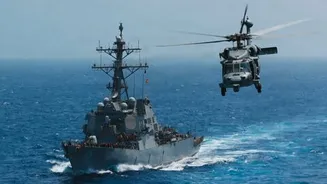
The regional picture is equally important. Israel’s approach to Iran, Lebanon and Syria will affect the prospects for stability across West Asia. Any escalation could widen the conflict and complicate efforts by neighbouring countries and international partners to contain it.
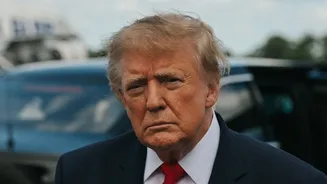
Netanyahu has said reconstruction in Gaza cannot begin until Hamas is fully disarmed, a position also reflected in the wider debate over the territory’s post-war future. Bennett opposes any Israeli withdrawal before that condition is met. Eisenkot, meanwhile, has pledged to end Hamas’s rule, either through US President Donald Trump’s framework or military action.
Lebanon presents a similar divide over Israel’s military presence and future security arrangements. Netanyahu has repeatedly warned that Israel will destroy Hezbollah if the Lebanese army fails to do so. Eisenkot supports keeping Israeli troops in place until negotiated security arrangements are reached.
Iran remains central to Netanyahu’s re-election strategy. He has described the fall of the Iranian government as a strategic objective and argued that Israel must retain the ability to act against threats from Tehran without seeking US approval.
Eisenkot, by contrast, has proposed a joint plan with Washington to prevent Iran from developing nuclear weapons, dismantle its nuclear capabilities and impose intrusive inspections. His approach combines the possibility of military action with a robust inspection system designed to prevent Iran from rebuilding its nuclear programme.
Whoever forms the next government will have to decide how closely Israel should coordinate with Washington and how far it is prepared to go militarily. The question of US military assistance is also likely to feature in the debate. Lapid, for instance, supports retaining American military aid, while Netanyahu has pledged to phase it out over the coming decade.
What Is At Stake For India?
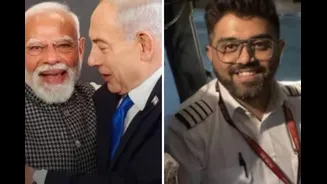
For New Delhi, the election comes at a consequential moment in India-Israel relations. During Prime Minister Narendra Modi’s visit to Israel in February 2026, the two countries elevated their relationship to a “Special Strategic Partnership for Peace, Innovation and Prosperity”. The partnership covers defence, security, space, energy, cyber security, critical technologies, agriculture and scientific research.
So, will a change in Israeli leadership affect the Israel-India cooperation? Defence and security ties are particularly important, while collaboration in technology, agriculture, water management and innovation offers scope for wider economic engagement. A new government could review priorities, but a change in leadership alone would not necessarily disrupt established bilateral ties.
Trade is another reason to watch the election. India and Israel recorded merchandise trade worth $3.93 billion in the 2025-26 financial year, while negotiations for a proposed free trade agreement continued in July 2026. Political stability and regional security will matter as both countries seek to deepen commercial ties.
India must also balance its close partnership with Israel against its extensive relations with Arab countries. West Asia is critical to India’s energy supplies, trade routes and the welfare of millions of Indians living and working in the region. A wider conflict involving Iran or other regional powers could have consequences far beyond Israel, affecting shipping, energy prices and economic confidence.
This is why New Delhi’s interest goes beyond the identity of Israel’s next prime minister. It lies in whether the election produces a government capable of reducing regional tensions while sustaining strategic and economic cooperation.