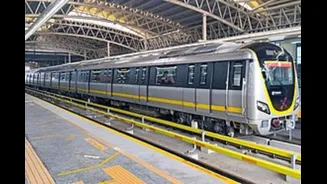







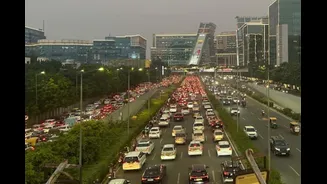

For thousands of daily commuters travelling between south Bengaluru and Electronic City, the Yellow Line has been both a relief and a frustration. While it finally offered a rail alternative to traffic
clogged roads like Hosur Road, long waiting times between trains meant the promise of smooth travel often fell short during peak hours. The arrival of the seventh train set for the Yellow Line now signals a shift that could finally tilt the experience in favour of commuters.
What the seventh train means for passengers
The newly arrived train set has reached the Hebbagodi depot, where Yellow Line operations are based. For commuters, this is not just another technical update. More train sets directly translate to shorter waiting times on platforms. At present, passengers often wait anywhere between 15 and 20 minutes for a train, especially during rush hours. With the seventh train inducted into service, BMRCL plans to bring down this gap to around 8 to 10 minutes.
For office goers, students and shift workers heading to Electronic City, this change could significantly reduce total travel time and platform crowding.
Why frequency matters on the Yellow Line
The Yellow Line connects R V Road to Bommasandra, cutting through one of Bengaluru’s busiest employment corridors. Electronic City alone sees daily movement of thousands of tech workers, many of whom depend on the Metro to avoid unpredictable road traffic.
Long train intervals have been one of the biggest complaints since the line opened. Miss one train, and commuters often lose 15 minutes or more, affecting office entry times, bus connections and last mile travel. A tighter frequency means not just faster journeys, but more predictable ones.
What happens before the train enters service
Although the train has arrived, commuters will still need to wait a little longer before seeing immediate changes on the platform display boards. Every new Metro train must go through a detailed commissioning process.
This begins with static tests at the depot, where systems like doors, braking, lighting and onboard electronics are checked. This is followed by mainline trials on the actual track, where the train is tested for traction, braking performance and integration with signalling systems. Only after completing the required trial kilometres and receiving safety clearance can the train be introduced into passenger service.
Officials indicate that this process typically takes a few weeks, depending on test outcomes.
When commuters can expect shorter waits
BMRCL officials have indicated that once the seventh train completes testing and is inducted, the Yellow Line will be able to offer an improved frequency of about 8 minutes. However, for this frequency to remain consistent throughout the day, especially during peak hours, more train sets will still be required.
Commuters can expect gradual improvements rather than an overnight change. Early 2026 is being seen as a realistic timeline for the improved frequency to stabilise, assuming additional train sets arrive and clear safety checks on schedule.
More trains in the pipeline
The Yellow Line fleet is being built by Titagarh Rail Systems, with components sourced internationally. BMRCL plans to steadily increase the number of operational train sets to match peak demand on the corridor.
Once the full planned fleet is inducted, the line is expected to run at near full capacity, with trains arriving every few minutes during rush hours. For commuters, this would place the Yellow Line on par with other high frequency Metro corridors in the city.
Beyond Travel Time
Improved Metro frequency does more than save travel time. It reduces overcrowding on platforms, lowers stress during peak hours and encourages more people to shift away from private vehicles. For a corridor like Electronic City, where road congestion is routine, reliable Metro service can reshape daily commuting habits.
For now, the arrival of the seventh train may seem like a small step. But for regular Yellow Line commuters watching the clock on crowded platforms, it is a meaningful move toward a smoother, more dependable daily commute.