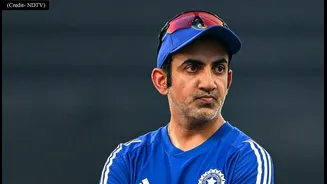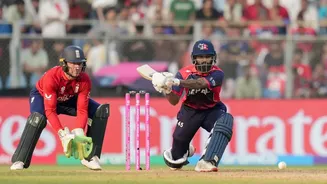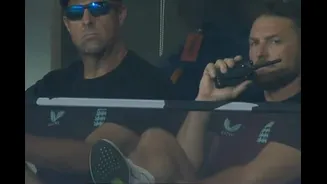







England men’s coach Brendon McCullum has once again sparked curiosity among the team’s fans and the wider base around the world by using walkie-talkies to communicate with his team from the dressing room
during the 2026 T20 World Cup. Jos Buttler on Tuesday explained that such ‘top to bottom’ communication has been quite helpful for the team, while also questioning cricket’s general aversion to such tactics.
Walkie-talkies are quite uncommon in the sport, but they are legal as long as the messages are encrypted. Usually, coaches don’t interfere too much with the on-field tactics and those who want to communicate with the players do so during breaks by rushing in with the drinks or designating a substitute to forward the message. Some even stand on the boundary and speak to the captain or a senior player directly.
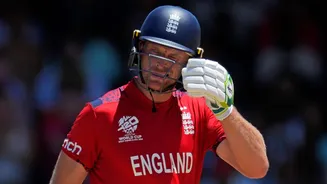
“I think so, there’s (been) walkie-talkies for a while to be fair. But then the communication from top to bottom has always been really good in the group,” Buttler told reporters when asked if it was McCullum’s way to be more hands-on. “Baz can sit with his feet up and his sunglasses on and look very relaxed, but he’s as sharp a coach as I’ve ever worked with. He doesn’t miss a beat,” he said.
“I think also for cricket in general, actually, coaches are getting more involved in real-time in cricket… I’ve played in the IPL, at Gujarat (Titans), Ashish Nehra is very active on the boundary rope. But it seems like cricket is a kind of sport where we are still a bit behind, maybe in that area where you look at other sports, the managers and coaches, and you think of rugby, running messages. So, maybe that will come more and more into cricket,” Buttler added.
Earlier, during his Kolkata Knight Riders (KKR) days, McCullum had used coded letters on the pavilion balcony to send messages to his skipper, Eoin Morgan.
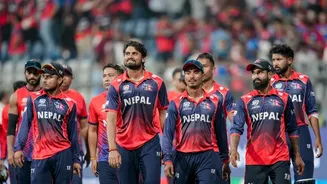
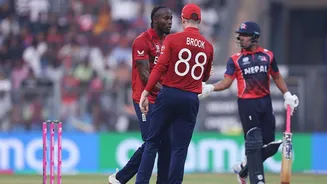
England beat Nepal in the first match in a thriller, which went deeper than they’d have liked. But the Three Lions are still taking confidence from it.
“In the T20 World Cups, (or) T20 cricket, generally the game is so close, one or two players can win games for their side on the day. Ultimately, we found a way to win, which is the most important thing,” he said. “Obviously, the consequences are different. So (we are) Learning how to manage those emotions. The cricket is the same, but the consequences and the pressures of that are then different. If you can hold your nerve and manage to still execute skills, knowing that the consequences are different, that’s probably good learning,” he added.