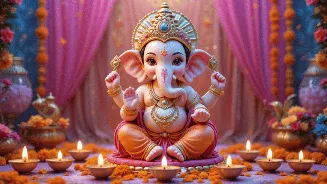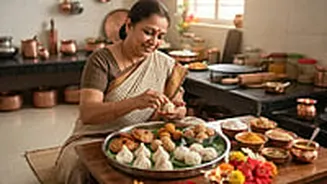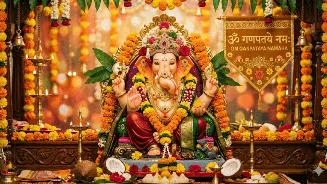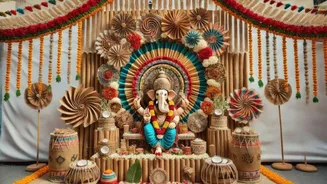






As millions celebrate Ganesh Chaturthi on Monday, mandatory offerings of steaming ukadiche modak (steamed rice-flour dumplings filled with jaggery and coconut) line every puja altar. Revered as Modakapriya—the
lover of sweet dumplings—Lord Ganesha is inextricably linked to this delicacy.
The modak is not merely a sweet dish; it carries deep spiritual and philosophical significance in Hindu tradition.
1. Legend of the Divine Nectar
Ancient texts offer compelling stories explaining Lord Ganesha’s fondness for the sweet.
- The Nectar of Knowledge: According to legend, the gods once presented a unique modak to Goddess Parvati, infused with the nectar of supreme wisdom and divine knowledge (Amrita). When Parvati declared that whoever ate it would become the master of all scriptures and arts, Lord Ganesha earned it by demonstrating unparalleled wisdom, demonstrating that encircling his parents was equivalent to encircling the universe.
- Satiating Lord Shiva: Another tale recounts Goddess Anusuya serving food to a ravenous Lord Shiva, whose hunger remained unsatiated until she presented a single modak to young Ganesha. Upon Ganesha eating it, Shiva burped twenty-one times, signalling complete satisfaction—giving rise to the tradition of offering 21 modaks during worship.
2. Symbolism of Spiritual Awakening
The physical structure of a modak serves as an allegory for spiritual enlightenment.
- The Shell and Filling: The outer white casing (ukad) is plain and neutral, representing the material world, body, or physical outer shell. The inner sweet mixture (saran) represents the inner soul (Atman) or divine bliss (Ananda).
- The Teardrop Shape: The pinched top of the modak represents the peak of spiritual realisation (Sahasrara Chakra), symbolising how a seeker’s mind must concentrate from a broad base into a single focused point of devotion.
3. The Number 21 and Ritualistic Significance
During Ganeshotsav rituals, offering 21 modaks as naivedya (sacred food offering) is considered essential for completing the puja.
- Five Elements and Senses: The number 21 corresponds to the five gross elements (Mahabhutas), five subtle elements, five organs of perception, five organs of action, and the mind. Offering 21 modaks symbolises surrendering one’s entire physical and mental entity to the deity.
- Culinary Variety: While the traditional steamed Ukadiche Modak remains the gold standard in Western India, fried modaks, dry fruit variations, and mawa modaks feature prominently across diverse regional celebrations.
4. A Symbol of Joy and Satisfaction
The word Modak derives from the Sanskrit root Moda, which translates directly to “joy”, “pleasure”, or “delight”.
Offering modaks during Ganesh Chaturthi is believed to invoke Lord Ganesha’s blessings, bringing joy, removing life’s obstacles (Vighnaharta), and ensuring prosperity for the household.