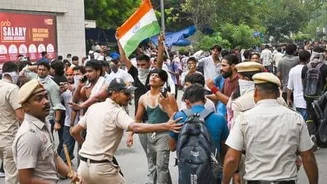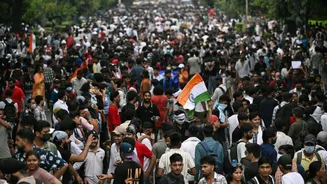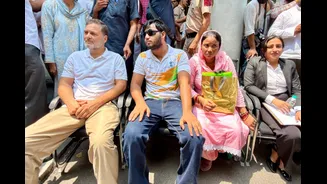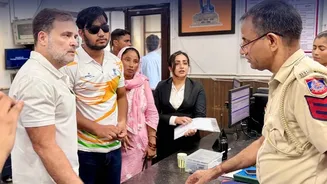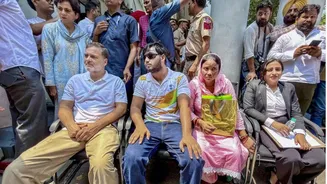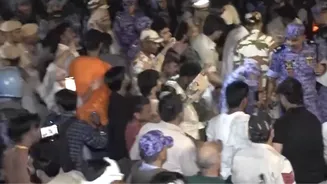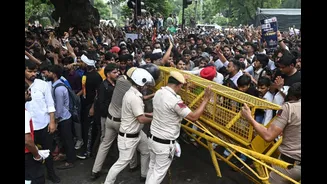





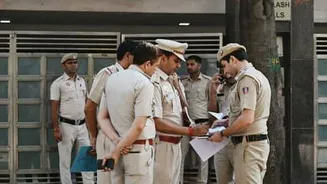


Last month’s Jantar Mantar agitation put Delhi Police’s crowd-control tactics under sharp scrutiny after videos of confrontations with protesters went viral and allegations of excessive force surfaced.
Now, in the aftermath of that episode, fresh protest-management guidelines have been issued to Delhi Police personnel, asking them to stay calm, avoid reacting to provocation and remain conscious that their conduct may be recorded and circulated online.
The advisory, issued by a central agency, also warns personnel against giving protesters the kind of angry reaction that can be turned into viral content. “Your anger is their satisfaction and content for them to portray you as villains,” the guidelines say, according to PTI.
Assume You Are Being Filmed
The guidelines ask Delhi Police personnel to assume that their actions and reactions during protests are being recorded on mobile phones and may later be widely circulated, PTI reported.
Officers have been told to avoid unnecessary conversations with demonstrators and not respond to questions, taunts, emotional appeals or attempts to draw them into arguments.
If an interaction cannot be avoided, the guidelines advise personnel to keep it brief, ask protesters to cooperate and then maintain silence.
According to The Indian Express, officers have also been told: “Your angry face is their content… They are not fighting you. They are making a film in which they want you to play the villain. Refuse that role.”
No Reaction To Taunts, Songs Or Mockery
The instructions specifically caution personnel against reacting to mockery, humour, songs, dances, placards, mock salutes or other behaviour aimed at eliciting a response, PTI reported.
They have also been advised against pushing away mobile phones, snatching or throwing objects, shouting in anger or entering into physical confrontation unless required as part of their duty.
The advisory also addresses attempts to provoke an emotional response. Personnel have been told not to get drawn into conversations about personal circumstances, family matters, salaries or similar subjects.
The Indian Express reported that officers may also encounter protesters who cry, fall at their feet or ask questions designed to evoke anger or sympathy. In such situations, the advisory says personnel should avoid debate or showing agreement and, if necessary, say only: “Please cooperate, we are doing our duty”. They should then remain silent.
Phones Close To Faces? Look Ahead
Personnel have also been advised to “look straight ahead” if protesters hold mobile phones close to their faces and ask personal or emotional questions, including whether they feel proud, how they sleep at night or what they would tell their children, according to The Indian Express.
“A calm face gives them nothing and police personnel are learnt to have been asked to not say anything in such situations. They have been clearly told that no controversial clip means no viral video,” a source told the newspaper.
Personnel have also been cautioned about protesters playing trending songs or audio clips, using officers’ names in slogans or recording point-of-view videos near police lines that may later be edited or captioned. “Treat this as background noise,” the SOP says, according to the newspaper.
Women Protesters: Extra Caution Advised
Police personnel have also been asked not to accept flowers, food or other items from women protesters, PTI reported.
During the CJP agitation, videos showed protesters offering flowers to police personnel while saying that they would do so despite having been lathi-charged. The contrasting visuals subsequently triggered criticism of the force on social media.
The guidelines also advise personnel to avoid physical contact with women protesters as far as possible and leave their handling to women police personnel, according to The Indian Express.
Controlled Body Language
Maintaining professional body language and respectful language has also been stressed in the guidelines, with officers told to exercise restraint even when demonstrators deliberately try to provoke them, according to PTI.
The Indian Express reported that the SOP gives examples such as “Uncle, come this way”, “Aunty, please go to this side” and “Sir, please cooperate”.
Personnel have also been advised to use gestures such as joined hands while asking crowds to move, rather than actions that could appear aggressive. “Respectful language from uniformed personnel can help calm a crowd,” a source told the newspaper.
Help Protesters Who Get Injured
While stressing restraint, the guidelines also make clear that maintaining law and order should not come at the cost of public safety.
PTI reported that personnel have been directed to assist protesters who fall ill or sustain injuries and ensure unobstructed movement for ambulances, schoolchildren and elderly people.
Personnel have also been asked to help elderly and disabled people cross police lines or reach vehicles. If a small child is separated from their parents in a crowd, officers should stay with the child until the parents are found, The Indian Express reported.
Why The Guidelines Were Issued
The directions assume significance after a series of protests in Delhi in which demonstrators and police personnel were seen filming one another, with several interactions later becoming the subject of debate and criticism online.
During the Cockroach Janta Party (CJP) protest at Jantar Mantar, videos showing verbal altercations between protesters and police personnel circulated widely.
A senior police officer told PTI that similar directions had been given to officers deployed during the agitation. “I had given the same directions to all the officers during the CJP protest — not to give any reaction to any of the protesters and just to do their duty,” the officer said.
The guidelines have also been circulated to personnel in district, Railway and Metro units, asking them to remain particularly conscious of their conduct in public spaces.