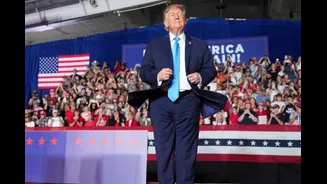





US President Donald Trump’s bizarre remarks surprised a large section of Americans and residents of the megacities of Los Angeles and San Diego, as he said Iran could “take” the two cities and that their
loss would be a “small price to pay” for national security, while seemingly playing on the dislike for the two Californian cities, which have mostly backed the Democrats.
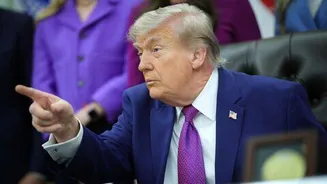
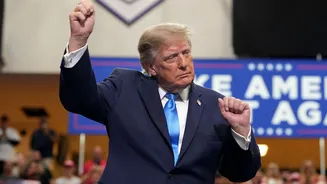
Speaking from the red, Republican state of Nebraska, Trump told attendees at the Pinnacle Bank Expo Center in Grand Island, Nebraska, that Iran “could destroy a city” and then named the two blue cities as potential targets.
“This is a small price to pay for the security of the world, for the security of our country. They could destroy a city. Let them destroy Los Angeles. Let them destroy San Diego. It’s a very small price to pay, and very soon it will all be over. Basically, it’s almost over already,” he said.
The remarks surprised Americans and Californians because Los Angeles is far more than the entertainment capital of the United States. America’s second-largest city is a major Pacific trade gateway, home to one of the country’s busiest ports and a vast logistics and manufacturing ecosystem, while the wider Los Angeles region is also a major centre for technology, aerospace, finance and startups. At the same time, Hollywood and the city’s music and creative industries give Los Angeles an outsized influence on global popular culture, making it one of the most economically and culturally consequential cities in the US.
San Diego is a critical US military and defence hub as well as a centre for biotechnology, life sciences, technology, manufacturing and international trade. Its proximity to Mexico also makes it an important cross-border economic corridor, while its naval installations give the city particular strategic significance for US military operations in the Pacific. Together, the two cities represent major pillars of America’s economy, technology sector, cultural influence and national-security infrastructure.
This is why the remarks angered California Governor Gavin Newsom, Los Angeles Mayor Karen Bass and San Diego Mayor Todd Gloria.
Trump allowed for the destruction of two American cities in a conflict with Iran
“This is a small price to pay for the security of the world, for the security of our country. They could destroy a city. Let them destroy Los Angeles. Let them destroy San Diego. It’s a very small price to pay, and very soon it will all be over. Basically, it’s almost over already,” Trump said.
— NEXTA (@nexta_tv) October 6, 2026
Newsom called Trump “deranged and dangerous”, saying the president was suggesting that America’s “foreign enemies” should “take out” Los Angeles and San Diego.
“Let’s be clear: The President is advocating for an attack on 10+ million U.S. residents in two of America’s largest cities,” Newsom said in a separate post. “This is not normal. None of this is.”
Bass accused Trump of making what she called “irresponsible threats” that could potentially compromise the safety of Los Angeles, saying the role of a president was to protect Americans rather than “threaten” them or encourage attacks on US citizens.
“The role of a president is to protect the country, not to actively threaten it and encourage attacks on American lives,” Bass said.
Gloria said San Diego was “not collateral damage” in the conflict and rejected the suggestion that its residents could be treated as a cost of the war.
“We are not expendable. And we are never a ‘small price to pay’,” Gloria said, urging Trump to keep the city out of his “reckless war talk”.
Trump’s remarks also prompted questions over whether he was speaking literally or referring to the economic consequences of the conflict. Some conservative commentators argued that his “small price to pay” remark referred to higher fuel prices rather than the destruction of an American city. The White House had not immediately clarified his comments, according to the report.
What Is The Current Status Of The US-Iran War?
Trump’s claim that the war is “almost over” comes as efforts to end the conflict remain unresolved. The seven-month war began with US and Israeli strikes on Iran in February, followed by a Pakistan-mediated ceasefire and a June memorandum that halted large-scale fighting. However, the ceasefire has remained fragile, with the two sides continuing to trade strikes and disagreeing over key issues including Iran’s nuclear programme, the Strait of Hormuz and sanctions relief.
Tehran recently put forward a proposal to end the war that linked the reopening of the Strait of Hormuz to the lifting of a US blockade, the release of frozen Iranian assets and relief from oil sanctions. Iran has said it received Washington’s response, but the contents and outcome of that exchange remained unclear.