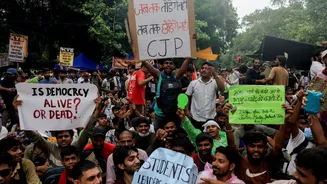









In a major move aimed at strengthening the legal framework against examination fraud, the Union Cabinet approved the Public Examinations (Prevention of Unfair Means) Amendment Bill, 2026.
The proposed legislation
seeks stricter punishments, time-bound investigations and the creation of Special Fast Track Courts to deal with cases related to paper leaks and examination fraud.
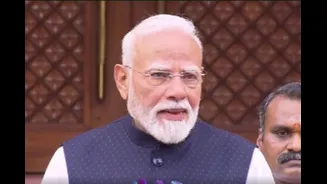
According to government sources, Prime Minister Narendra Modi, while chairing the Cabinet meeting, emphasised that the Bill should be treated as a priority and directed that it be introduced in Parliament at the earliest. The legislation is expected to be brought before the Lok Sabha on Monday.
What Is The Public Examinations Amendment Bill 2026?
The proposed amendments seek to increase penalties under the existing Public Examinations (Prevention of Unfair Means) Act, 2024.
The minimum imprisonment for offences under the Act has been increased from three years to five years, while the maximum punishment has been raised from five years to ten years.
The maximum fine has also been increased from ₹10 lakh to ₹50 lakh.
Stricter Penalties For Service Providers
The Bill proposes tougher action against service providers found involved in examination fraud.
Such entities could face fines of up to ₹5 crore and may be barred from conducting public examinations for eight years, replacing the existing four-year restriction.
Directors and senior management officials of service providers found involved in examination-related offences will face a minimum imprisonment of five years along with fines of up to ₹5 crore.
Harsher Punishment For Organised Exam Fraud
The proposed amendments include stricter provisions for organised examination fraud.
Such offences will attract a minimum jail term of seven years along with a minimum fine of ₹10 crore.
Time-Bound Investigation Process
To ensure faster investigation, the proposed law empowers the Central Government to constitute a Special Task Force (STF), apart from referring cases to a Central Investigating Agency.
Investigations under the Act will have to be completed within two months.
Special Fast Track Courts For Exam Fraud Cases
The Bill proposes that every State and Union Territory designate Special Fast Track Courts to exclusively hear offences under the Act.
These courts will conduct day-to-day proceedings and complete trials within three months from the filing of the chargesheet.
Pending cases under the Act will also be transferred to these courts and proceedings will continue from the stage at which they were transferred.
Dedicated Appellate Mechanism Proposed
The amendments also provide for the appointment of Special Public Prosecutors by every State and Union Territory.
Appeals against judgments of Special Fast Track Courts will lie before a Division Bench of the concerned High Court. The High Courts will endeavour to dispose of such appeals within three months.
Government’s Objective Behind The Amendments
According to the Statement of Objects and Reasons accompanying the Bill, the proposed changes aim to strengthen the integrity, transparency and credibility of public examinations.
The amendments seek to achieve this through time-bound investigations, speedy trials and stronger deterrence against organised examination fraud.
Bill Likely To Trigger Fresh Parliament Face-Off
With Parliament scheduled to reconvene on Monday after the weekend recess, the proposed legislation is expected to lead to another confrontation between the government and the Opposition.
The focus will remain on whether the Bill receives bipartisan support amid the ongoing political standoff over examination reforms and paper leak cases.