







National Education Day 2026: India celebrates National Education Day every year on November 11 to recognise the importance of education and honour the contributions of Maulana Abul Kalam Azad, the country’s
first Education Minister after Independence. The occasion marks his birth anniversary and highlights his vision of building an inclusive, modern and progressive education system.
The day serves as a reminder of the role education plays in nation-building, social development and creating equal opportunities for citizens. It also provides an opportunity to reflect on the foundations of India’s education system and the contributions of the leaders who helped shape it after Independence.
Maulana Abul Kalam Azad played a significant role in laying these foundations. During his tenure as Education Minister from 1947 to 1958, he advocated universal education, women’s education, scientific learning, technical training and the development of higher educational institutions.
From supporting the establishment of the Indian Institutes of Technology (IITs) to strengthening the University Grants Commission (UGC), his vision influenced several aspects of India’s academic landscape.
On National Education Day 2026, here is a look at the history of the occasion, who Maulana Abul Kalam Azad was and 10 of his important contributions to India’s education system.
National Education Day 2026: History And Significance
The Ministry of Human Resource Development, now known as the Ministry of Education, announced on September 11, 2008, that November 11 would be observed as National Education Day every year. The first celebration took place on November 11, 2008.
The decision recognised Maulana Abul Kalam Azad’s contribution to India’s educational development and his efforts to promote universal education, scientific learning and institution-building.
The first National Education Day celebration was inaugurated by then President Pratibha Patil in New Delhi on November 11, 2008. The occasion highlighted the importance of strengthening educational institutions and improving the quality of learning across the country.
Since then, schools, colleges, universities and educational institutions have marked the day through seminars, discussions, awareness programmes, debates and other activities focused on education.
National Education Day is not just a tribute to an eminent educationist. It is also an occasion to reflect on the need for accessible, affordable and quality education for every section of society.
Who Was Maulana Abul Kalam Azad?
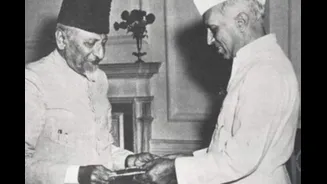
Maulana Abul Kalam Azad was an Indian freedom fighter, journalist, scholar, educationist and political leader who played an important role in the country’s independence movement and post-Independence development.
He was born on November 11, 1888, in Mecca, Saudi Arabia. His birth name was Feroze Bakht, while Abul Kalam became the name by which he was widely known. His father, Maulana Khairuddin, was a respected Islamic scholar, and his mother was Alia.
Azad received his early education at home and studied subjects such as Arabic, Persian, philosophy, mathematics, history and theology. He was also familiar with several languages, including Urdu, Arabic, Persian and Hindi.
As a young intellectual, he developed an interest in journalism and public affairs. He launched the Urdu journal Al-Hilal in 1912, through which he criticised British colonial rule and promoted nationalism and Hindu-Muslim unity. His writings and political activities brought him into the freedom movement.
Azad became closely associated with the Indian National Congress and worked alongside prominent leaders, including Mahatma Gandhi and Jawaharlal Nehru. He was also elected Congress president and played an important role in the Quit India Movement and the negotiations surrounding India’s independence.
After India became independent in 1947, Azad was appointed the country’s first Education Minister. He continued in the position until February 1958.
He believed education was essential for social equality, national development and individual empowerment. His work as Education Minister focused on expanding educational opportunities and building institutions that could support India’s future generations.
Maulana Azad passed away on February 22, 1958, in New Delhi. His legacy continues to be remembered through National Education Day and the institutions associated with his educational vision.
National Education Day: 10 Key Contributions of Maulana Azad
Maulana Abul Kalam Azad believed that education should be accessible to everyone, irrespective of caste, religion, gender or economic background. His policies and initiatives helped lay the groundwork for several important developments in India’s education sector.
Here are 10 significant contributions associated with his tenure and educational vision.
Promoted Free and Compulsory Education for Children
One of Azad’s most important priorities was universal primary education. He strongly advocated free and compulsory education for all children up to the age of 14.
He believed that every child should have access to basic education, regardless of their family’s financial circumstances or social background.
His emphasis on universal schooling helped establish education as an important responsibility of the independent Indian state and influenced later discussions on the right to education.
Encouraged Women’s Education
Azad believed that women’s education was essential for the overall development of society.
He advocated greater educational opportunities for girls and women at a time when access to schooling remained limited for many sections of the population.
His educational vision supported the idea that women should have equal opportunities to study, acquire knowledge and participate in the country’s social and economic development.
Supported the Development of the IIT System
Azad recognised the importance of science, engineering and technical knowledge in building a newly independent nation.
During his tenure, the Indian Institute of Technology (IIT) Kharagpur was established in 1951. It became the first IIT and laid the foundation for the development of a wider network of premier technical institutions.
Other IITs were established in subsequent years, including those in Bombay, Madras, Kanpur and Delhi.
His support for technical education helped strengthen India’s capacity to train engineers, scientists and professionals needed for industrial and technological development.
Played an Important Role in the Development of UGC
The University Grants Commission (UGC) is one of India’s key institutions responsible for coordinating university education and maintaining academic standards.
Azad played an important role in its development. The UGC was formally inaugurated in 1953, and it received statutory status through an Act of Parliament in 1956.
The commission was intended to support universities through financial assistance and help improve the quality of higher education.
Its development was an important step towards creating a more organised university education system in independent India.
Strengthened Technical Education Through AICTE
Azad recognised that India needed trained technical professionals to support industrial growth and scientific advancement.
He supported the strengthening of the All India Council for Technical Education (AICTE), which had existed as an advisory body since 1945.
The focus was on improving technical education, expanding training opportunities and developing a skilled workforce.
His emphasis on technical learning helped shape the country’s approach to engineering, vocational and professional education.
Advocated Education in the Mother Tongue
Azad believed that children should be able to understand and learn in a language familiar to them.
He supported the use of the mother tongue as the medium of instruction at the primary education level.
At the same time, he recognised the importance of English for higher education, national communication and international engagement.
His approach reflected the need to make education accessible while also preparing students to participate in a wider academic and professional environment.
Promoted Adult Education and Literacy
Azad understood that educational development should not be limited to children attending schools.
He supported adult education and initiatives aimed at expanding literacy among people who had missed formal schooling opportunities.
His vision recognised that learning should continue throughout life and that literacy could improve people’s ability to participate in society.
Adult education was therefore an important part of his broader approach to building an educated nation.
Encouraged Vocational and Agricultural Education
Azad believed that education should prepare individuals for practical responsibilities and employment opportunities.
He advocated vocational training and agricultural education alongside traditional academic subjects.
His approach aimed to connect learning with the country’s economic requirements, particularly in a nation where agriculture employed a large section of the population.
He also recognised the importance of developing technical skills to support industrial and rural development.
Promoted Indian Art, Literature and Culture Through National Academies
Azad believed that education should include India’s cultural and artistic heritage.
During his tenure, several national institutions were established to support the country’s cultural development.
These included:
- Sangeet Natak Akademi: Established in 1953 to promote music, dance and drama.
- Sahitya Akademi: Established in 1954 to encourage literature and literary activities in Indian languages.
- Lalit Kala Akademi: Established in 1954 to promote visual arts.
These institutions helped create a national platform for India’s diverse artistic and literary traditions.
Established the Indian Council for Cultural Relations
The Indian Council for Cultural Relations (ICCR) was established in 1950, with Azad playing a key role as its founder.
The organisation was created to promote cultural exchanges and strengthen India’s relations with other countries through art, literature, education and cultural activities.
It also contributed to India’s cultural diplomacy by encouraging international engagement and mutual understanding.
Azad believed that education and culture were closely connected and that India’s intellectual and cultural traditions deserved a prominent place in the world.
Why Is Maulana Abul Kalam Azad Remembered on National Education Day?
Maulana Abul Kalam Azad is remembered because of his vision of an education system that could support equality, scientific progress, cultural understanding and national development.
As independent India’s first Education Minister, he faced the challenge of building an educational framework for a country emerging from colonial rule.
His efforts focused on expanding access to education, developing universities, encouraging technical learning and supporting institutions dedicated to research, literature and the arts.
He also believed that education should develop independent thinking and help individuals contribute meaningfully to society.
National Education Day provides an opportunity to remember these ideas and assess how far the country has progressed in making quality education accessible to all.
How Is National Education Day Celebrated in India?
Schools, colleges and universities across India observe National Education Day through educational and cultural activities.
Common activities include:
- Essay-writing and speech competitions on the importance of education.
- Debates and discussions on the future of India’s education system.
- Seminars highlighting Maulana Abul Kalam Azad’s life and contributions.
- Awareness programmes promoting literacy and equal access to education.
- Quiz competitions and educational exhibitions.
- Activities encouraging students to understand the importance of learning and social development.
Educational institutions also use the occasion to discuss challenges such as access to schooling, digital learning, educational infrastructure, skill development and the quality of teaching.
National Education Day is an occasion to celebrate the importance of learning and remember the contributions of Maulana Abul Kalam Azad, whose vision helped shape India’s education system after Independence.
From advocating free and compulsory education for children to supporting technical institutions, universities, adult literacy and cultural academies, his contributions covered several areas of national development.
His belief that education was essential for building an inclusive and progressive society remains relevant today.
As India observes National Education Day on November 11, 2026, the occasion serves as a reminder that strengthening education requires continued efforts to improve access, quality and opportunities for every learner.