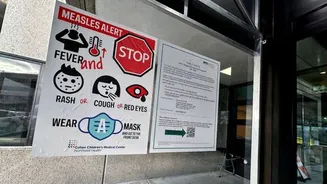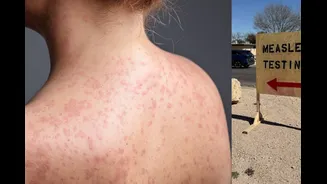







Since January 1, 2026, the US has recorded 5,412 confirmed measles cases as of November 12, making it the country’s worst outbreak since 1991.
After 26 years of being declared measles-free, the United States
has officially lost its measles elimination status, with the Pan American Health Organization (PAHO) confirming on November 17 that the virus has been circulating continuously for over 12 months.
What was once considered a major public health achievement is now a worrying setback, raising fresh concerns about the global resurgence of a vaccine-preventable disease.
What Does Losing Measles-Free Status Mean?
Elimination status does not mean zero cases. It means the virus no longer circulates continuously within a country’s borders. Occasional imported cases can still occur, but strong vaccination coverage and rapid containment prevent sustained chains of transmission. PAHO withdraws the status when the same genotype and lineage of measles virus spreads uninterrupted for at least one year.
In the US, genetic analysis linked ongoing cases across multiple states back to the 2025 Texas outbreak, confirming endemic transmission had re-established itself. Canada lost its status in 2025, and Mexico and Bolivia joined the US in the latest determination. Several European countries faced similar setbacks earlier due to declining immunisation rates.
How Contagious and Dangerous Is Measles?
Measles is one of the most infectious viruses known. It spreads through the air via respiratory droplets and can linger in the air or on surfaces. A single infected person can infect up to 12–18 others in an unvaccinated population. Symptoms typically begin with high fever, cough, runny nose, and red eyes, followed by the characteristic rash.
Complications are serious, especially in young children, pregnant women, and immunocompromised people. Pneumonia, encephalitis (brain inflammation), severe diarrhoea, and ear infections are common. In rare cases, measles can lead to long-term neurological damage or death. Unvaccinated individuals face the highest risk, which is why outbreaks concentrate in communities with low immunisation rates.
Two doses of the measles-mumps-rubella (MMR) vaccine provide about 97% protection. One dose offers roughly 93%. Herd immunity requires at least 95% coverage in a community to stop sustained spread.
The virus spreads through respiratory droplets when an infected person coughs, sneezes or breathes. Initial symptoms generally develop 10-14 days after exposure and can resemble those of a common respiratory infection.
Some common symptoms include:
- High fever
- Persistent cough
- Runny nose
- Red and watery eyes
- Small white spots inside the mouth, known as Koplik spots
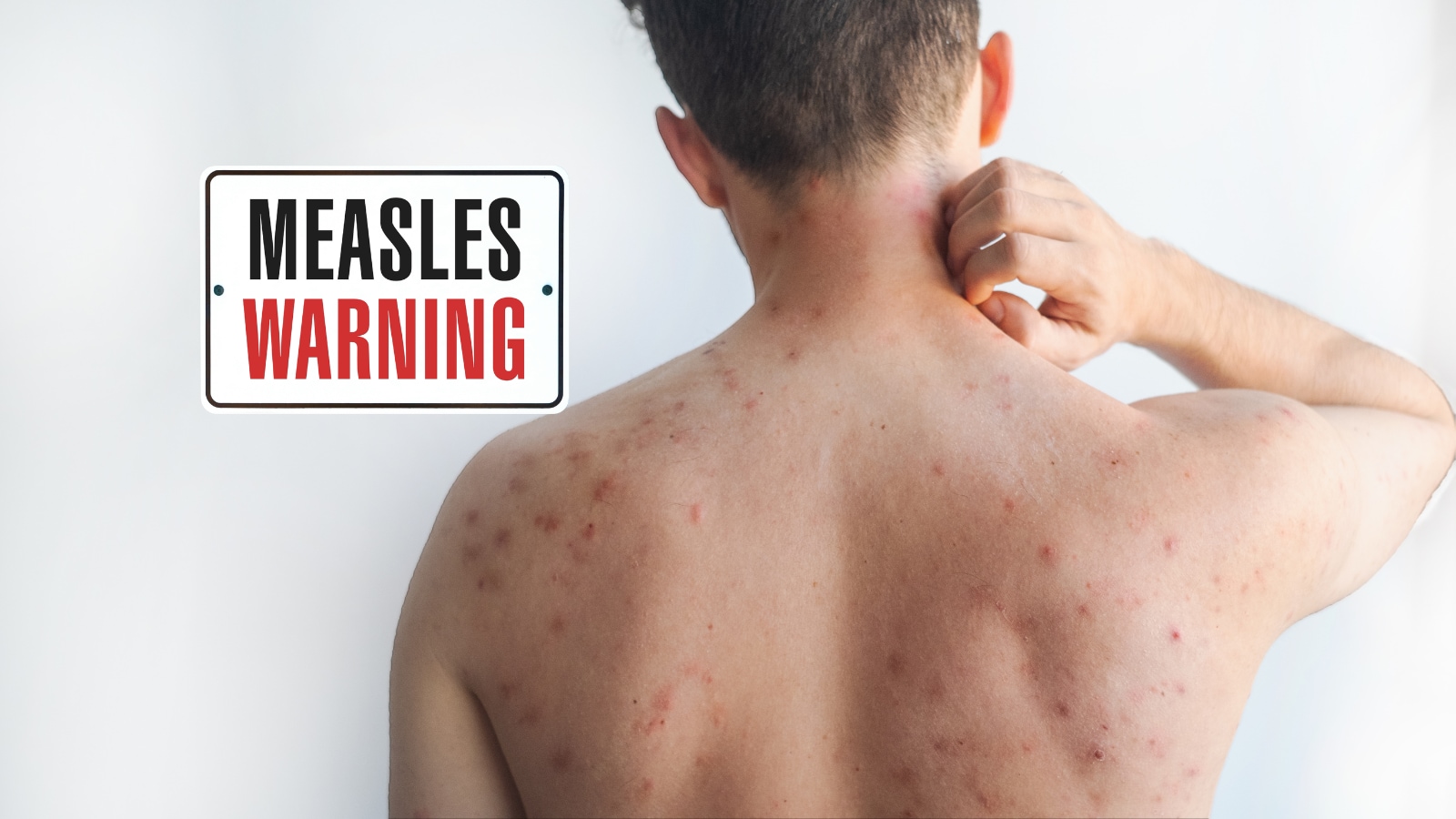
- A red, blotchy rash that usually begins on the face and spreads downwards across the body
While many people recover, measles can cause severe complications, particularly in children below five years, adults over 30, pregnant women and people with weakened immune systems.
Is India Facing A Similar Measles Threat?
India has made considerable progress in childhood immunisation, but measles continues to be a public health concern.
According to WHO and UNICEF estimates, India’s measles vaccination coverage reached 98% for the first dose and 95% for the second dose in 2025. This marks a significant improvement compared with the pre-pandemic period, when coverage for the two doses stood at 95% and 84%, respectively, in 2019.
However, high national vaccination coverage does not mean that every child is protected. An estimated 4.53 lakh children in India missed their first measles vaccine dose in 2025.
Moreover, India reported 18,774 measles cases in 2025. Reports based on WHO and US Centers for Disease Control and Prevention (CDC) data also indicated that the country recorded approximately 26,627 cases in the first half of 2026, raising concerns about the disease burden despite improvements in immunisation.
India also continues to be classified as a country with endemic measles transmission. This means the virus continues to circulate locally rather than being restricted to occasional imported cases.
The figures underline why maintaining vaccination coverage across every district, rather than relying only on national averages, remains important.
Should You Get A Measles Booster Shot?
According to WHO, two doses of a measles-containing vaccine provide approximately 97% protection against measles. Vaccine-induced immunity is generally long-lasting and, for most people, lifelong.
With the growing number of measles cases worldwide has raised questions about whether adults who received childhood vaccinations need another dose. However, a booster is not automatically necessary for everyone. People who have received the recommended two doses of a measles-containing vaccine and have developed immunity generally remain protected.
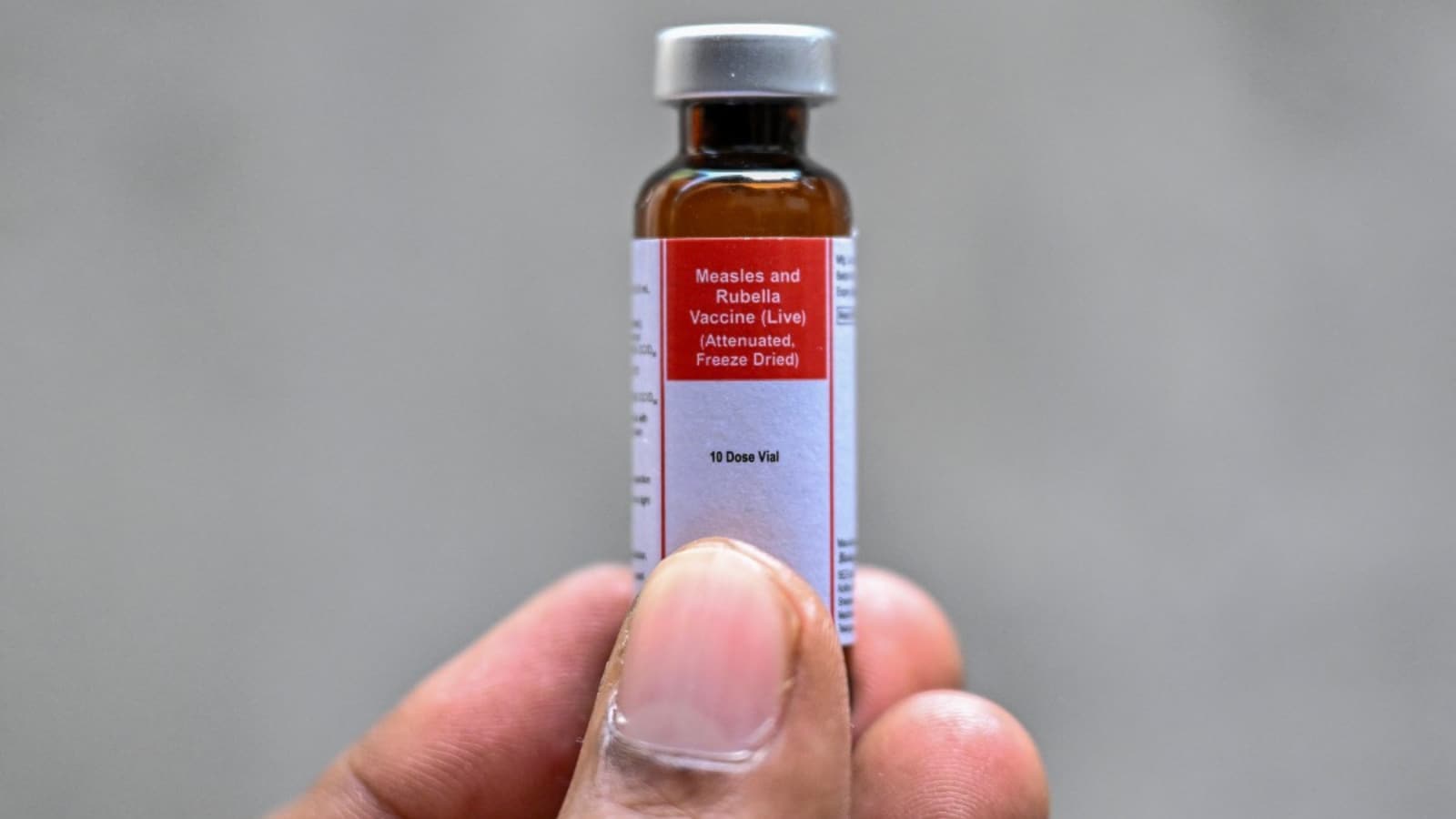
According to CDC guidance, adults without evidence of immunity should discuss vaccination with a healthcare professional. People in certain higher-risk groups, including healthcare workers, international travellers and students attending post-secondary institutions, may need two documented doses.
What Can India Learn From The US Measles Outbreak?
The US losing its measles elimination status is a reminder that vaccination achievements need to be maintained through consistent public health efforts.
India’s improved immunisation coverage is encouraging, but the continued circulation of measles and the number of children missing scheduled doses show that gaps remain.