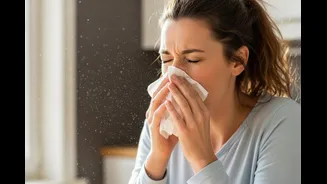







Festive seasons bring warmth, togetherness, and beautifully decorated homes, but they also quietly transform indoor spaces into allergy hotspots. Extended hours indoors, combined with fragranced decor,
decorative trees, and poor ventilation, can significantly affect respiratory health. For many adults and children, the season arrives with nasal congestion, sinus pressure, sneezing, coughing, and breathing discomfort. What’s often mistaken for a lingering cold is, in reality, an allergic response triggered by indoor irritants unique to festive environments.
The Common Thread: Fragrance, Smoke, And Indoor Exposure
“Festive celebrations often mean spending a lot of time indoors, which can worsen nasal and sinus allergies in adults,” explains Dr Deepti Sinha, Lead Consultant, ENT, CK Birla Hospital, Delhi. She notes that symptoms like nasal blockage, facial pressure, sinus headaches, throat irritation, and frequent sneezing are usually caused by seasonal indoor irritants rather than infections.
Scented candles, incense, air fresheners, and decorative sprays are central to festive décor, but they release volatile organic compounds (VOCs). Dr Atul Mittal, Principal Director & Head-ENT, Fortis Memorial Research Institute, Gurugram, notes, “These VOCs inflame and irritate the sensitive mucous membranes in the nose and sinuses, triggering symptoms ranging from sneezing and dry cough to facial pain and breathing difficulty.” He adds that these compounds evaporate easily, making them readily inhaled in enclosed spaces.
Natural Doesn’t Always Mean Safe
Live Christmas trees and pine decor may feel like healthier alternatives, but experts urge caution. Dr Sinha highlights that natural trees stored in damp conditions can carry mould spores, which cause sneezing, nasal blockage, and sinus congestion once released indoors. Pine pollen and VOCs from fresh trees can also irritate the eyes, nose, and throat, particularly in individuals with asthma or sinus conditions.
Dr Mittal reinforces this concern, noting that even smoke from incense, dhoop, or scented oils can penetrate deep into nasal cavities, increasing swelling and blocking sinus openings – especially in poorly ventilated homes.
Why Children Are Especially Vulnerable
Children often show quicker and more visible allergic reactions during festive seasons. “Many parents notice a sudden rise in sneezing, wheezing, coughing, watery eyes, and skin rashes,” says Dr Medha, Paediatrician, Madhukar Rainbow Children’s Hospital, Delhi. She explains that scented candles and room fresheners can exacerbate asthma and allergic rhinitis, while artificial snow sprays may cause coughing or skin irritation if inhaled or touched.
She advises parents to improve ventilation, limit scented products, and keep decorative items out of children’s bedrooms. If symptoms persist beyond a few days or recur every festive season, medical advice becomes essential.
Who Is Most At Risk And What Helps
Adults with allergic rhinitis, asthma, a deviated nasal septum, or recurrent sinus infections are particularly vulnerable. Dr Sinha recommends cutting back on strong fragrances, choosing flameless or fragrance-free alternatives, improving airflow, and maintaining clean, dry indoor spaces. Dr Mittal adds that fragrance-free products are safer than those labelled unscented, which may still contain masking chemicals. HEPA-filter air purifiers can significantly reduce airborne allergens and irritants.
Festive decor should uplift the senses, not overwhelm the sinuses. By being mindful of fragrances, smoke, and ventilation, it’s possible to create a celebratory environment that’s both joyful and health-conscious. Thoughtful choices can prevent seasonal discomfort, allowing families to truly enjoy the festivities without compromising respiratory well-being.