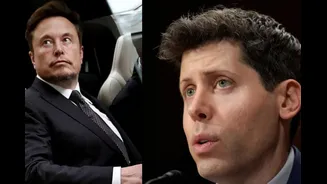









The closely watched legal battle between Elon Musk and OpenAI is set to move into the courtroom, with jury selection scheduled to begin today at a federal court in Oakland, California. The case will be overseen
by Judge Yvonne Gonzalez Rogers.
Describing the dispute as “billionaires versus billionaires,” the judge had earlier highlighted the scale and significance of the case. Since Musk first filed the lawsuit in 2024, the matter has seen multiple twists before reaching trial.
Why Musk Is Suing OpenAI
Musk has accused OpenAI of straying from its founding mission of developing artificial intelligence for the benefit of humanity. According to the lawsuit, the company shifted towards a profit-driven model, particularly through its partnership with Microsoft.
The billionaire claims he contributed about $38 million during OpenAI’s early days with the understanding that its technology would remain open-source and aligned with public benefit goals.
In his filing, Musk alleges that OpenAI’s leadership—including Sam Altman and president Greg Brockman—misled him about the organisation’s structure and long-term intentions. He argues that his support was secured on the premise of a non-profit model focused on safe and open AI development.
Musk is seeking approximately $134 billion in damages and has also called for Altman’s removal as CEO. He has stated that any compensation awarded should go to OpenAI’s non-profit arm rather than to him personally.
OpenAI’s Response and Counterclaims
OpenAI has strongly denied the allegations, maintaining that it remains committed to its mission of building artificial general intelligence (AGI) that benefits humanity.
The company has, in turn, accused Musk of launching a “harassment campaign,” suggesting that his actions are driven by personal motives and competition with his own AI venture.
According to OpenAI, Musk stepped away from the organisation in 2018 after disagreements over control. The company claims he had sought significant authority over its direction, including proposals that were not accepted by other co-founders such as Greg Brockman and Ilya Sutskever.
In its response, OpenAI also stated that Musk’s $38 million contribution was a donation to the non-profit entity and was utilised in line with its mission. It argued that Musk is now attempting to retroactively treat the donation as an investment that would entitle him to ownership or compensation.
What’s at Stake
The outcome of the case could have far-reaching implications for the governance and structure of AI companies, especially those transitioning from non-profit origins to commercial models.
Beyond the legal dispute, the trial underscores broader tensions within the AI industry around control, funding, and the balance between public benefit and commercialisation.