




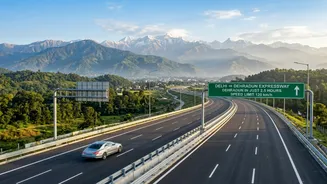
The much-anticipated Delhi–Dehradun Expressway is finally being rolled out, promising to dramatically cut travel time and transform connectivity between the national capital and Uttarakhand.
Stretching
roughly 210 km, this access-controlled expressway is designed to reduce travel time between Delhi and Dehradun from around 6–7 hours to just 2.5–3 hours, making weekend getaways and intercity travel significantly smoother.
Route & Connectivity
The expressway begins from Akshardham in Delhi and passes through key regions of Uttar Pradesh and Uttarakhand, including Baghpat, Shamli, Saharanpur, and finally Dehradun.
It integrates seamlessly with existing highways and urban corridors, ensuring faster entry and exit points without congested city traffic. A notable stretch also connects to the Eastern Peripheral Expressway, easing traffic flow around Delhi.
Travel Time: What Changes?
Before: 6–7 hours (often longer due to traffic bottlenecks)
Now: Approximately 2.5–3 hours
Impact: Faster logistics, smoother tourism access, and reduced fuel consumption
This time reduction is expected to boost tourism to Dehradun, Mussoorie, and nearby hill destinations, especially for Delhi-NCR travellers.
Key Features
Access-Controlled Highway: Limited entry/exit points for uninterrupted high-speed travel
12-Lane Section (Delhi stretch): One of the widest urban expressway segments
Wildlife Corridors: Asia’s longest elevated wildlife corridor near Rajaji National Park to protect animal movement
Elevated Roads & Underpasses: To reduce congestion and ensure safety
Smart Traffic Systems: CCTV surveillance, emergency response systems, and modern signage
Why It Matters
Beyond convenience, the expressway is a major infrastructure upgrade that will:
Strengthen regional connectivity
Boost tourism and local economies
Reduce traffic congestion on existing routes
Improve road safety and travel efficiency
In essence, the Delhi–Dehradun Expressway isn’t just about speed—it’s about redefining how North India travels.