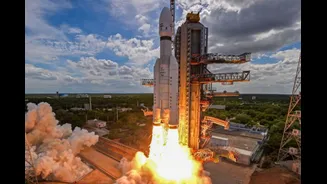








Indian Space Research Organisation (ISRO) is preparing to select a second batch of astronauts for the Gaganyaan programme, marking a major step toward building a long-term human spaceflight ecosystem in India as reported
by India Today.
Unlike the first selection round, which was limited to Indian Air Force test pilots, the new intake is expected to include civilians from science, technology, engineering and mathematics (STEM) backgrounds alongside military personnel.
The move reflects India’s broader ambitions in space, which include sending astronauts into orbit, building a space station, and eventually landing Indians on the Moon by 2040.
From Test Pilots To Scientists
The first batch of astronauts, chosen in 2020, came exclusively from the Indian Air Force and underwent an extensive screening process involving advanced medical and psychological testing.
The four selected astronauts later trained in Russia under Roscosmos, where they completed survival drills, zero-gravity simulations and spacecraft training.
Now, ISRO is broadening its approach. Officials are considering a pool of around 10 astronauts, potentially including six military pilots and four civilian specialists from STEM fields.
The agency is still deciding whether the military category will remain limited to test pilots or expand to include helicopter and transport stream officers.
Dedicated Team Working On New Selection Process
ISRO has formed a special committee involving agency officials and current astronauts to design the next phase of astronaut selection and management.
The committee is working on eligibility rules, training methods and evaluation systems. Members of the current astronaut corps—including Shubhanshu Shukla, Ajit Krishnan and Angad Pratap—are helping develop training procedures and infrastructure while preparing for India’s first crewed mission.
Balancing Global Standards With Accessibility
ISRO officials say one challenge is adapting international astronaut selection standards to Indian conditions.
Space agencies like NASA often require civilian applicants to hold pilot licences, but officials acknowledge such qualifications can be expensive and inaccessible in India.
As a result, ISRO is exploring alternative pathways, including offering flying training to civilian candidates while maintaining strict medical and psychological standards.
“We need to strike a balance between maintaining global standards and making the process accessible,” an official told India Today.
India’s Human Spaceflight Push Expands
The expansion of the astronaut corps signals a shift from a one-time mission approach to a sustained human spaceflight programme.
ISRO is also working on infrastructure such as training facilities, living quarters and operational protocols needed to support a larger astronaut team, particularly if civilians are inducted.
Although a formal date for Gaganyaan’s first uncrewed mission has not yet been announced, officials say preparations are advancing steadily.
The next phase of astronaut selection, they say, reflects India’s growing ambition not just to reach space—but to establish a long-term human presence beyond Earth.