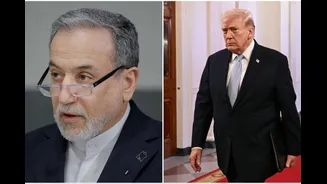





Iranian Foreign Minister Abbas Araghchi said negotiations with the United States have ended permanently, describing the situation as a betrayal following assurances that no military action would take place.
In a video released on X, Araghchi said, “The negotiations with the Americans are over forever… a bitter experience and betrayal after promises of no attack!”
He further stated that the developments have eliminated any remaining diplomatic space between Tehran and Washington.
“There is no longer any room for dialogue with the Americans. They deceived us with promises of no attack, and even after achieving noticeable progress in the negotiations, they decided to attack us anyway,” Araghchi said.
Calling the experience deeply damaging to trust, he added, “The experience is exceedingly bitter, and trust is completely nonexistent. The regional war closes the doors of diplomacy forever!”
🚨عاجـــــــــــــــل
أراغشي يغلق الباب نهائياً:
“انتهت المفاوضات مع الأمريكيين إلى الأبد… تجربة مريرة وخيانة بعد وعود بعدم شن هجوم!”
وزير الخارجية الإيراني عباس عراقجي 🇮🇷 :
لم يعد هناك مجال للحوار مع الأمريكيين. لقد خدعونا بوعود عدم الهجوم، وحتى بعد إحراز تقدم ملحوظ في… pic.twitter.com/XwdA8En67f
— Iran’s latest (@Red_Bat_) March 23, 2026
His remarks signal a hardened Iranian position amid intensifying hostilities in the region.
WAR ENTERS FOURTH WEEK AS INFRASTRUCTURE THREATS ESCALATE
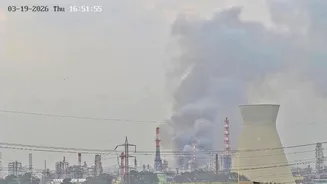
According to the Associated Press, the United States and Iran have both threatened to target critical infrastructure as the war in the Middle East enters its fourth week, raising concerns over civilian safety and economic disruption.
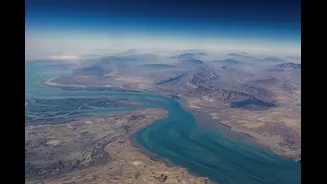
Iran has warned that the Strait of Hormuz, a key global energy route, would be “completely closed” if the US follows through on threats to attack Iranian power plants.
The waterway is crucial for global oil shipments, with roughly one-fifth of the world’s supply passing through it.
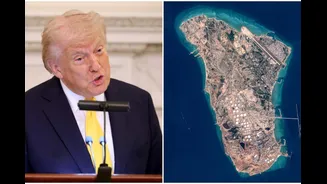
US President Donald Trump has threatened to strike Iran’s power plants if Tehran does not reopen the strait, escalating tensions further.
Iranian parliament speaker Mohammad Bagher Qalibaf warned that if Iran’s infrastructure is targeted, then vital facilities across the region, including energy and desalination plants providing drinking water in Gulf countries, could be considered legitimate targets and “irreversibly destroyed,” according to AP.
Iran’s ambassador to the United Nations has also said attacks on power plants would be “inherently indiscriminate and clearly disproportionate,” and could amount to a war crime, the report added.
MISSILE STRIKES AND NUCLEAR SITES ADD TO TENSIONS
Iran said its strikes in the Negev Desert were carried out in response to an attack on its main nuclear enrichment facility in Natanz.
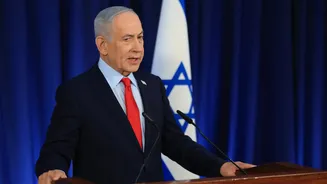
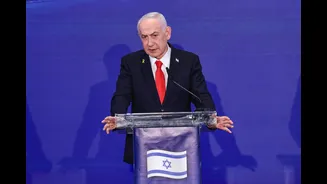
Israeli Prime Minister Benjamin Netanyahu described the situation as a “miracle” after Iranian missile strikes near a sensitive nuclear research site caused injuries but no fatalities.
The International Atomic Energy Agency has indicated that much of Iran’s enriched uranium stockpile is believed to be located elsewhere, including at a facility in Isfahan, according to the AP report.
Israel is widely believed to possess nuclear weapons, though it neither confirms nor denies this.
CONFLICT SPREADS ACROSS REGION
The conflict has expanded beyond Israel and Iran, with Hezbollah claiming responsibility for strikes in northern Israel.
Lebanese President Joseph Aoun described Israel’s targeting of bridges in southern Lebanon as “a prelude to a ground invasion.”
Israeli military spokesperson Brig. Gen. Effie Defrin said “more weeks of fighting against Iran and Hezbollah are expected for us,” indicating the possibility of prolonged hostilities.
Air defences were also activated in Kuwait, Bahrain and the United Arab Emirates amid missile and drone threats, highlighting the widening regional impact of the conflict.
Casualties continue to rise across multiple countries.
The war, which the US and Israel launched on February 28, has killed more than 2,000 people, according to the Associated Press.
Iran’s health ministry has reported over 1,500 deaths in the country, while Israeli authorities say Iranian strikes have killed at least 15 people.
Lebanese authorities have said Israeli strikes have killed more than 1,000 people and displaced over one million.
As the conflict continues to impact critical infrastructure, energy routes and civilian populations, concerns remain over the potential for further escalation and long-term regional instability.