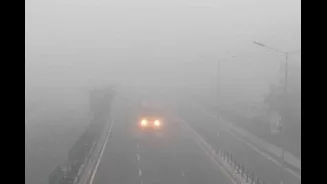








Dehradun’s air quality deteriorated over the past two days, with the Air Quality Index (AQI) slipping into the “poor” category and approaching “severe” levels at night. Dehradun’s real-time AQI on Wednesday
hovered between 260 and 300, worsening significantly after sunset. This comes as Delhi continued to grapple with ‘very poor’ air quality, recording an AQI of 328 on Wednesday morning despite a slight improvement from 377 a day earlier, with smog and fog reducing visibility across large parts of the national capital.
Dehradun Air Quality Deteriorates Sharply After Sunset
Professor Vijay Shridhar, who heads the pollution monitoring centre at Doon University, told news agency PTI that the city’s average AQI touched 291 during the day, placing it in a grey zone between “polluted” and “severely polluted”.
“There is some improvement during daylight hours because of air movement. But at night, the AQI crosses 300 at several locations. While Dehradun is not yet comparable to Delhi, the air quality cannot be described as satisfactory,” he said.
What Is Driving Dehradun’s Rising Pollution?
Environmental experts attribute the decline in air quality to a combination of factors, including a sharp increase in vehicle numbers, burning of waste, ongoing construction activity and seasonal forest fires across Uttarakhand.
Data from the Central Pollution Control Board showed that by 4 pm on Wednesday, Dehradun’s AQI stood at 294, firmly in the “poor” category.
While Dehradun’s pollution levels remain lower than those recorded in major metropolitan centres during winter, experts warn that the current trend highlights growing environmental stress on the city.
With expanding urbanisation and rising traffic, pollution specialists say sustained monitoring and stronger enforcement measures will be crucial to prevent further deterioration in air quality as winter progresses.
Delhi’s Air Still ‘Very Poor’
Delhi’s air quality showed marginal improvement on Wednesday morning but remained in the “very poor” category. At 9 am, the national capital recorded an AQI of 328, down from 377 a day earlier, even as dense smog continued to cover large parts of the city. Out of 40 air quality monitoring stations in Delhi, 30 recorded “very poor” air quality, with Bawana registering the worst AQI at 376.