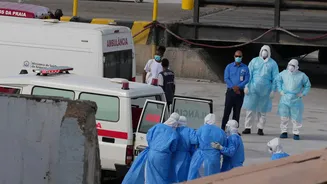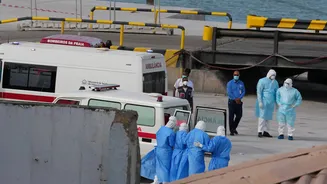








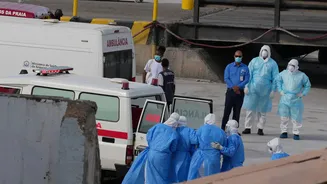

US President Donald Trump has commented on the reported Hantavirus outbreak, saying the situation is “hopefully” under control. He added that he had been briefed about the incident linked to a cruise and
that officials are preparing a detailed report.
Speaking to reporters, Trump said, “It’s very much, we hope, under control.” He further noted, “It was the ship, and I think we’re going to make a full report about it tomorrow. We have a lot of people studying it. It should be fine.”
NEW: President Trump says he’s been briefed on Hantavirus.
“It’s very much, we hope, under control.”
“I think we’re going to make a full report about it tomorrow. We have a lot of people — a lot of great people are studying it. It should be fine, we hope.” pic.twitter.com/nelc7QOIlz
— Fox News (@FoxNews) May 8, 2026
Hantavirus Outbreak
The World Health Organization (WHO) said that more hantavirus cases could emerge after the disease killed three passengers from a cruise ship, but it expected the outbreak to be limited if precautions were taken.
It also confirmed five instances of hantavirus linked to fatalities on a cruise vessel currently navigating the Atlantic Ocean.
Addressing a press briefing on Thursday, Tedros Adhanom Ghebreyesus said that the World Health Organization was informed by the United Kingdom about a cluster of passengers showing acute respiratory distress symptoms aboard the Dutch-flagged ship Hondius. The vessel is currently travelling from Cape Verde to Tenerife in Spain.
The WHO chief described the situation as serious but added that the overall public health risk remains low. “While this is a serious incident, WHO assesses the public health risk as low,” he told reporters.
He also provided an update on the situation, stating that eight cases have been identified so far. This includes three deaths, five confirmed infections, and three suspected cases under investigation.
How Hantavirus Spreads
Hantaviruses are generally transmitted to humans through direct contact with infected rodents or exposure to their urine, droppings, or saliva. However, health officials noted that the Andes strain linked to this outbreak is unusual, as it can spread between humans.
Such human-to-human transmission typically occurs only through close or prolonged contact, most commonly among family members or healthcare workers caring for infected patients.