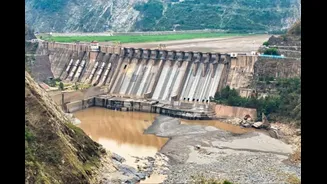









Pakistan has officially projected a 22% shortfall in water inflows into the Indus Basin for the upcoming Kharif season of 2026-27, according to an official Pakistani statement accessed by CNN-News18.
The
projection comes as the Indus Waters Treaty (IWT) remains in abeyance following the April 2025 Pahalgam terror attack.
“The overall system shortage worked out at as 22% for both Punjab and Sindh,” said the official Pakistani statement.
It also stated that Pakistan suffered a 22% drop in water inflows during the recent Kharif season 2026.
Pakistan has been raising the IWT suspension on international forums, calling it a “water war” waged by India against it, but the Narendra Modi government has said ‘water and blood cannot flow together’ and asked Pakistan to first abjure terror.
Pakistan’s water authorities had feared a major irrigation crisis last year too after India put the Indus Waters Treaty in abeyance following the Pahalgam terror attack in April 2025, with official Pakistani records showing an anticipated water shortage of up to 21% at the start of the crucial Kharif crop season last year in May.
But floods and snowmelt in the higher reaches of the Himalayas had then saved the day.
Pakistani documents have been speaking about dwindling reservoir levels, uncertainty over river inflows and growing concern over reduced flows in the Jhelum-Chenab system.
Officials have repeatedly expressed concern over reduced inflows in the Jhelum-Chenab river system and referred to a “crisis created by India’s short supplies in the Chenab River”.
Punjab and Sindh account for the bulk of Pakistan’s irrigated agriculture.
The records show authorities are clearly preparing for a difficult season and repeatedly flagged concerns over reduced flows in parts of the western river system.
Any change in Indus Basin flows has major implications for food security, as 90% of agricultural production depends on the Indus Basin Irrigation System.