






Iran’s National Security Council has warned that Tel Aviv could come under attack if hostilities in southern Lebanon continue, amid conflicting claims over whether Lebanon is covered under the recently
announced US-Iran ceasefire.
According to media reports, the Iranian National Security Council said, “Within a few hours, if the firing does not stop in southern Lebanon, the air and missile unit will bomb Tel Aviv.”
LIVE Updates On The US-Iran War
The warning comes as uncertainty persists over the scope of the ceasefire, with Israel and Pakistan offering contradictory positions on whether the agreement extends to Lebanon, where fighting between Israel and Iran-backed Hezbollah has intensified in recent weeks.
HEZBOLLAH HALTS FIRE AMID CEASEFIRE SIGNALS
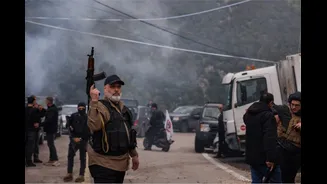
Reuters reported that Hezbollah halted fire on northern Israel and on Israeli troops in Lebanon in the early hours of Wednesday as part of the US-Iran ceasefire announced earlier, citing three Lebanese sources close to the group.
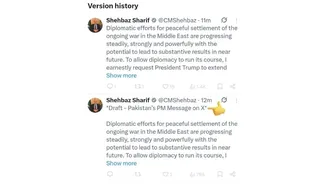
Pakistani Prime Minister Shehbaz Sharif, who played a mediating role in ceasefire negotiations, said the two-week truce would include Lebanon, where renewed hostilities between Israel and Hezbollah began on March 2.
Reuters had reported last month that Iran wanted Lebanon to be included in any agreement reached with the United States, underlining Tehran’s strategic interest in limiting Israeli military operations against Hezbollah.
According to the three Lebanese sources cited by the report, Hezbollah is expected to issue a formal statement clarifying its position on the ceasefire and responding to Israeli Prime Minister Benjamin Netanyahu’s assertion that Lebanon is not part of the agreement.
Hezbollah’s last public statement on its military activity was posted at 1 am (2200 GMT Tuesday), saying it had targeted Israeli troops inside Lebanon earlier on Tuesday evening.
ISRAEL SAYS LEBANON NOT INCLUDED IN TRUCE
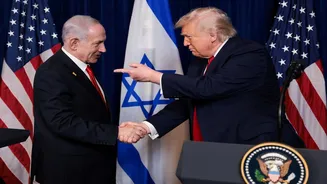
Israel supports US President Donald Trump’s decision to suspend strikes on Iran for two weeks, but the ceasefire does not apply to Lebanon, according to a statement from Netanyahu’s office on Wednesday.
Israel has also issued a new evacuation order for one southern Lebanese city, indicating it could continue military operations despite the broader pause in hostilities involving Iran.
The Israeli government said it backed the US move, provided Tehran immediately opened the strait and halted attacks against the United States, Israel and countries in the region.
Israel also said it supported US efforts to ensure Iran no longer posed a nuclear, missile or “terror” threat to the United States, Israel and its Arab neighbours, adding that Washington had assured Israel it remained committed to achieving shared strategic goals in upcoming negotiations.
Iran said negotiations with the United States would begin on April 10 in Islamabad, Pakistan, as diplomatic efforts continue to reduce tensions.
HUMANITARIAN IMPACT OF CONFLICT IN LEBANON
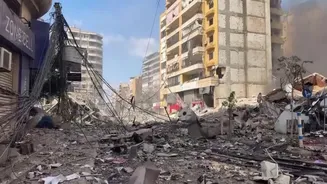
The ongoing Israeli offensive in Lebanon has killed more than 1,500 people, including 130 children and over 100 women, Reuters reported.
Israeli strikes and evacuation orders covering large parts of southern and eastern Lebanon, as well as Beirut’s southern suburbs, have displaced more than 1.2 million people.
Lebanon’s army has urged displaced families to delay returning home, warning that Israeli attacks remain ongoing and cautioning about the dangers posed by unexploded ordnance.
Lebanon was drawn deeper into the widening regional conflict after Hezbollah fired rockets at Israel in solidarity with Iran, two days after Iran was attacked by Israel and the United States.
The exchange triggered a new Israeli ground and air offensive.
ALSO READ | Expect Unimpeded Freedom Of Navigation Through Strait Of Hormuz: MEA On US-Iran Ceasefire