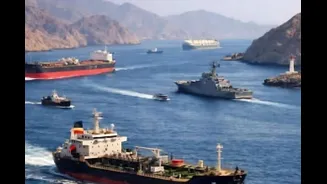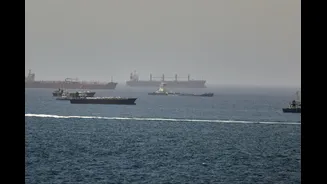










Maritime traffic through the Strait of Hormuz has shown signs of recovery in recent days, although vessel movements remain significantly below levels recorded before the Middle East conflict disrupted
one of the world’s most important shipping corridors.
According to data and analytics company Kpler, 71 ships transited the strait between Friday and Sunday, with traffic peaking at 35 crossings on Saturday.
Before the United States and Israel launched strikes on Iran in late February and Tehran responded with its own attacks, the waterway typically handled between 100 and 130 vessels daily.
AFP reported that at least 35 commodity carriers transited the strait on Monday.
The figure represents nearly one-third of the normal peacetime traffic of around 120 vessels per day, with maritime trackers expecting the final count to rise further as additional ship movements are recorded.
Maritime tracking companies have linked the increase in vessel movements to the Memorandum of Understanding reached between Washington and Tehran.
“The latest figures suggest a cautious but visible rebound in traffic following the MoU (memorandum of understanding between the United States and Iran), although the daily pattern remains volatile,” Mihail Todorov of shipping data provider AXSMarine told AFP.
According to the report, Kpler had recorded 26 commodity ship transits by Monday afternoon, while AXSMarine data showed at least 26 commercial vessels had already crossed the strait by Monday morning.
Saturday recorded the strongest activity since the conflict began, with AXSMarine registering 38 commercial vessel transits and Kpler counting 32 commodity ship movements.
Kpler press officer Nikos Pothitakis said operational activity continued despite uncertainty surrounding negotiations.
TANKERS AND LNG CARRIERS RESUME MOVEMENTS
Reuters reported that shipping activity continued to strengthen on Tuesday, with two previously stranded supertankers successfully passing through the strait.
The Very Large Crude Carrier Dubai Energy, carrying two million barrels of crude from Abu Dhabi and Saudi Arabia, exited the waterway and headed towards Taiwan, according to Kpler and LSEG tracking data.
Another VLCC, Universal Glory, carrying two million barrels of Saudi crude, also cleared the strait.
Ship-tracking data further showed that seven QatarEnergy-controlled liquefied natural gas tankers entered the Gulf between June 11 and June 22 to reload cargoes.
Reuters reported that this was the first such movement since airstrikes on Iran began in late February.
Three of the vessels, Al Hamla, Al Areesh and Al Khuwair, completed their inbound journeys with tracking systems switched off before reappearing in maritime databases days later.
CAUTION VISIBLE DESPITE RECOVERY
While traffic has increased, analysts say vessel operators remain cautious.
According to AP, ships are still moving at a much slower pace than before the conflict.
Kpler data showed many vessels either following routes prescribed by Iran or concealing their locations by turning off transponders.
The report noted that the central shipping channel remains mined and closed, forcing ships to use alternative northern and southern routes through Iranian and Omani waters.
Kpler said “caution is still clear” in the behaviour of many operators navigating the strategic waterway.
Despite the improvement in vessel movements, data from tracking firms indicates that shipping volumes remain substantially below pre-war norms, underscoring continued uncertainty over the future of commercial traffic through the Strait of Hormuz.