






Is Uttar Pradesh the BJP’s next big political target after its emphatic victory in West Bengal? The signals are clear.
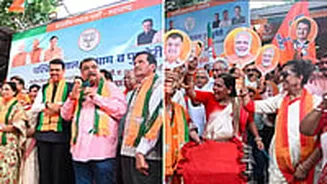
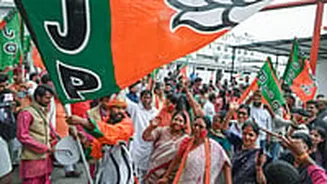
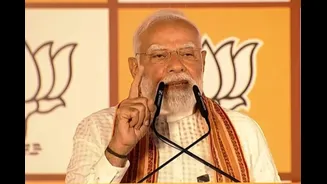
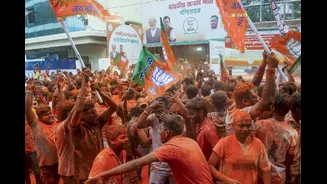
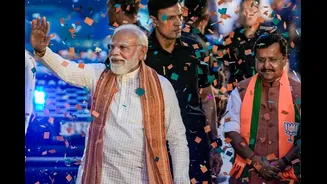
Prime Minister Narendra Modi, while addressing party workers during the victory celebrations,
chose not just to highlight the win but also to sharpen his attack on the Samajwadi Party—making it evident that the BJP’s focus is now shifting towards the crucial 2027 Uttar Pradesh Assembly elections.
Among the most talked-about lines from Prime Minister Modi’s speech was his sharp attack on the Samajwadi Party over the Women’s Reservation Bill. Modi said that the Samajwadi Party had a chance to remove the “stain” of being anti-women but failed to do so. He added that by opposing the bill, the party had “crushed the dreams” of Ram Manohar Lohia and that women in Uttar Pradesh and across the country “will never forget” this stance.
By blaming the Samajwadi Party for blocking the legislation and branding it “anti-women”, the Prime Minister laid the groundwork for a narrative that the BJP is expected to push aggressively in UP.
These specific remarks have quickly become the central talking point in political circles, indicating a clear attempt to shape the narrative ahead of the 2027 Uttar Pradesh Assembly elections.
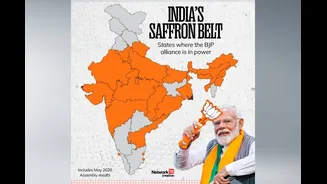
The timing of this pivot is equally significant. After facing setbacks in the 2024 Lok Sabha elections, the BJP has regained political momentum with victories in states like Haryana, Maharashtra, Delhi, Assam, West Bengal, and Puducherry. Despite limited success in southern states such as Kerala and Tamil Nadu, the party continues to dominate the national landscape, with National Democratic Alliance governments in 22 states. Yet, within this broad canvas, Uttar Pradesh remains the political epicentre.
For the BJP, retaining Uttar Pradesh is critical to sustaining its dominance at the Centre. The state sends the largest number of Members of Parliament, and its electoral verdict often shapes national politics. This is why top leaders, including Home Minister Amit Shah and BJP president Nitin Nabin, are expected to play a direct role in shaping the party’s strategy in the state.
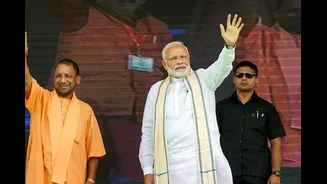
At the governance level, early signs of recalibration are already visible. A cabinet expansion under Chief Minister Yogi Adityanath is likely, aimed at addressing anti-incumbency and improving administrative delivery. Sources indicate that underperforming ministers could be replaced, while new faces—particularly women and representatives of key caste groups—may be inducted. This dual approach of governance correction and social balancing is central to the BJP’s electoral strategy.
Simultaneously, organisational changes are on the horizon. The state unit, led by Pankaj Chaudhary, is expected to see a revamped team with a sharper electoral focus. The emphasis will be on strengthening booth-level management, expanding the role of women leaders, and bringing in individuals with strong grassroots connections. The appointment of a full-time state in-charge, pending for nearly two years, is also expected soon, signalling a more structured and centralised campaign approach.
Development and governance narratives will form the backbone of the BJP’s campaign. The Yogi government has already accelerated infrastructure projects, including metro expansions, expressways, and the upcoming Jewar International Airport. At the same time, frequent recruitment drives by agencies such as the Uttar Pradesh Public Service Commission and the Uttar Pradesh Subordinate Services Selection Commission are being highlighted to address concerns around employment. By combining development, welfare schemes, and nationalism, the BJP aims to project a narrative of continuity and stability.
Equally crucial is the effort to project unity within the party and its allies. Following coordination meetings with the Rashtriya Swayamsevak Sangh leadership, the Uttar Pradesh government has maintained a disciplined public posture, avoiding internal contradictions. Senior leaders, including deputy chief ministers, have intensified their attacks on the Samajwadi Party, ensuring that the opposition remains on the defensive.
On the ground, an extensive outreach strategy is being rolled out. Chief Minister Yogi Adityanath is set to begin statewide tours, focusing on inaugurations, foundation stone-laying ceremonies, and direct engagement with the public. In parallel, organisational leaders will mobilise party workers at the district level, strengthening the election machinery well ahead of 2027.
Political analysts believe the stakes are exceptionally high. The BJP’s victory in West Bengal is being seen as a morale booster, but the real test lies in retaining power in its strongholds. Uttar Pradesh, in this context, is not just another election—it is the decisive battleground that could define the party’s future trajectory.
However, for Yogi Adityanath, the 2027 election is also a personal and political milestone. A third consecutive victory would solidify his position as one of the BJP’s most influential regional leaders and potentially elevate his role in national politics. On the other hand, any setback could trigger internal recalibrations within the party.