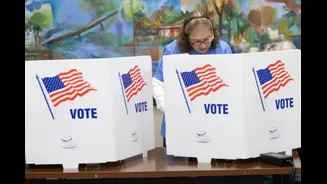




The US midterm elections are not just a referendum on Donald Trump and his presidency. For the Indian-American community, which has steadily expanded its political participation and electoral influence,
the November 3 vote is also about the economy, healthcare, education, discrimination, foreign policy and the future of America’s relationship with immigrants.
While immigration remains an important concern, it is no longer the only issue shaping the community’s political choices. The latest surveys indicate that Indian-American voters are weighing everyday economic pressures alongside questions of identity, representation and America’s role in the world.
Click here for LIVE updates on US midterm elections
With candidates from both the Democratic and Republican parties making efforts to reach South Asian voters, the community’s political preferences are attracting renewed attention. The question is whether its traditionally Democratic lean will hold, and which issues will ultimately determine how Indian-Americans cast their ballots.
The seven issues shaping the Indian-American vote
1. Cost of living and inflation
For Indian-American households, many of whom are concentrated in professional and middle-income communities, the cost of living has emerged as an important electoral concern. Housing, groceries, healthcare, education and everyday expenses are likely to weigh on voters as they assess the performance of the administration and their local representatives.
The 2026 Asian American Voter Survey, conducted by AAPI Data and APIAVote between June 3 and July 27, found that 90 per cent of Asian-American voters considered cost of living and inflation very or extremely important in deciding their vote. The survey also found that 44 per cent trusted Democrats to handle the issue better, against 18% who preferred Republicans.
While these figures cover Asian-American voters collectively rather than Indian-Americans alone, they offer an indication of the economic pressures confronting the wider electorate.
2. Jobs, employment and economic opportunities
Employment opportunities, wage growth and economic stability are also important considerations. Indian-Americans have a significant presence in the technology, healthcare, finance, research and entrepreneurial sectors. Consequently, changes in the American labour market, business regulations and government spending can directly affect their professional and financial prospects.
The AAPI survey found that 80 per cent of Asian-American voters considered jobs and unemployment very or extremely important. Concerns about the economy have also featured prominently in Carnegie’s Indian American Attitudes Survey, which found widespread dissatisfaction with Trump’s handling of the domestic economy earlier in 2026.
3. Healthcare and social security
Healthcare costs, insurance coverage and access to medical services are another important consideration, particularly for families with children and older members.
The AAPI survey found that 82 per cent of Asian-American voters considered healthcare an important electoral issue. Social Security and Medicare were also important to 80% of respondents.
For Indian-American voters, these concerns intersect with broader debates over healthcare affordability, insurance premiums and the future of federal social welfare programmes. The direction of healthcare spending and social security policy could therefore influence how voters assess candidates in congressional races.
4. Education and opportunities for the next generation
Education has traditionally been a major priority for many immigrant families, and Indian-Americans are no exception. School funding, university affordability, student loans, access to higher education and opportunities for children are likely to feature in voting decisions.
The AAPI survey found that 79 per cent of Asian-American voters considered education very or extremely important.
The issue also extends to immigration-related questions, particularly for families whose children are studying in American universities or whose professional prospects are linked to the country’s education and research ecosystem. However, education is not simply a question of immigration policy; it also concerns local school boards, state funding and federal education priorities.
5. Racism, discrimination and community safety
Questions of identity and belonging have become particularly prominent in the run-up to the midterms. The Indian-American community has faced renewed scrutiny following incidents involving anti-Indian rhetoric and hostility towards South Asians. A recent controversy erupted after Texas Republican candidate Bo French posted a photograph of University of Texas students of South Asian origin celebrating their football team’s success, accompanied by the remark: “I heard UT graduation this year looked like this. I didn’t believe it.”
The post triggered a debate about national identity and belonging, placing the community’s concerns about discrimination in the middle of an already polarised election campaign.
The issue has also featured in campaign outreach. In Michigan, Democratic Senate candidate Abdul El-Sayed addressed a Diwali-themed gathering in the Detroit suburbs, where South Asian community members raised concerns about hate speech and discrimination.
Dharminder Dargan, an Indian-American engineer and former Republican campaign volunteer, told The Straits Times: “The wind is changing, and I’m very disappointed in the GOP.”
His comments reflect the concerns of some former Republican supporters, although they should not be interpreted as representing the entire community. The AAPI survey found that 78 per cent of Asian-American voters considered crime and public safety important, while 73 per cent highlighted racism, racial discrimination and hate crimes.
6. Immigration and the future of Indian professionals
H-1B visas, green cards and deportations, immigration remain an important part of the broader electoral conversation. Indian-Americans include naturalised citizens, permanent residents, temporary workers, students and families with members navigating different immigration categories. Changes in visa rules, employment-based immigration and deportation policies can therefore affect households differently.
The issue is also politically significant because it has implications for the technology and healthcare industries, which employ large numbers of Indian-origin professionals.
However, immigration concerns do not automatically translate into support for one political party. Voters also weigh economic policies, social issues and the positions of individual candidates.
7. India-US Relations And Trump’s Trade Deal Pitch
For Indian-Americans with family, business and cultural connections to India, the direction of US foreign policy is another consideration. The relationship between Washington and New Delhi, defence cooperation, trade negotiations, tariffs, America’s approach towards China and its position on Russia can all have implications for the diaspora.
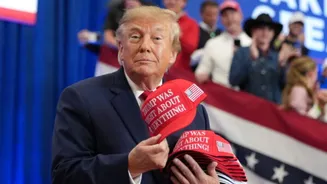
The India-US trade agreement has now become an important part of Trump’s own political messaging ahead of the midterms.
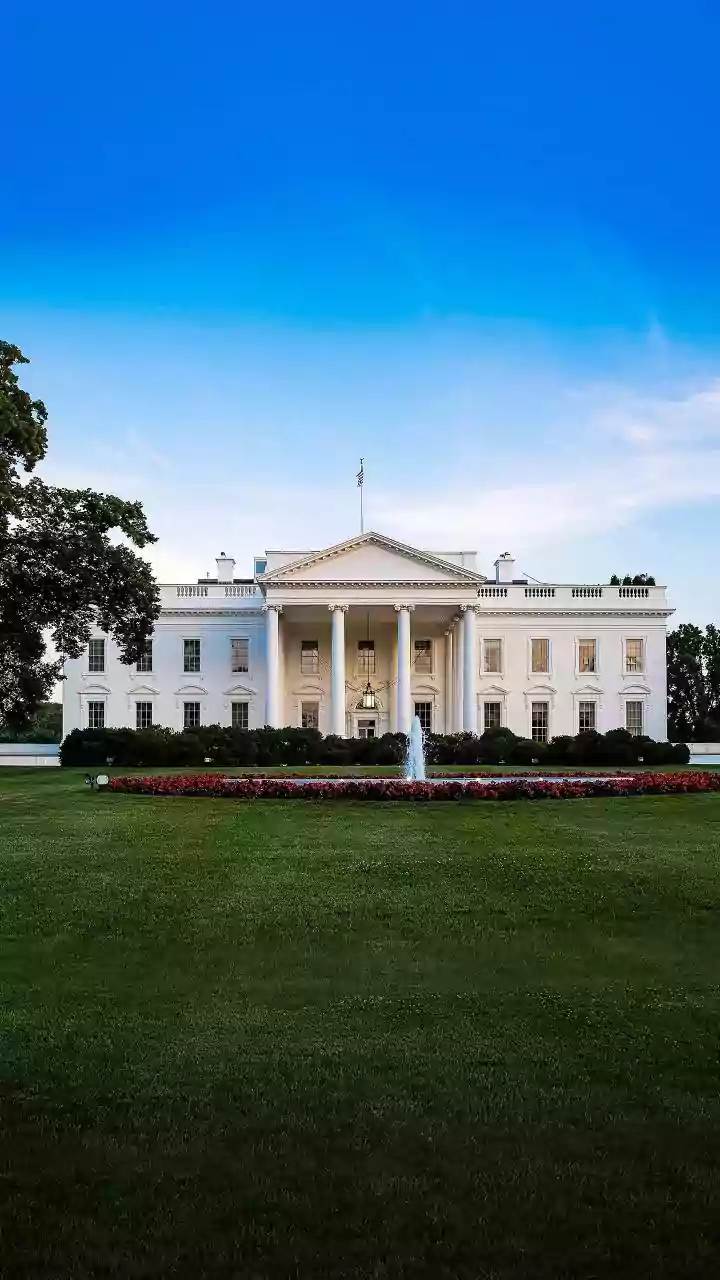
On November 2, the White House released a document titled ‘President Trump’s Second Term: Promises Made, Promises Kept, Results Delivered’, listing 127 campaign promises that the administration claimed the President had fulfilled. Among the achievements highlighted was the securing of new and improved trade agreements with major US trading partners, including India, Japan, China, the United Kingdom, the European Union and South Korea.
The White House described the agreements as a result of Trump’s use of tariffs as leverage, claiming that the countries covered account for more than half of global GDP.
The inclusion of India is politically significant. It allows Trump to present the trade agreement with New Delhi as evidence that his ‘America First’ economic approach has delivered results for American workers and businesses.
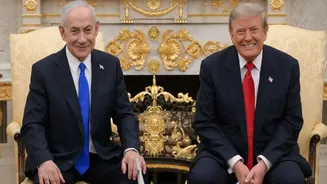
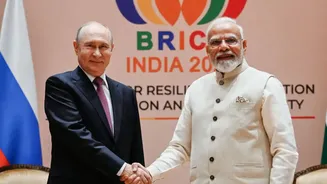
The trade framework announced in February 2026 followed discussions between Trump and Prime Minister Narendra Modi. Under the arrangement, Washington agreed to lower the reciprocal tariff on Indian goods from 25% to 18% and remove an additional 25% tariff imposed in connection with India’s Russian oil purchases.
India, meanwhile, indicated its intention to purchase more than $500 billion worth of American energy, technology, aircraft and other products over five years, alongside commitments on market access and trade barriers.
However, the framework also leaves several areas for further negotiations, including the broader bilateral trade agreement. The White House’s inclusion of the deal in its list of fulfilled promises is therefore an administration assessment of its achievement, rather than proof that every component has been fully implemented.
For Indian-American voters, the issue goes beyond diplomatic optics. Trade relations can influence businesses, technology partnerships, employment opportunities and the broader economic relationship between their country of residence and their country of origin.
Democrats And Republicans Step Up Outreach
With Indian-Americans concentrated in states such as California, Texas, New Jersey, New York, Washington, Illinois, Pennsylvania and Georgia, political parties have increasingly recognised the importance of reaching the community.
The Carnegie Endowment estimates that the US has approximately 2.6 million eligible Indian-American voters. While this represents a relatively small proportion of the national electorate, their concentration in closely contested constituencies can make their participation consequential.
Both parties have attempted to engage voters through community events, religious gatherings and local outreach.
Democratic candidate James Talarico, contesting the Texas Senate race, made headlines after trying his hand at preparing a masala dosa at an Indian restaurant in Irving, near Dallas. Democratic politicians have also attended Diwali celebrations and temple events. Connecticut Governor Ned Lamont joined Diwali celebrations at the State Capitol, while Senator Cory Booker participated in celebrations at the Akshardham temple in New Jersey.
Republican politicians have also made efforts to connect with Hindu and Indian-American communities. Congressmen Randy Fine and Scott Perry attended a temple event in Pennsylvania, while Congressman John James visited a Swaminarayan temple in Michigan.
The outreach reflects an attempt by candidates across party lines to engage with a community that has become increasingly visible in American political life.
Indian-Origin Candidates Add Another Dimension
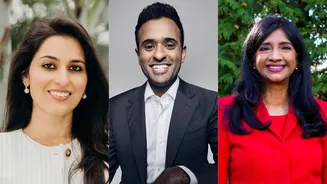
The growing political participation of Indian-Americans is also reflected in the number of candidates of Indian origin contesting the 2026 elections. Among the prominent names are Democratic lawmakers Ro Khanna, Pramila Jayapal, Ami Bera and Suhas Subramanyam, who are seeking re-election to the US House of Representatives.
Republican Vivek Ramaswamy, meanwhile, is contesting the Ohio gubernatorial election after securing the party’s nomination with Trump’s backing.
Other Indian-origin candidates include Nithya Raman, contesting the Los Angeles mayoral election, Pooja Sethi in the Texas House District 47 race, Sandeep Srivastava in Texas House District 66 and Pia Dandiya in Florida’s 22nd Congressional District.
Their political affiliations and positions differ, illustrating that Indian ancestry does not necessarily translate into a common political ideology or voting preference.
What The Latest Surveys Reveal
A particularly important indicator ahead of the elections is the October 2026 Indian American Attitudes Survey conducted by the Carnegie Endowment for International Peace in partnership with YouGov.
The nationally representative survey covered 1,000 Indian-American adults between October 7 and October 27, with a margin of error of approximately 3.87 percentage points.
It found that 62 per cent of Indian-American citizens intended to vote for Democratic congressional candidates, compared with 19 per cent for Republicans. Another 12 per cent remained undecided.
For Senate contests, 63 per cent favoured Democratic candidates, against 21% who supported Republicans.
The findings indicate a renewed Democratic advantage after Republicans made some gains among Indian-Americans during the 2024 presidential election. In 2024, 62 per cent had backed Kamala Harris, compared with 30 per cent for Trump.
However, the survey also offers an important insight into the community’s changing political identity. While 46 per cent identified as Democrats, 19 per cent as Republicans and 26 per cent as independents, voting intentions showed a larger Democratic advantage.
As Americans head to the polls on November 3, Indian-American voters are weighing a combination of economic priorities, community concerns, immigration policies and foreign affairs. Their choices will offer a glimpse into how one of America’s prominent immigrant-origin communities is navigating an increasingly polarised political landscape.